

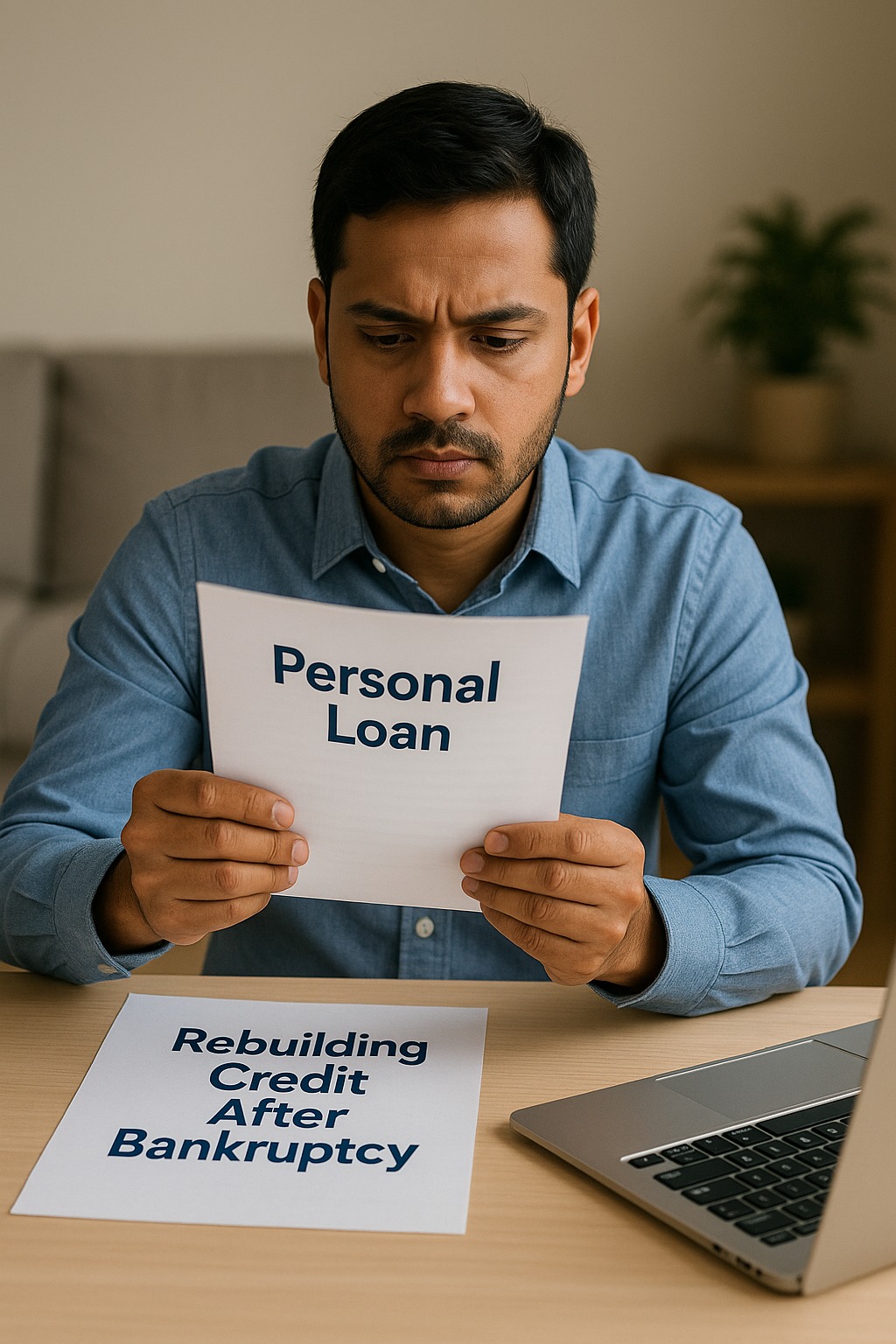
Bankruptcy can feel like the end of your financial journey — but it isn’t. While your credit score drops and lenders become cautious, you can still get a personal loan even after bankruptcy.
The key is rebuilding financial trust and proving repayment ability.
Here’s a simple guide to help you understand how the process works and how to improve your chances of approval.
1. Understand How Bankruptcy Affects Your Credit
After bankruptcy:
Your credit score drops sharply
Your credit report shows the bankruptcy for 7–10 years
Most mainstream banks automatically reject applications for some time
But as time passes — and with good financial behaviour — lenders begin to reconsider your profile.
2. Wait Until Your Bankruptcy Is Fully Discharged
You must have your bankruptcy discharge certificate before applying for any new loan.
Lenders will NOT approve your loan if the bankruptcy is still active.
3. Start Rebuilding Your Credit Immediately
Even a small effort helps.
Ways to rebuild credit:
✔ Use a secured credit card
✔ Pay all bills on time
✔ Keep your credit utilisation low
✔ Avoid late payments and defaults
✔ Maintain at least 6 months of clean financial activity
The stronger your new credit behaviour, the better your chances of getting a loan.
4. Prepare Strong Documentation
Since lenders see post-bankruptcy borrowers as high-risk, you must show:
Stable income
Updated bank statements
Employment proof
No recent missed payments
Lower debt-to-income ratio
This reduces lender fears and improves approval probability.
5. Choose the Right Type of Lender
a) Credit Unions & Cooperative Banks
They often approve loans for people rebuilding credit based on relationships and income, not just score.
b) NBFCs / Fintech Lenders
Some NBFCs specialise in lending to high-risk profiles, though interest may be higher.
c) Secured Personal Loans
Backing your loan with:
Fixed deposits
Gold
Savings
can increase your approval chance.
d) Second-Chance Loan Providers
These lenders focus on helping people rebuild credit after bankruptcy.
6. Apply for a Small Loan First
Start with a small amount (e.g., ₹20,000–₹50,000).
Once you repay it successfully, future approvals become easier and interest rates improve.
7. Avoid Multiple Loan Applications
Each loan enquiry lowers your credit score.
Apply only with lenders who pre-check your eligibility without hard inquiries.
8. Consider a Co-Applicant or Guarantor
If a trusted family member has a good credit score, adding them can:
✔ Improve approval chances
✔ Reduce interest rates
✔ Lower risk for lenders
9. Be Prepared for Higher Interest Rates Initially
After bankruptcy, lenders charge higher interest because of perceived risk.
As your credit improves, you can refinance or take a lower-cost loan later.
10. Build Strong Repayment Behaviour
Once you get a loan, pay EMIs:
On time
In full
Without bounce charges
Timely EMIs after bankruptcy can increase your credit score significantly within 6–12 months.
FAQs
Q1. Can I really get a personal loan after bankruptcy?
Yes. It’s harder, but not impossible with the right lenders and financial discipline.
Q2. How long after bankruptcy can I apply?
After discharge. Most lenders prefer a 6–12 month clean financial history.
Q3. Will the interest rate be higher?
Yes, initially. Rates improve as your score recovers.
Q4. Which lenders approve post-bankruptcy loans?
Credit unions, NBFCs, second-chance loan providers and secured-loan lenders.
Q5. Does repaying a new loan help rebuild credit?
Absolutely. Timely EMIs boost your score faster than most other methods.
Published on : 15th November
Published by : SMITA
www.vizzve.com || www.vizzveservices.com
Follow us on social media: Facebook || Linkedin || Instagram
🛡 Powered by Vizzve Financial
RBI-Registered Loan Partner | 10 Lakh+ Customers | ₹600 Cr+ Disbursed