

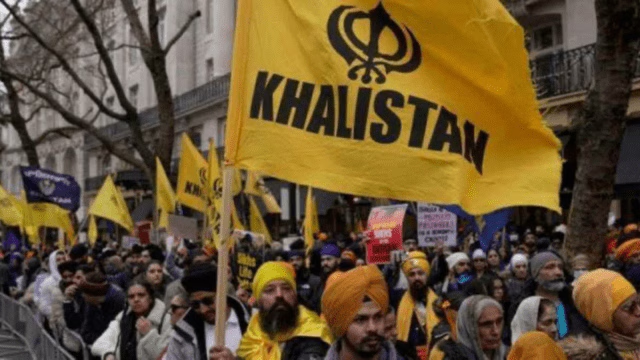
Canada Courts Increasingly Reject Asylum Claims Linked to Khalistan Activism
Canada is witnessing a noticeable rise in rejected asylum claims connected to Khalistan-related political activity. Recent court rulings highlight that many applicants are unable to justify their political affiliations or present credible proof of persecution, leading judges to label several claims as “disingenuous”, “contrived”, or politically convenient conversions”.
A Pattern of Weak Evidence and Repetitive Narratives
Canadian judges have pointed out a recurring trend where applicants present nearly identical stories of threats, harassment, or police pressure back in India. These narratives, often lacking detailed evidence, raise red flags during proceedings.
Several judgments emphasize:
Repetitive claims copied from previous cases
Sudden political activism after arriving in Canada
Failure to provide verifiable proof of past persecution
Contradictions during testimony
Fabricated or exaggerated political involvement
This pattern has contributed to a growing number of rejections across immigration and refugee boards.
Disingenuous Political Conversions Under Scrutiny
One of the most noted concerns involves asylum seekers who claim newfound affiliation with Khalistan causes only after landing in Canada, often engaging in activism primarily to strengthen refugee cases.
Courts have repeatedly questioned:
Whether the activism is genuine
Whether the applicant had a real political risk in India
Whether any threats are substantiated
Many applicants struggle to show continuity of political involvement before their arrival, weakening the credibility of their claims.
Why Rejections Are Rising
Experts point to several key factors behind the surge in rejections:
Stricter review of political asylum claims
Growing misuse of political activism for immigration advantage
Enhanced cross-referencing with Indian security and legal reports
Improved fraud detection mechanisms
Impact on Asylum Seekers
With increasing scrutiny, asylum seekers linked to Khalistan claims now face a tougher legal environment. Immigration lawyers advise applicants to prepare solid, verifiable evidence, as the courts are no longer accepting generic narratives or unsupported claims.
FAQ Section
1. Why is Canada rejecting more Khalistan-related asylum claims?
Because many claims show repetitive or fabricated narratives, lack evidence of persecution, and involve political conversions seen as opportunistic.
2. What type of evidence do Canadian courts expect?
Courts require credible documentation such as police records, medical reports, eyewitness statements, or proof of political involvement before arriving in Canada.
3. Does activism in Canada help asylum cases?
Only if it is genuine. Courts scrutinize whether activism is lifelong or merely started after landing in Canada to strengthen a refugee claim.
4. Are all Khalistan-related claims rejected?
No. Genuine cases supported with strong, consistent, and verifiable evidence may still be approved.
5. How can applicants improve their chances?
By presenting accurate information, avoiding fabricated details, and providing solid evidence of persecution or political risk.
source credit : Manraj Grewal Sharma
Published on : 24TH November
Published by : SARANYA
www.vizzve.com || www.vizzveservices.com
Follow us on social media: Facebook || Linkedin || Instagram
🛡 Powered by Vizzve Financial
RBI-Registered Loan Partner | 10 Lakh+ Customers | ₹600 Cr+ Disbursed