

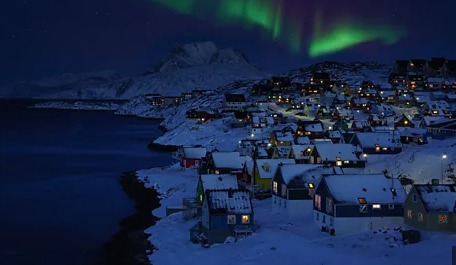
The Alert Base in Canada, one of the world’s northernmost inhabited places, is set to enter a polar night period lasting 136 days. During this time, the sun will not rise above the horizon, leaving the region in continuous darkness.
Polar night is a natural phenomenon occurring in areas within the Arctic and Antarctic Circles, and it affects both humans and wildlife in unique ways.
What is Polar Night?
Definition: A polar night occurs when a location experiences continuous darkness for more than 24 hours, typically lasting weeks to months.
Cause: It happens due to the tilt of the Earth, which prevents the sun from rising in polar regions during winter.
Effects: Residents experience limited daylight, colder temperatures, and changes in daily routines, often requiring artificial light and vitamin D supplements.
Other Famous Polar Night Locations
Barrow (Utqiaġvik), Alaska, USA – Experiences about 65 days of darkness each winter.
Longyearbyen, Svalbard, Norway – Faces four months of polar night from late October to mid-February.
Tromsø, Norway – The sun disappears for over two months, offering stunning northern lights.
Murmansk, Russia – One of the largest cities above the Arctic Circle, it undergoes polar night for around 40 days.
South Pole, Antarctica – Experiences continuous darkness for six months, from March to September.
Life During Polar Night
Daily Life: People rely on artificial lighting and maintain routines to combat the psychological effects of darkness.
Wildlife Adaptation: Arctic animals like polar bears, reindeer, and foxes have adapted to survive and hunt in darkness.
Tourism: Polar nights also attract tourists seeking northern lights, offering unique natural beauty and experiences.
FAQ
Q1: How long will the Alert Base be without sunlight?
A1: The Alert Base will experience 136 days of continuous darkness this winter.
Q2: Why does polar night occur?
A2: It occurs due to the tilt of the Earth, which prevents the sun from rising in polar regions.
Q3: Are there other places with polar night?
A3: Yes, places like Barrow (Alaska), Longyearbyen (Norway), Tromsø (Norway), Murmansk (Russia), and the South Pole also experience polar night.
Q4: How do people cope with polar night?
A4: Residents use artificial lighting, maintain routines, and take vitamin D supplements to manage the lack of sunlight.
Q5: Can you see the northern lights during polar night?
A5: Yes, the darkness during polar night enhances the visibility of auroras, making it a popular tourist attraction.
Conclusion
The 136-day polar night at Canada’s Alert Base is a remarkable reminder of Earth’s unique geography and the extremes of life in polar regions.
While darkness dominates for months, humans and wildlife adapt and thrive, and nature provides breathtaking phenomena like the northern lights. Polar night is both a challenge and a spectacle, highlighting the resilience of life at the extremes.
Published on : 15th October
Published by : SMITA
www.vizzve.com || www.vizzveservices.com
Follow us on social media: Facebook || Linkedin || Instagram
🛡 Powered by Vizzve Financial
RBI-Registered Loan Partner | 10 Lakh+ Customers | ₹600 Cr+ Disbursed
https://play.google.com/store/apps/details?id=com.vizzve_micro_seva&pcampaignid=web_share