

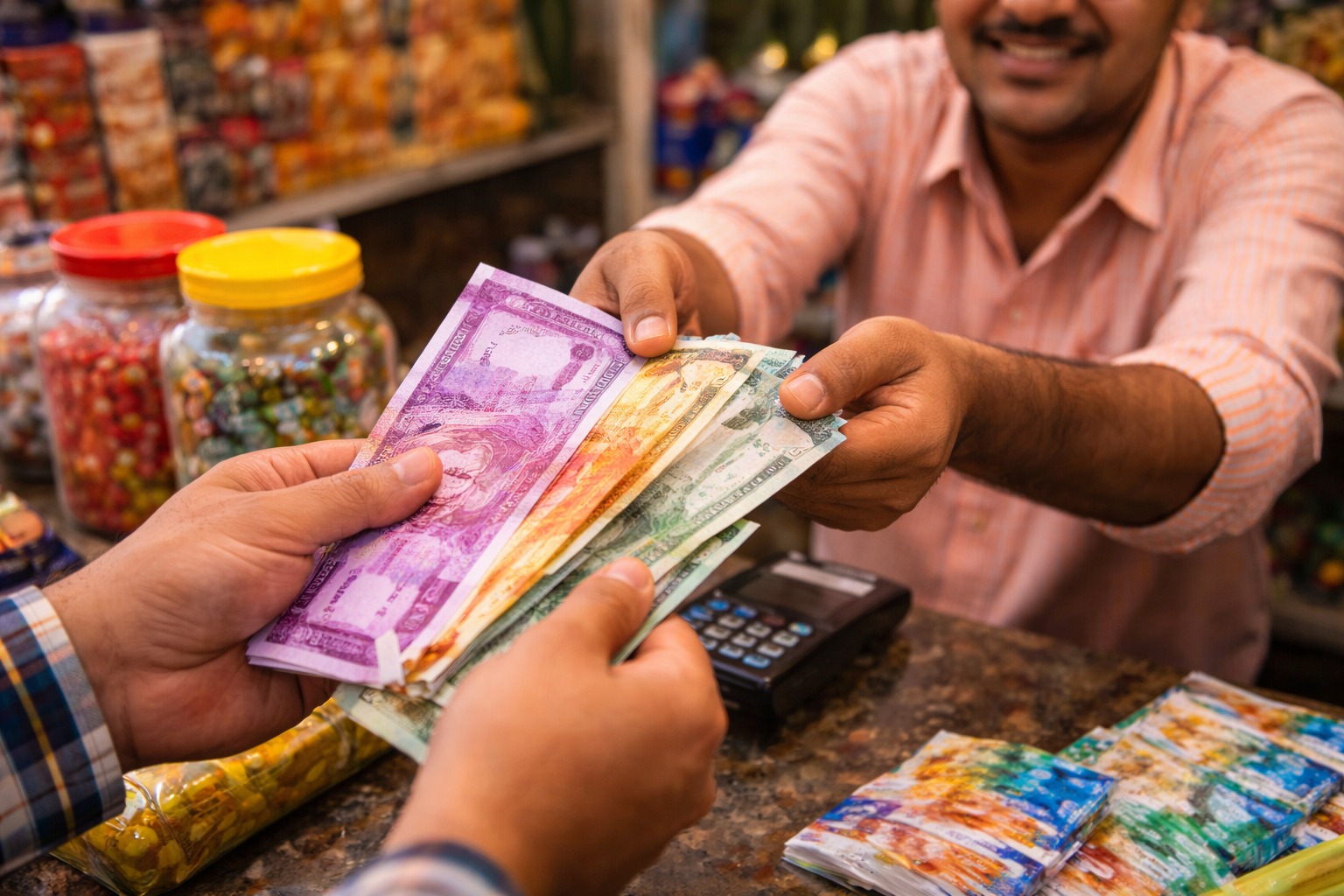
In India’s fast-digitalising economy, you can pay in three main ways: physical cash, instant mobile payments through UPI, or debit/credit cards. Each method feels different psychologically, and that feeling directly affects how much you spend.
UPI transactions run on infrastructure developed by the National Payments Corporation of India, making digital payments instant and almost frictionless. But that same convenience can sometimes make overspending easier.
So which method actually helps you stay within budget?
Quick Answer
Cash = best for strict budget control
UPI = most convenient but easiest to overspend
Card = good tracking, but credit cards can increase impulse buys
If your goal is maximum spending discipline, cash wins. If you want convenience with some control, debit card or UPI with limits works best.
How Each Payment Method Affects Your Brain
Cash: The “Pain of Paying”
Handing over notes creates a real, visible loss.
You physically see money leaving your wallet.
Effects:
Slows down spending decisions
Reduces impulse buying
Makes you more price-conscious
Great for:
Daily budgets
Grocery envelopes
Limiting discretionary expenses
UPI: Invisible, Instant, Effortless
Scan, tap, done. No waiting, no counting.
Effects:
Almost zero friction
Easy small repeated spends
Harder to notice total daily outflow
Common risk:
“It’s only ₹50” repeated 10 times = ₹500 gone unnoticed.
Best used with:
Daily spend alerts
App limits
Linked savings rules
Cards: Controlled but Potentially Risky
Debit Card
Spends only what you have
Good digital record
Less emotional than cash but still finite
Credit Card
Delays the pain of paying
Encourages larger purchases
Rewards and EMIs can tempt overspending
Great for:
Planned purchases
Monthly expense tracking
Building credit (if fully repaid on time)
Spending Control Comparison
| Feature | Cash | UPI | Debit Card | Credit Card |
|---|---|---|---|---|
| Spending Awareness | Very High | Low | Medium | Low |
| Convenience | Low | Very High | High | High |
| Budget Discipline | Excellent | Weak | Good | Poor (if misused) |
| Expense Tracking | Manual | Automatic | Automatic | Automatic |
| Overspending Risk | Lowest | Medium–High | Medium | Highest |
Real-Life Example
You set a weekly food budget of ₹2,000.
Using cash: once your wallet is empty, you stop.
Using UPI: you may cross ₹2,000 without realising.
Using credit card: you might spend ₹3,000 and promise to “adjust next month”.
The payment method silently shapes behaviour.
Best Method by Situation
| Situation | Best Choice |
|---|---|
| Strict monthly budgeting | Cash |
| Everyday quick payments | UPI with limits |
| Bills and subscriptions | Debit card |
| Big planned purchase | Credit card (paid in full) |
Smart Hybrid Strategy
Use all three, but with roles:
Cash for daily variable expenses
UPI for convenience, but set daily caps
Card for fixed, trackable spending
This gives control without losing ease.
Tips to Control Spending Regardless of Method
Set daily/weekly limits in banking apps
Turn on instant transaction alerts
Review spending every Sunday
Avoid saving cards in shopping apps
Pay credit card bills in full, always
Pros & Cons Summary
Cash
Pros
Strongest self-control
No hidden spending
Cons
No automatic records
Less convenient
UPI
Pros
Fast and accepted everywhere
Excellent transaction history
Cons
Encourages micro-overspending
Hard to “feel” money leaving
Cards
Pros
Detailed statements
Useful for planned buys
Cons
Credit cards can create debt
Easier to justify impulse purchases
Key Takeaways
Physical cash naturally limits spending.
UPI maximises convenience but needs self-set limits.
Debit cards balance control and tracking.
Credit cards are powerful tools but dangerous without discipline.
The best payment method for controlling spending is the one that makes you pause before paying. For most people, that’s still cash.
FAQs
1. Which payment method helps control spending the most?
Cash, because you physically see money leaving your wallet.
2. Does UPI make people overspend?
It can, because small instant payments don’t feel like real losses.
3. Are debit cards safer for budgeting than credit cards?
Yes, debit cards spend only your available balance.
4. Why do people spend more with credit cards?
Because payment is delayed, reducing the “pain of paying”.
5. Is cash still useful in a digital economy?
Yes, especially for strict daily or weekly budgets.
6. Can I control spending while using UPI?
Yes, by setting daily limits and using alerts.
7. Which is best for tracking expenses automatically?
UPI and cards, because every payment is recorded digitally.
8. Should I avoid credit cards completely?
Not necessarily, but always pay the full bill on time.
9. What is the best method for small daily purchases?
Cash if you want discipline, UPI if you want convenience.
10. How can I stop impulse spending with digital payments?
Disable saved cards, set limits, and review transactions daily.
11. Is a mix of payment methods better?
Yes, use cash for variable spends, digital for fixed bills.
12. Do rewards on cards increase overspending?
Often yes, because rewards can justify unnecessary purchases.
13. Can budgeting apps work with UPI and cards?
Yes, they can auto-categorise and track spending.
14. Which method is best for long-term financial habits?
Cash builds discipline; digital tools build awareness and tracking.
15. What simple rule improves spending control?
If you don’t feel the payment, you’re more likely to overspend—so add friction with limits or cash use.
Published on : 30th January
Published by : SMITA
www.vizzve.com || www.vizzveservices.com
Follow us on social media: Facebook || Linkedin || Instagram
🛡 Powered by Vizzve Financial
RBI-Registered Loan Partner | 10 Lakh+ Customers | ₹600 Cr+ Disbursed