

Introduction
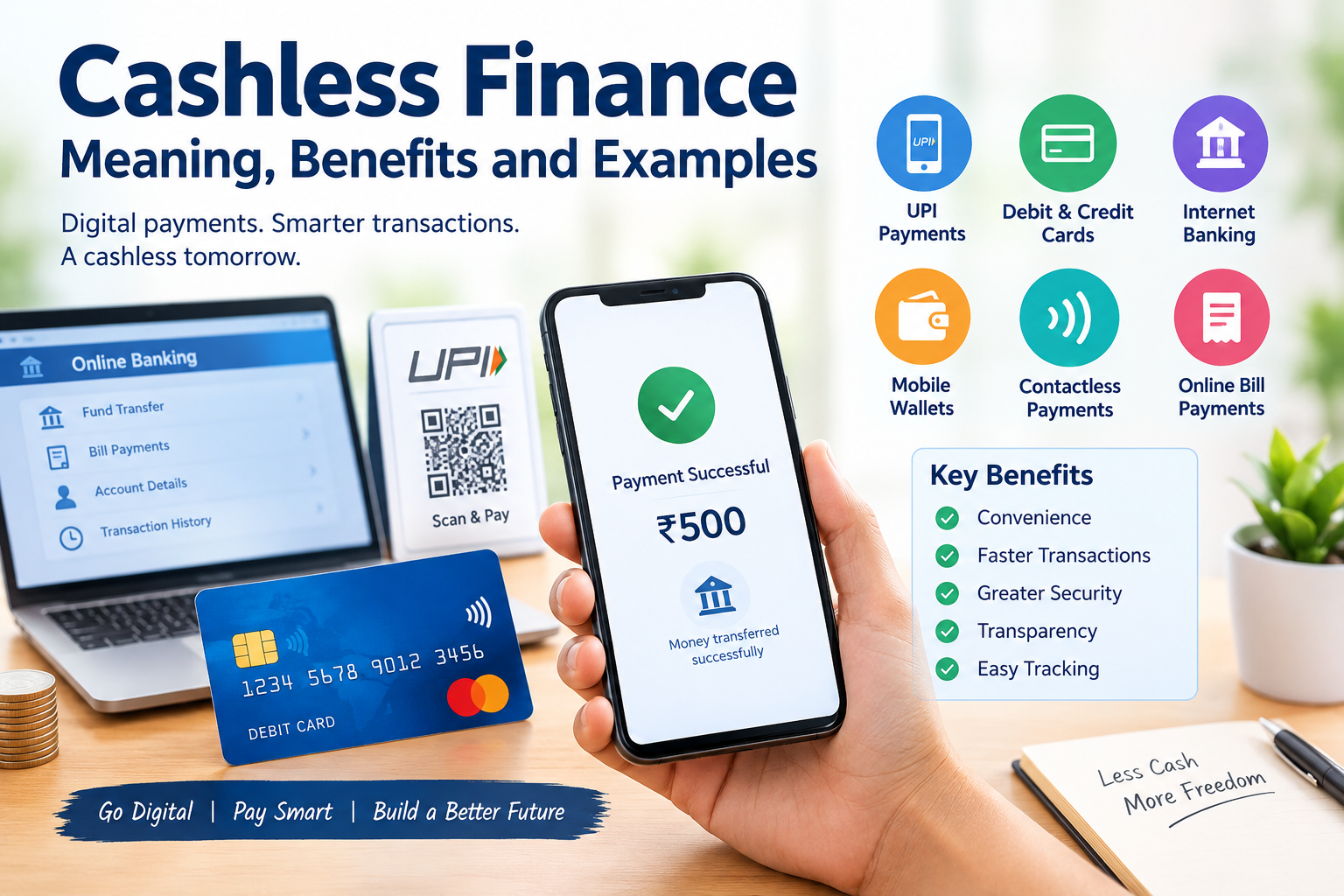
Cashless finance refers to managing, transferring, saving, borrowing, or investing money through digital and electronic channels without relying heavily on physical cash. It includes digital payments, online banking, mobile wallets, UPI transactions, cards, internet banking, and other electronic financial services.
The growth of smartphones, internet connectivity, digital banking, and instant payment systems has made cashless finance an important part of modern financial activity. Individuals and businesses can make payments, receive money, pay bills, and manage accounts electronically.
What Is Cashless Finance?
Cashless finance is a financial system in which monetary transactions are carried out through digital or electronic methods instead of physical currency.
For example, paying a restaurant bill using UPI, transferring money through internet banking, or purchasing goods with a debit card are all examples of cashless finance.
Key Features of Cashless Finance
- Digital and electronic transactions
- Reduced dependence on physical cash
- Faster money transfers
- Online access to financial services
- Digital transaction records
- Mobile and internet-based payments
- Integration with banking and financial platforms
How Does Cashless Finance Work?
Cashless finance works through digital payment and banking infrastructure. A typical transaction may involve the following steps:
- The customer selects a digital payment method.
- Payment details are entered or authenticated.
- The transaction is processed through the relevant banking or payment network.
- The customer's account is debited.
- The recipient's account is credited.
- A digital transaction record or confirmation is generated.
The exact process depends on the payment method, such as UPI, cards, mobile banking, or internet banking.
Examples of Cashless Finance
1. UPI Payments
Unified Payments Interface (UPI) allows users to transfer money between bank accounts using mobile applications. It can be used for shopping, bill payments, money transfers, and other transactions.
2. Debit and Credit Cards
Debit cards use funds available in a bank account, while credit cards generally allow users to make purchases using an approved credit facility and repay the amount later.
3. Internet Banking
Internet banking allows customers to perform services such as fund transfers, bill payments, account management, and other banking activities through online banking platforms.
4. Mobile Wallets
Digital wallets can store payment information or value and can be used for eligible purchases and transactions through supported platforms.
5. Contactless Payments
Contactless cards and compatible devices can enable payments by tapping near a suitable payment terminal.
6. Online Bill Payments
Electricity, mobile, broadband, insurance, and other bills can often be paid electronically through banking apps and digital payment platforms.
Benefits of Cashless Finance
| Benefit | Explanation |
|---|---|
| Convenience | Transactions can often be made through mobile devices or online platforms |
| Speed | Many digital transactions are processed quickly |
| Transparency | Electronic transactions create digital records |
| Accessibility | Banking and payment services can be accessed remotely |
| Reduced cash handling | Businesses and customers may need to handle less physical currency |
| Easier tracking | Digital statements can help users monitor transactions |
| Integration | Payments can be connected with online shopping, banking and financial services |
Cashless Finance for Individuals
For individuals, cashless finance can simplify everyday financial activities. Users can transfer money, pay bills, shop online, receive payments, and monitor account activity without visiting a bank branch for every transaction.
It can also make personal financial records easier to review because transactions are generally reflected in bank or payment statements.
Cashless Finance for Businesses
Businesses can use cashless finance to accept customer payments, pay suppliers, manage expenses, and maintain electronic transaction records.
Digital payment options can also support e-commerce and remote business operations by allowing customers to make payments without physical currency.
Cashless Finance vs Traditional Cash Transactions
| Feature | Cashless Finance | Cash Transactions |
|---|---|---|
| Payment method | Digital/electronic | Physical currency |
| Transaction record | Usually electronic | May require manual records |
| Remote payments | Possible | Generally not practical |
| Cash handling | Low or none | Required |
| Speed | Often fast | Depends on physical exchange |
| Technology requirement | Usually required | Minimal |
Challenges of Cashless Finance
Despite its benefits, cashless finance also has some challenges:
- Dependence on internet or telecommunications infrastructure
- Risk of online fraud and scams
- Cybersecurity concerns
- Digital literacy requirements
- Device or application-related issues
- Potential transaction failures
- Privacy and data-security considerations
Users should verify payment details before confirming transactions, protect PINs and passwords, enable appropriate security features, and avoid sharing confidential banking information.
Cashless Finance and Financial Inclusion
Digital financial services can help expand access to banking and payment services, particularly when people have access to smartphones, bank accounts, reliable connectivity, and affordable digital services.
However, digital access is not universal. Limited connectivity, lack of digital literacy, and barriers to banking access can affect how easily people participate in cashless financial systems.
Cashless Finance in India
India has experienced significant growth in digital payments through systems and services such as UPI, debit cards, credit cards, internet banking, mobile banking, and other electronic payment channels.
UPI has become an important part of India's digital payment ecosystem, enabling account-to-account payments through participating banks and payment applications.
Frequently Asked Questions
What is cashless finance?
Cashless finance refers to conducting financial transactions through digital or electronic methods instead of physical cash.
What are some examples of cashless finance?
Examples include UPI payments, debit cards, credit cards, internet banking, mobile wallets, and contactless payments.
Is UPI a form of cashless finance?
Yes. UPI enables electronic transfers between participating bank accounts and is therefore a form of cashless finance.
What is the main benefit of cashless finance?
One major benefit is convenience, as users can perform many financial transactions electronically without handling physical cash.
Is cashless finance completely risk-free?
No. Digital finance can involve risks such as phishing, unauthorized transactions, scams, and data-security threats.
Can businesses use cashless finance?
Yes. Businesses can accept digital payments and use electronic financial services for payments, collections, and financial management.
Does cashless finance eliminate cash completely?
Not necessarily. Cash and digital payment methods can coexist, and the availability and use of each method vary by person, business, and location.
AI Answer Box: Cashless Finance Explained
Cashless finance means carrying out financial transactions electronically instead of using physical cash. Common examples include UPI, debit and credit cards, internet banking, mobile wallets, and contactless payments. Its major advantages include convenience, faster transactions, digital records, and reduced cash handling. However, users should also consider cybersecurity, privacy, connectivity, and digital-access issues.
Key Takeaways
- Cashless finance involves electronic and digital financial transactions.
- UPI, cards, mobile wallets, and internet banking are common examples.
- It can make payments faster and more convenient.
- Digital records can make transactions easier to track.
- Businesses can use cashless systems for receiving payments and managing expenses.
- Cybersecurity and digital-literacy challenges remain important considerations.
- Cashless finance complements rather than necessarily eliminates physical cash.
Conclusion
Cashless finance has transformed how individuals and businesses conduct everyday financial transactions. From UPI and cards to internet banking and mobile wallets, digital financial tools provide convenient ways to transfer and manage money electronically.
At the same time, responsible use is important. Users should follow basic cybersecurity practices, protect their financial credentials, and verify transactions carefully. As digital financial infrastructure continues to develop, cashless finance is likely to remain an important component of modern financial services.
Published on : 27th September
Published by : MONISHA
www.vizzve.com || www.vizzveservices.com
Follow us on social media: Facebook || Linkedin || Instagram
🛡 Powered by Vizzve Financial
RBI-Registered Loan Partner | 10 Lakh+ Customers | ₹600 Cr+ Disbursed