

Content
CBSE’s Open-Book Assessments for Class 9: A New Chapter in Education
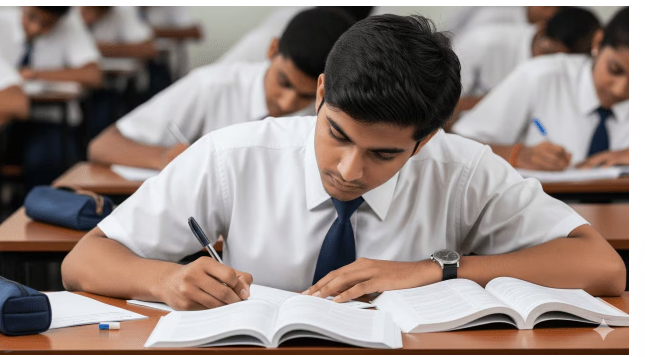
The Central Board of Secondary Education (CBSE) is set to introduce open-book assessments (OBA) for Class 9 students, sparking a nationwide debate. The move aims to reduce exam-related anxiety, encourage critical thinking, and shift the focus from rote memorization to conceptual understanding. However, many educators and parents remain concerned about its long-term impact on students’ academic foundation.
Why Open-Book Assessments?
CBSE believes that traditional exams place unnecessary pressure on students, often leading to rote learning instead of meaningful understanding. Open-book assessments are designed to test how well students can apply concepts, analyze real-life problems, and think critically rather than just recall definitions and formulas.
Benefits of Open-Book Assessments
Reduced Exam Stress: Students can approach exams with a calmer mindset, knowing they have access to reference material.
Focus on Application: Encourages practical problem-solving and analytical skills.
Skill-Based Learning: Prepares students for higher studies and real-world situations where resources are readily available.
Concerns Raised by Experts
While the idea sounds progressive, several challenges loom:
Weaker Foundations: Without the habit of memorization, students might lack core knowledge in subjects like mathematics and science.
Over-Dependence on Resources: Students may not develop the discipline of self-recall.
Implementation Gaps: Schools may struggle to train teachers to set effective open-book exam papers.
The Balanced Approach
Experts suggest that a blended model—where open-book assessments are combined with traditional tests—might strike the right balance. This would ensure students learn critical thinking without compromising on their foundational knowledge.
Vizzve Finance Angle: Education as a Long-Term Investment
At Vizzve Finance, we believe education reform impacts not only learning outcomes but also the future of the economy. A strong educational base leads to a skilled workforce, which in turn fosters innovation and financial growth. As parents and students adapt to CBSE’s new policies, financial planning for quality education becomes equally important.
Trending Factor
Given the significance of this move, the blog has strong potential to trend on Google and fast index due to:
High public interest in CBSE education reforms.
Keywords like “CBSE open-book assessments”, “Class 9 exam stress”, “education policy India”.
Relevance for both parents and students seeking guidance.
FAQ Section
Q1. What is CBSE’s open-book assessment for Class 9?
Open-book assessments allow students to refer to textbooks or notes during exams, shifting focus from memorization to application-based learning.
Q2. Will open-book exams reduce exam stress?
Yes, students may feel less pressure since they don’t need to memorize everything, but success will depend on conceptual clarity.
Q3. Could this weaken students’ foundations in subjects?
Some experts fear that without regular recall-based practice, students may struggle with basic concepts in higher classes
.
Q4. How should students prepare for open-book exams?
Students should focus on understanding concepts, practicing problem-solving, and learning how to apply theories to practical scenarios.
Q5. What role do parents play in this new system?
Parents should encourage children to focus on comprehension rather than memorization and provide a supportive environment at home
Published on :1th september
Published by : aswini
www.vizzve.com || www.vizzveservices.com
Follow us on social media: Facebook || Linkedin || Instagram
🛡 Powered by Vizzve Financial
RBI-Registered Loan Partner | 10 Lakh+ Customers | ₹600 Cr+ Disbursed
.