

Bengaluru witnessed a sharp change in weather on Tuesday, September 15, as heavy showers and gusty winds swept across several parts of the city after a prolonged period of unusually warm and relatively dry conditions.
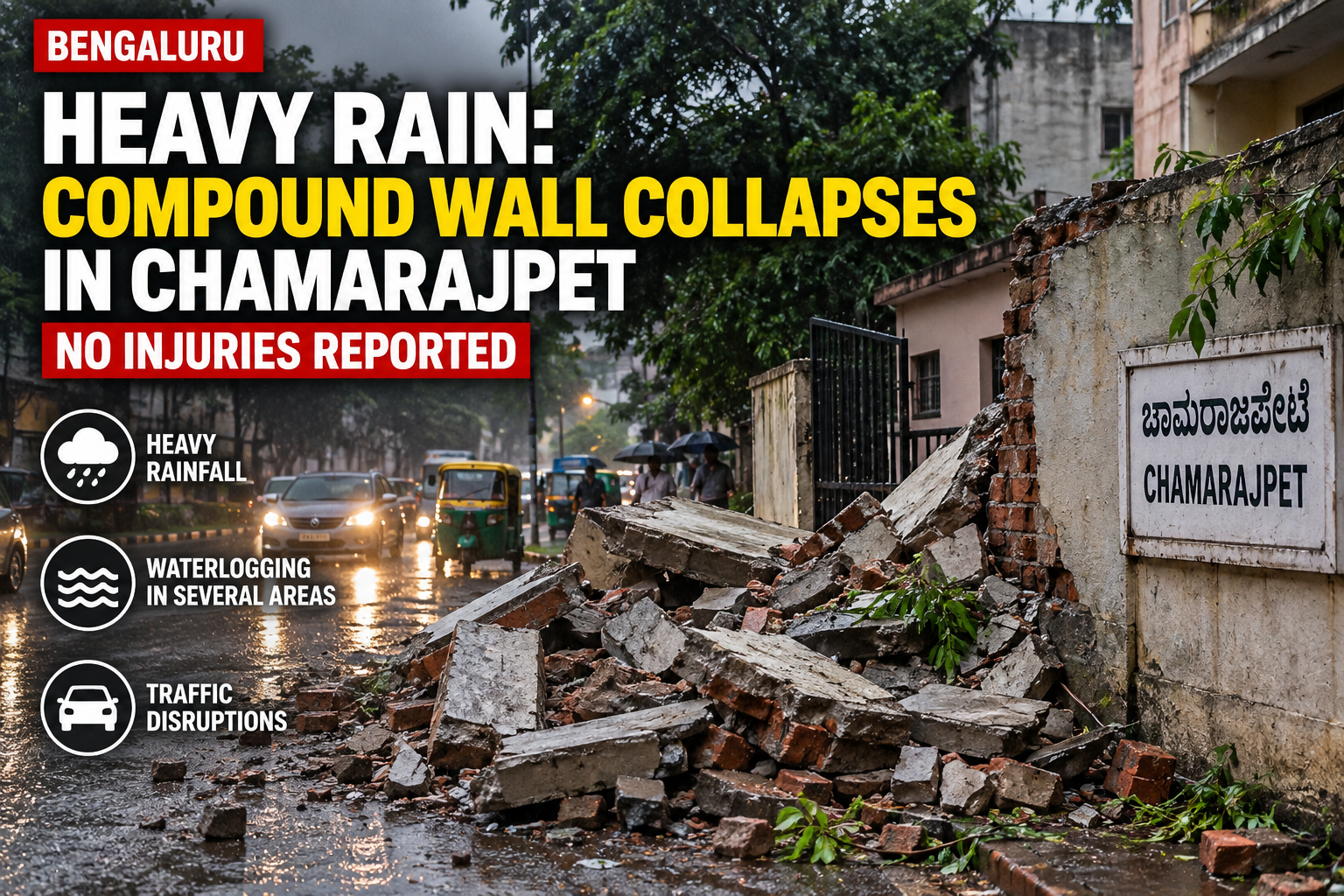
The intense weather caused widespread waterlogging, traffic disruption and reports of fallen trees and branches. In Chamarajpet, a compound wall collapsed at Nanjamba Agrahara, although no injuries were reported.
The incident highlights how sudden heavy rainfall and strong winds can put pressure on older or weakened structures, while also creating difficult conditions for commuters and pedestrians.
A compound wall collapsed in Nanjamba Agrahara in Bengaluru's Chamarajpet division following heavy rain and gusty winds on September 15, 2026. No injuries were reported.
The wall collapse occurred during a broader spell of thunderstorms and heavy showers that affected several parts of Bengaluru. The rain caused waterlogging on multiple roads, slowing traffic during the evening peak period.
The rainfall also resulted in reports of fallen branches and trees in different parts of the city.
Bengaluru Heavy Rain: What Happened?
After several days of warm weather, Bengaluru experienced a significant spell of thunderstorms and rain on Tuesday evening.
According to the Times of India, temperatures had been hovering around 31°C to 32°C during the preceding period before the storm brought a sudden change in conditions. Winds accompanying the thunderstorms were reported at around 30–40 kmph.
The heavy rainfall quickly affected road conditions.
Major impacts reported across Bengaluru included:
- Waterlogging on several roads
- Slow-moving traffic
- Reduced visibility
- Fallen branches
- Fallen trees at some locations
- Strong gusty winds
- Damage to some structures
- Traffic advisories from Bengaluru Traffic Police
- Compound wall collapse in Chamarajpet
The Chamarajpet wall collapse was one of the reported infrastructure-related incidents during the storm.
Chamarajpet Compound Wall Collapse
The compound wall collapse occurred in Nanjamba Agrahara, within the Chamarajpet division.
The incident attracted attention because it happened during a period of strong winds and heavy rainfall across the city.
Most important fact
No injuries were reported in the Chamarajpet wall collapse.
While the incident did not result in reported casualties, a structural collapse during severe weather can create risks for pedestrians, nearby residents, vehicles and property.
Authorities and residents generally need to remain particularly alert around:
- Old compound walls
- Construction sites
- Loose structures
- Temporary sheds
- Large trees
- Damaged buildings
- Exposed electrical infrastructure
Why Can Heavy Rain Cause Compound Walls to Collapse?
Heavy rain alone does not necessarily cause a wall to collapse. Several factors can work together.
1. Water saturation
Prolonged or intense rainfall can saturate soil around a foundation.
When soil becomes saturated, its strength and stability can change, potentially increasing pressure on structures.
2. Poor drainage
If rainwater cannot drain properly, water can accumulate around the foundation of a compound wall.
3. Age of the structure
Older walls may already have cracks, weakened mortar or foundation problems.
4. Strong winds
Gusty winds can add lateral pressure to walls, particularly tall or poorly supported structures.
5. Existing cracks
Small cracks can become more significant when a structure is exposed to repeated rain and moisture.
6. Construction quality
The quality of the foundation, materials and construction can influence how a wall responds to extreme weather.
Heavy Rain and Gusty Winds Hit Bengaluru
The September 15 storm was significant because it followed a prolonged dry spell and unusually warm weather.
The Times of India reported that IMD scientists attributed the showers to moisture coming from the Bay of Bengal, combined with atmospheric conditions that allowed thunderclouds to move from the eastern parts of the region toward the west.
Winds accompanying the thunderstorms were reported at approximately 30–40 kmph.
This combination of:
Heat + atmospheric moisture + thunderstorms + gusty winds
can produce sudden and intense weather events in urban areas.
Bengaluru Rainfall: How Much Rain Was Recorded?
According to data reported by the Karnataka State Natural Disaster Monitoring Centre, some areas recorded substantial rainfall by around 7:30 pm on Tuesday.
| Bengaluru Area | Reported Rainfall |
|---|---|
| Koramangala | 70 mm |
| New BEL Road | 47 mm |
| RT Nagar | 46 mm |
| Jayanagar | 35 mm |
| HSR Layout | 31 mm |
These figures were reported by the Times of India based on KSNDMC data.
The distribution shows why the effects of the storm varied considerably between different parts of Bengaluru.
Bengaluru Waterlogging and Traffic Disruption
The rainfall quickly affected traffic movement across the city.
Several important stretches experienced waterlogging, forcing vehicles to slow down and creating congestion during the evening rush.
Areas reported to have experienced disruption included:
- Chickpet
- New Tharagupet
- Jayamahal Road
- Hebbal
- Nagawara
- Veerannapalya
- Mehkri Circle
- Indiranagar
- Wilson Garden
- Madiwala
- Peenya
- Rupena Agrahara
Bengaluru Traffic Police issued advisories asking motorists to exercise caution on affected stretches.
Chamarajpet Wall Collapse vs Other Rain Impacts
| Impact | Chamarajpet | Other Bengaluru Areas |
|---|---|---|
| Heavy rain | Yes | Yes |
| Gusty winds | Reported during storm | Reported across city |
| Wall collapse | Yes | Other incidents also reported |
| Injuries from this wall collapse | None reported | Varied by incident |
| Waterlogging | Wider city impact | Widespread |
| Traffic disruption | Citywide effect | Significant in several locations |
| Fallen branches/trees | Reported in city | Multiple locations |
Fallen Trees and Branches Add to Bengaluru's Weather Risks
The Chamarajpet wall collapse was not the only infrastructure-related incident.
The Times of India reported that Bengaluru South City Corporation received complaints about fallen branches at six locations. Other reports included fallen trees in Chickpet, KH Double Road, Indiranagar, Vivek Nagar and Ganganagar. A tree in RMV II Stage was also reported to be at risk of falling.
This demonstrates why strong winds can be a major safety concern even when rainfall itself does not cause direct damage.
Why Was Bengaluru Hit by Heavy Rain After a Dry Spell?
The rainfall was particularly notable because Bengaluru had experienced several days of unusually warm weather.
The city recorded a maximum temperature of 32.1°C before the storm, according to the report.
The sudden transition from hot and relatively dry conditions to thunderstorms and heavy rainfall can catch commuters off guard.
Weather sequence
Prolonged warmth → moisture buildup → thundercloud development → gusty winds → heavy rainfall → waterlogging and traffic disruption
This type of rapid weather change can create challenges for an already densely populated urban environment.
Expert Commentary: Why Urban Infrastructure Needs Rain Preparedness
From an urban infrastructure perspective, heavy rainfall can expose weaknesses that remain unnoticed during dry weather.
Compound walls, storm-water drains, roads and trees all interact with rainfall differently.
A wall may appear stable under normal conditions but become vulnerable when:
- Soil becomes saturated.
- Drainage is blocked.
- Water accumulates near the foundation.
- Strong winds add pressure.
- Existing structural cracks are present.
Therefore, routine structural inspection and proper rainwater drainage are important parts of urban safety, particularly before and during periods of heavy rainfall.
Real-World Safety Lessons From the Chamarajpet Incident
The absence of injuries in the Chamarajpet incident is important, but the collapse also provides a practical reminder.
Residents should avoid standing close to visibly damaged compound walls during or immediately after heavy rainfall.
Watch for warning signs
- New cracks
- Tilting walls
- Bulging sections
- Soil erosion near foundations
- Loose bricks
- Water collecting at the base
- Broken drainage channels
- Unusual movement or sounds
If a wall appears unstable, people should maintain a safe distance and inform the relevant local authority or property owner.
What Should Bengaluru Residents Do During Heavy Rain?
Step 1: Check weather conditions
Before leaving home, check official weather warnings and local traffic updates.
Step 2: Avoid risky roads
Do not attempt to drive through deep or fast-moving water.
Step 3: Stay away from damaged structures
Avoid standing beside:
- Compound walls
- Construction sites
- Temporary structures
- Large trees
- Electrical poles
Step 4: Slow down while driving
Rain reduces visibility and increases braking distance.
Step 5: Follow official advisories
Traffic diversions and road closures should be followed rather than bypassed.
Safety Guide for Two-Wheeler Riders
Two-wheeler riders face additional risks during heavy rain.
Riders should:
- Wear a certified helmet.
- Reduce speed.
- Use headlights when visibility is poor.
- Avoid flooded roads.
- Watch for potholes hidden beneath water.
- Avoid riding near unstable walls.
- Stay away from trees during strong winds.
- Avoid unnecessary travel during severe thunderstorms.
Safety Guide for Homeowners
Residents with compound walls or older structures can take preventive measures.
During dry weather
- Inspect walls for cracks.
- Check drainage near foundations.
- Remove vegetation damaging masonry.
- Repair damaged sections.
- Check whether rainwater is flowing away from foundations.
Before heavy rain
- Clear nearby drainage channels.
- Remove loose objects from terraces and balconies.
- Check temporary structures.
- Keep emergency contacts accessible.
During heavy rain
Do not attempt risky repairs while lightning, strong winds or intense rainfall are occurring.
Pros and Cons of Heavy Rainfall in Bengaluru
Potential Benefits
- Provides relief from unusually hot weather.
- Supports groundwater recharge where drainage allows infiltration.
- Benefits vegetation.
- Can improve short-term air quality.
- Provides water resources after dry periods.
Challenges
- Waterlogging
- Traffic congestion
- Structural damage
- Fallen trees
- Power-related hazards
- Road damage
- Reduced visibility
- Disruption to daily activities
Bengaluru Rain Impact: Quick Summary
| Category | Impact |
|---|---|
| Weather | Heavy showers and thunderstorms |
| Wind | Gusty winds around 30–40 kmph reported |
| Chamarajpet | Compound wall collapsed |
| Injuries from Chamarajpet wall collapse | None reported |
| Waterlogging | Reported across multiple areas |
| Traffic | Significant slowdowns |
| Trees/branches | Multiple incidents reported |
| Highest listed rainfall area | Koramangala – 70 mm |
| Weather background | Prolonged warm/dry spell |
The rainfall figures and incident details are based on local reporting citing KSNDMC and IMD information.
Topic: Chamarajpet compound wall collapse
Location: Nanjamba Agrahara, Chamarajpet division, Bengaluru
Cause/context: Heavy rainfall and gusty winds during a major thunderstorm spell
Injuries: No injuries reported in the wall-collapse incident
Date: September 15, 2026
Wider impact: Waterlogging, traffic congestion, fallen branches and trees across several Bengaluru areas
Key message: The incident highlights the need for caution around potentially unstable structures during heavy rain and strong winds.
Key Takeaways
- A compound wall collapsed at Nanjamba Agrahara in Chamarajpet during Bengaluru's September 15 rain spell.
- No injuries were reported in the Chamarajpet wall-collapse incident.
- Bengaluru experienced heavy showers accompanied by gusty winds.
- Around 30–40 kmph winds were reported during the thunderstorms.
- Koramangala reportedly recorded 70 mm of rainfall by around 7:30 pm.
- Heavy rain caused waterlogging and traffic disruption across several parts of the city.
- Fallen trees and branches were also reported in multiple locations.
- Residents should maintain distance from unstable structures during and immediately after heavy rainfall.
- The incident demonstrates the importance of drainage maintenance and structural inspections.
Frequently Asked Questions
1. Where did the compound wall collapse in Bengaluru?
The compound wall collapsed at Nanjamba Agrahara in the Chamarajpet division of Bengaluru.
2. Were there any injuries in the Chamarajpet wall collapse?
No injuries were reported in connection with the Chamarajpet compound wall collapse.
3. Why did the Chamarajpet wall collapse?
The collapse occurred during heavy rain and gusty winds. The exact structural cause of the wall failure should not be assumed without an engineering assessment.
4. When did the wall collapse?
The incident was reported during the heavy-rain spell on September 15, 2026.
5. Did heavy rain affect other parts of Bengaluru?
Yes. Several areas experienced waterlogging, traffic disruption, fallen branches and trees during the storm.
6. How much rain did Koramangala receive?
KSNDMC data cited by the Times of India showed 70 mm of rainfall in Koramangala by around 7:30 pm on Tuesday.
7. How strong were the winds in Bengaluru?
IMD scientists said winds of around 30–40 kmph accompanied the thunderstorms.
8. Did the rain cause traffic problems?
Yes. Waterlogging and reduced visibility slowed traffic across multiple important roads, particularly during evening peak hours.
9. Which areas recorded heavy rainfall?
Reported rainfall totals included approximately 70 mm in Koramangala, 47 mm in New BEL Road, 46 mm in RT Nagar, 35 mm in Jayanagar and 31 mm in HSR Layout by around 7:30 pm.
10. Why are compound walls vulnerable during heavy rain?
Water accumulation, saturated soil, poor drainage, structural deterioration and strong winds can all contribute to wall instability.
11. What should people do near a damaged wall?
People should maintain a safe distance and avoid standing, parking or walking close to a visibly unstable wall.
12. Is it safe to travel during thunderstorms?
Travel can become more hazardous because of poor visibility, waterlogging, falling branches and slippery roads. People should avoid unnecessary travel during severe weather.
13. Can heavy rain damage old structures?
Yes. Water infiltration, soil saturation and wind can expose weaknesses in older or poorly maintained structures.
14. What other damage was reported after Bengaluru's rain?
Reports included fallen branches and trees in several parts of the city, along with widespread waterlogging and traffic disruption.
15. What is the main safety lesson from the Chamarajpet wall collapse?
Residents should remain alert around old or visibly damaged structures during heavy rain and strong winds and report potential hazards promptly.
Published on : 16th September
Published by : Shanlee JV
www.vizzve.com || www.vizzveservices.com
Follow us on social media: Facebook || Linkedin || Instagram
🛡 Powered by Vizzve Financial
RBI-Registered Loan Partner | 10 Lakh+ Customers | ₹600 Cr+ Disbursed