

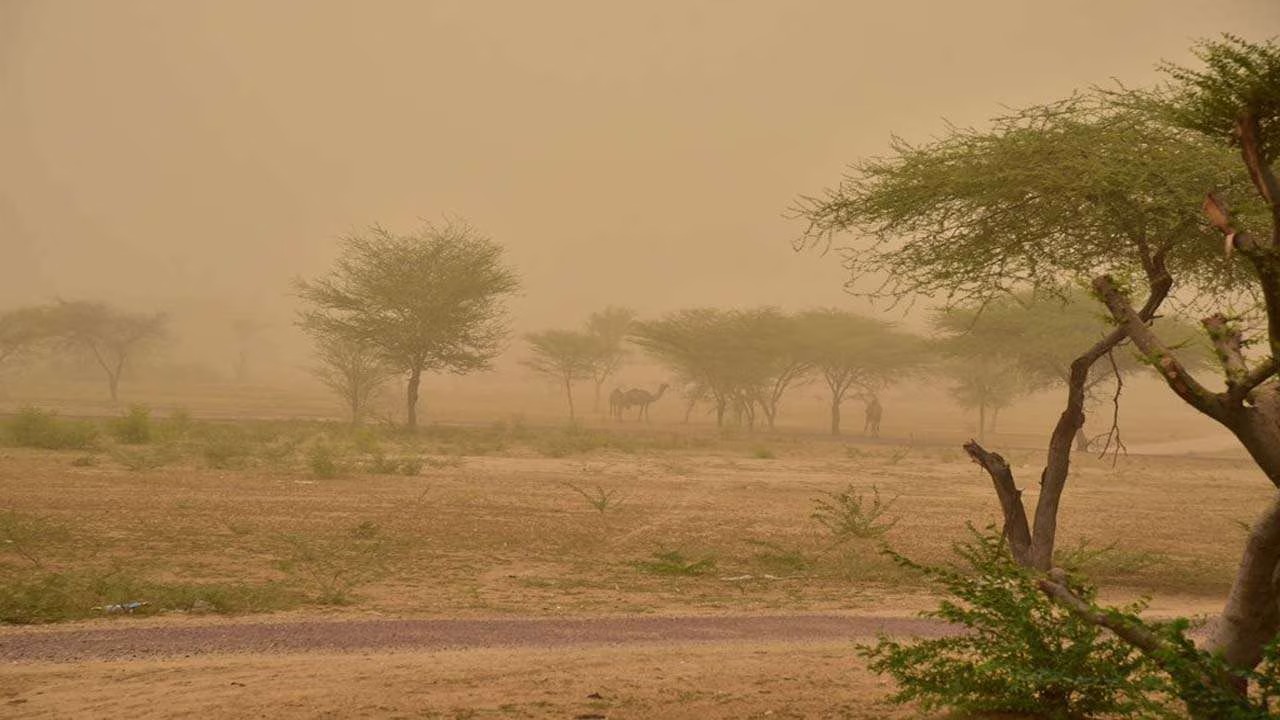
From Rajasthan’s dry fields to Delhi’s muggy heatwaves, August 2025 is proving to be anything but typical for North-West India. Despite the rest of the country receiving fairly balanced or even surplus rainfall, large parts of the north-western belt are seeing:
Patchy, delayed, or below-average monsoon activity
Frequent heatwave-like conditions
Inconsistent cloud buildup and wind patterns
So, what’s driving this dramatic shift in weather?
The Data Speaks: What IMD and Weather Models Show
Rainfall deficit: As of mid-August, Rajasthan, Haryana, Punjab, and western UP have seen 10%–35% below normal rainfall.
Temperature anomalies: Multiple days with day temperatures exceeding 42°C, even in early August.
Poor cloud formation: Weak monsoon trough movement over the Indo-Gangetic plain.
5 Reasons Behind This Monsoon Disruption
El Niño’s Lingering Effects
The El Niño phenomenon disrupted normal jet stream patterns in early 2025. Its tail effect is weakening monsoon penetration into north-west India.
Shifting Monsoon Troughs
The monsoon trough, typically anchored across Rajasthan–UP–Bihar, has hovered lower, closer to central and eastern India.
Urban Heat Island Effect
Cities like Delhi and Jaipur are experiencing intense localized heat due to concrete-heavy development, which further repels rainfall formation.
Jet Stream Anomalies
High-altitude winds have been disrupting low-pressure systems from moving westward.
Climate Change at Work
Overall, climate data suggests that North-West India is slowly transitioning toward drier monsoon spells and more extreme heat events.
Impact on Agriculture & Livelihoods
Delayed sowing of kharif crops, especially bajra, pulses, and cotton
Farmers shifting to shorter-duration crops or skipping sowing altogether
Groundwater stress increasing due to delayed rainfall recharge
Higher demand for irrigation and diesel pumps, increasing input costs
Urban Woes: Power and Water Scarcity
Delhi and NCR have faced record electricity demand spikes due to persistent heat
Water supply reduced in Jaipur, Bikaner, and Ludhiana
Rise in respiratory illnesses due to dust-laden air and stagnant humidity
What Can Be Done Now?
Accelerate cloud-seeding trials in deficit zones
Prioritize power and water supply management in vulnerable cities
Equip farmers with climate-resilient crop advisories
Plan early Rabi preparations with more accurate soil moisture and rainfall forecasts
Final Word
The monsoon of August 2025 shows us that North-West India is on the frontlines of climate volatility. As rainfall becomes less reliable and heat extremes grow sharper, both policy and personal planning must evolve. The age of predictable monsoons is fading. What replaces it must be resilience, science-backed agriculture, and smart urban management.
Published on : 2nd August
Published by : SMITA
www.vizzve.com || www.vizzveservices.com
Follow us on social media: Facebook || Linkedin || Instagram
🛡 Powered by Vizzve Financial
RBI-Registered Loan Partner | 10 Lakh+ Customers | ₹600 Cr+ Disbursed