

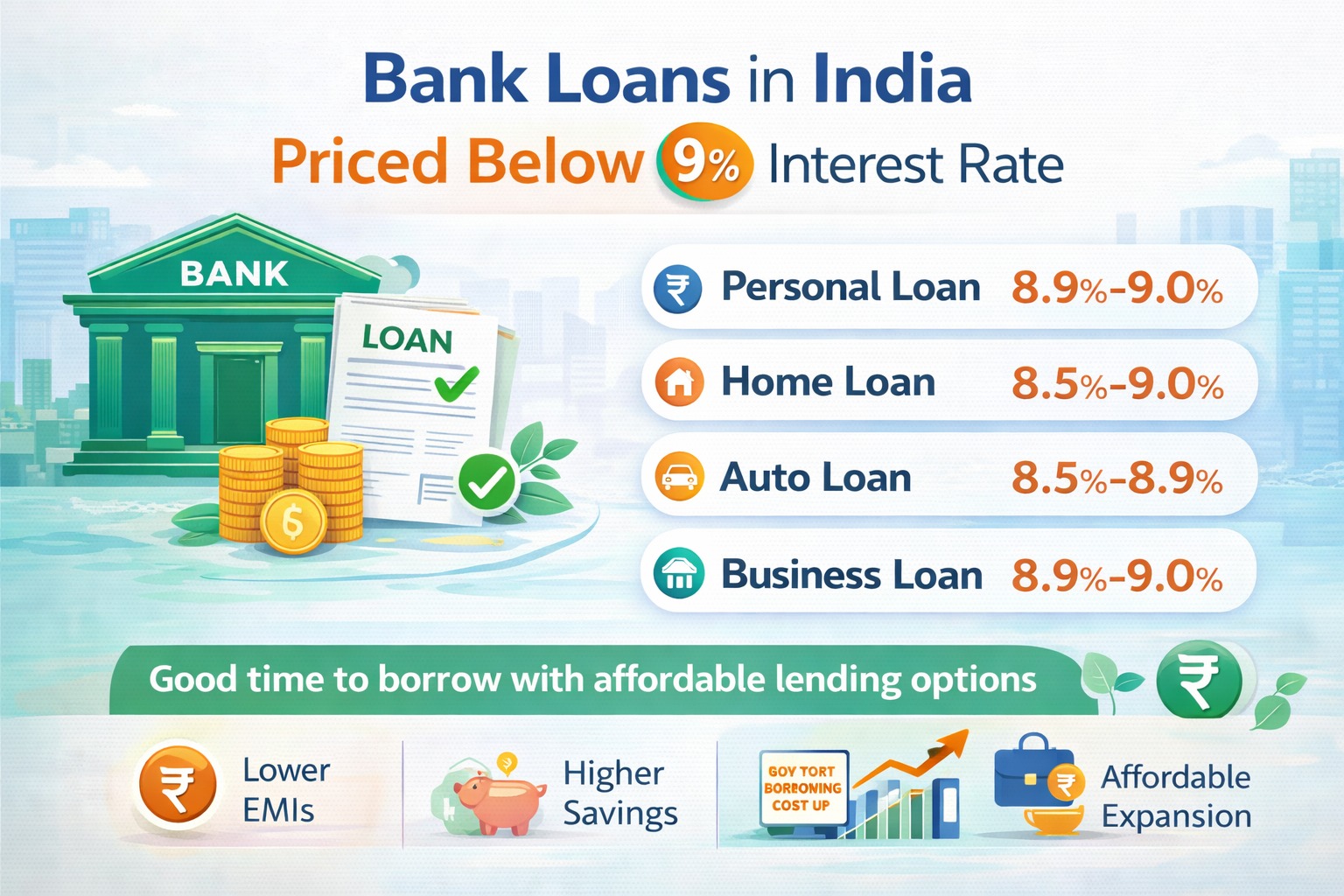
India’s lending market is witnessing an important shift as more bank loans are now priced below 9% interest. Increasing competition among banks, stable inflation levels, and improved financial conditions are driving lenders to offer cheaper borrowing options.
For borrowers, this trend means more affordable access to credit, whether for personal loans, home purchases, or business financing. Lower interest rates can significantly reduce monthly EMIs and the overall cost of borrowing.
Understanding why this trend is happening helps borrowers make smarter financial decisions.
AI Answer Box
Why are bank loans in India becoming cheaper?
Increased competition among banks
Stable inflation and economic conditions
Improved liquidity in the banking system
Growth in retail lending demand
Digital lending efficiency reducing costs
These factors are encouraging banks to offer loans at lower interest rates.
Growing Demand for Affordable Loans
Borrowing demand in India has increased significantly in recent years.
Consumers are taking loans for:
home purchases
vehicle financing
education expenses
personal financial needs
small business expansion
To attract more borrowers, banks are offering competitive interest rates.
Why More Loans Are Priced Below 9%
Several financial and economic factors are contributing to the decline in loan interest rates.
Strong Competition Among Banks
Banks are competing aggressively to expand their retail loan portfolios.
Lower interest rates attract more customers and increase lending volume.
Improved Banking Liquidity
When banks have sufficient liquidity, they can lend money at lower interest rates.
Healthy liquidity conditions allow financial institutions to offer cheaper credit.
Growth of Digital Lending
Digital lending platforms reduce operational costs.
Lower administrative expenses allow lenders to provide loans at competitive rates.
Stable Economic Conditions
Stable inflation and economic growth help maintain favorable lending conditions.
Lower inflation reduces pressure on interest rates.
Loan Interest Rate Comparison
Below is a simplified comparison of loan rates.
| Loan Type | Typical Interest Rate |
|---|---|
| Home Loan | 8% – 9% |
| Personal Loan | 9% – 14% |
| Vehicle Loan | 8.5% – 10% |
| Business Loan | 10% – 16% |
Some banks now offer select loan products below the 9% range.
Role of the Central Bank
Monetary policies and interest rate frameworks are overseen by the
Reserve Bank of India.
The central bank monitors inflation, liquidity, and economic stability to guide lending conditions across the banking sector.
These policies influence how banks price their loans.
Benefits of Lower Loan Interest Rates
Lower interest rates provide several advantages to borrowers.
Reduced Monthly EMI
Lower rates reduce the monthly repayment burden.
Lower Total Interest Cost
Borrowers pay less interest over the life of the loan.
Easier Access to Credit
Affordable loans increase financial accessibility.
Encourages Economic Growth
More borrowing can stimulate economic activity and consumption.
Risks Borrowers Should Consider
While cheap loans are beneficial, borrowers should still evaluate financial risks.
Over-Borrowing
Easy access to credit may encourage excessive borrowing.
Hidden Fees
Processing charges and service fees can increase the total cost of borrowing.
Interest Rate Changes
Some loans have variable interest rates that may increase later.
Responsible borrowing is always important.
Future Outlook for Loan Interest Rates
The trend of affordable lending is expected to continue as banks compete for customers.
Future developments may include:
increased digital lending adoption
greater competition among financial institutions
expansion of retail loan products
innovative credit assessment technologies
These trends may further improve credit accessibility.
Expert Insight
Financial analysts believe that competitive lending conditions are encouraging banks to expand credit access across India. However, borrowers should always evaluate loan affordability and repayment capacity before taking on debt.
Key Takeaways
More bank loans in India are now priced below 9%
Competition among banks is driving cheaper credit
Digital lending is reducing operational costs
Lower interest rates improve loan affordability
Responsible borrowing remains essential
FAQs
1. Why are bank loans becoming cheaper in India?
Competition among lenders and improved liquidity are reducing interest rates.
2. What loans are available below 9% interest?
Some home loans and vehicle loans may fall below 9%.
3. Do personal loans have low interest rates?
Personal loans usually have slightly higher rates due to higher risk.
4. What affects loan interest rates?
Credit score, income stability, and economic conditions.
5. Can borrowers negotiate loan rates?
Yes, strong credit profiles may qualify for lower rates.
6. Are cheap loans safe for borrowers?
Yes, when borrowed responsibly.
7. Do digital lenders offer lower rates?
Some digital platforms provide competitive rates.
8. How can borrowers reduce loan costs?
By maintaining good credit scores and comparing lenders.
9. Can interest rates change after loan approval?
Some loans have variable interest rates.
10. Will loan interest rates remain low in the future?
Rates depend on economic and monetary policy conditions.
Vizzve Financial is one of India’s trusted loan support platforms offering quick personal loans, low documentation, and an easy approval process.
Apply today at www.vizzve.com
Fast approval. Transparent process. Easy documentation.
Published on : 9th March
Published by : SMITA
www.vizzve.com || www.vizzveservices.com
Follow us on social media: Facebook || Linkedin || Instagram
🛡 Powered by Vizzve Financial
RBI-Registered Loan Partner | 10 Lakh+ Customers | ₹600 Cr+ Disbursed