

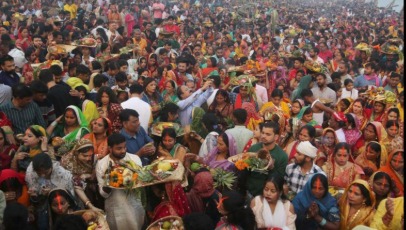
Day 4 of Chhath Puja, also known as Usha Arghya, marks the conclusion of this deeply spiritual four-day festival dedicated to Surya Dev (Sun God) and Chhathi Maiya.
It is considered the most sacred day of the puja, where devotees offer their final prayers to the rising Sun, thanking the deity for granting energy, prosperity, and wellbeing.
The 36-Hour Nirjala Fast
On this final day, devotees observe a 36-hour-long nirjala (waterless) fast, demonstrating immense devotion and discipline.
The fast begins after evening rituals on Day 3 (Sandhya Arghya) and continues until the Usha Arghya on Day 4.
During this period:
Devotees abstain from food and water completely.
They stay awake through the night, chanting devotional songs and hymns.
Families gather near water bodies such as rivers, ponds, or ghats for the final offering at sunrise.
This fast symbolizes purity, endurance, and spiritual cleansing — a way to thank nature and the Sun for sustaining life.
The Usha Arghya Ritual
The Usha Arghya, meaning morning offering, is performed at sunrise on the final day.
Devotees stand in knee-deep water facing the rising Sun and make offerings that typically include:
Sugarcane, fruits, thekua, and coconuts
Milk, turmeric, and rice placed in bamboo baskets
Lit diyas (lamps) symbolizing light and positivity
This ritual represents gratitude and renewal, as devotees pray for health, happiness, and prosperity for their families.
Spiritual Significance
Chhath Puja goes beyond religious customs — it’s a celebration of nature, gratitude, and discipline.
By worshipping both the setting and rising Sun, devotees acknowledge the cycle of life and energy balance.
The 36-hour fast and early morning prayers embody:
Self-control and inner strength
Connection between human life and natural elements
The belief that purity of intent brings divine blessings
Communities & Celebrations
The festival is celebrated with great devotion in Bihar, Jharkhand, Uttar Pradesh, and parts of Nepal, with millions of devotees gathering at riverbanks.
Even in urban areas, special arrangements are made at artificial water tanks and community ponds to accommodate worshippers.
The air is filled with folk songs, diyas, and the aroma of prasad, making Chhath one of the most serene and soulful festivals of India.
❓ FAQ
Q1: What is Usha Arghya in Chhath Puja?
Usha Arghya is the offering made to the rising Sun on the final day of Chhath Puja, marking the end of the 36-hour fast.
Q2: How long is the Chhath Puja fast?
Devotees observe a 36-hour nirjala (without water) fast starting after Sandhya Arghya on Day 3.
Q3: What items are offered during the Usha Arghya?
Offerings include fruits, thekua, sugarcane, coconuts, and milk, symbolizing purity and gratitude.
Q4: Why do devotees worship the setting and rising Sun?
It represents balance in nature and life, acknowledging both beginnings and endings as sacred.
Q5: When does Chhath Puja end?
The festival concludes after the Usha Arghya ritual on the morning of Day 4, when devotees break their fast.
Conclusion
Chhath Puja Day 4 is not just about rituals — it’s about faith, endurance, and harmony with nature.
The 36-hour nirjala fast and Usha Arghya embody the purest form of devotion, teaching the values of gratitude, discipline, and light over darkness.
As the first rays of the Sun touch the water, millions of devotees pray together — a timeless symbol of India’s spiritual unity.
Published on : 28th October
Published by : SMITA
www.vizzve.com || www.vizzveservices.com
Follow us on social media: Facebook || Linkedin || Instagram
🛡 Powered by Vizzve Financial
RBI-Registered Loan Partner | 10 Lakh+ Customers | ₹600 Cr+ Disbursed
https://play.google.com/store/apps/details?id=com.vizzve_micro_seva&pcampaignid=web_share