

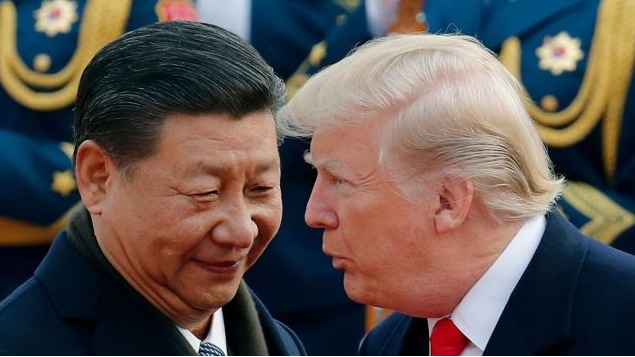
In a major escalation of the ongoing trade war between the world's two largest economies, China has slapped retaliatory tariffs of up to 245% on select U.S. imports, following what Beijing called “unjustified protectionist measures” by Washington.
The move marks one of the most aggressive trade responses by China in recent years, signaling a sharp deterioration in bilateral economic relations and setting off alarms across global markets.
What Triggered the Tariffs
The tit-for-tat response comes after the U.S. administration imposed a new round of steep duties on Chinese tech products, semiconductors, and EV components, citing national security concerns and alleged intellectual property violations.
In response, the Chinese Ministry of Commerce announced tariffs on a wide range of U.S. goods, including agricultural products, energy exports, and certain manufactured goods—some facing an unprecedented 245% duty rate. These tariffs are aimed at hitting politically and economically sensitive sectors in the U.S.
Sectors Most Affected
The 245% tariff will most notably apply to American pork, LNG (liquefied natural gas), and some high-tech equipment. Additional duties ranging from 35% to 120% are being imposed on other U.S. goods including soybeans, whiskey, automotive parts, and industrial machinery.
U.S. exporters and multinational corporations are expected to face severe disruptions, with some already reconsidering supply chains and export plans for 2025.
Global Economic Fallout
Markets reacted swiftly to the news, with major indices in Asia and Europe dipping amid investor concerns over a renewed cycle of economic retaliation. Analysts warn that the trade war may spill into global inflation pressures and further complicate already fragile supply chains.
Political and Strategic Implications
This escalation comes at a time when both nations are gearing up for key political events — the U.S. presidential election cycle and China's 20th Party leadership reforms. The hardline stance on both sides may be partially influenced by domestic political calculations, as leaders seek to project strength on the international stage.
Washington has expressed "deep disappointment" over China's latest actions and warned that further steps may be taken if Beijing doesn't reverse course. China, on the other hand, insists it is defending its economic sovereignty and responding proportionately.
What’s Next?
With negotiations currently stalled, the prospect of a quick resolution appears unlikely. Trade analysts fear a prolonged standoff could damage long-term global economic stability and erode investor confidence in international cooperation frameworks like the WTO.
For now, businesses and consumers on both sides — and beyond — may find themselves caught in the crossfire of an intensifying trade conflict.
🟢 Why Choose Vizzve Financials?
Vizzve isn’t just another financial company. It’s a community-driven platform built to simplify loans, improve financial literacy, and support your goals.
✅ Instant Loan Approvals
✅ Low Interest Rates
✅ Easy Documentation
✅ Expert Loan Advisory
✅ Loans for Salaried, Self-Employed & Businesses
Whether you’re looking to consolidate debt, grow a business, or fund personal needs—Vizzve is your trusted partner.
📌 Final Thoughts
Real stories, expert tips, and the right loan partner can help you unlock your financial potential. Let Vizzve Financials be part of your journey toward savings, stability, and success.
📲 Ready to take the next step? Visit www.vizzve.com and apply for a loan today!
US-China trade war,
245 percent tariff China,
import duties China retaliation,
economic conflict China US,
trade war news,
global trade impact,
China US relations,
export-import tensions,
China retaliatory tariffs