

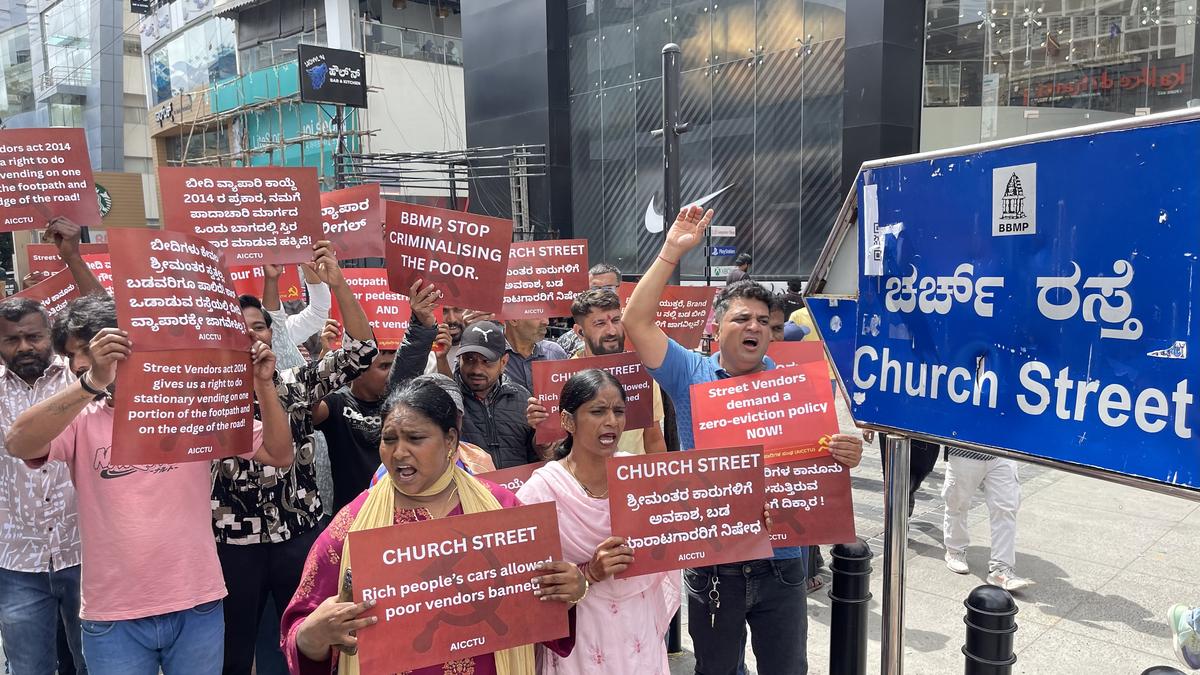
CHURCH STREET VENDORS DEMAND AN END TO HARASSMENT
Street vendors operating on Bengaluru’s popular Church Street have launched a protest demanding an immediate end to what they describe as continuous harassment by municipal authorities and police. The vendors, many of whom have operated in the area for years, claim they are being unfairly targeted and evicted without due process, disrupting their livelihoods.
According to on-ground updates from Vizzve Local News, this unrest reflects a growing tension between urban development policies and the rights of informal workers.
VENDORS CALL FOR PROTECTION UNDER STREET VENDING ACT
The protesters are invoking the Street Vendors (Protection of Livelihood and Regulation of Street Vending) Act, 2014, which guarantees vendors the right to carry out their trade without arbitrary eviction, provided they are registered and follow local regulations.
Key demands by the Church Street vendors:
Immediate halt to evictions and harassment by civic and police officials
Legal recognition and allocation of vending zones as per the 2014 Act
Inclusion in town vending committees (TVCs) for fair representation
Issuance of valid vendor IDs and licenses
Several vendors allege that despite repeated assurances, the Bruhat Bengaluru Mahanagara Palike (BBMP) and other local bodies have failed to implement the law in spirit.
THE HUMAN COST OF URBAN GENTRIFICATION
Church Street, known for its foot traffic, tourism, and upscale cafés, has seen increased pressure for "beautification" and commercial redevelopment. Vendors say this drive has led to a systematic removal of informal workers, without offering alternative locations or compensation.
Many vendors on site told Vizzve Local News:
“We are not illegal. We sell food, books, and crafts—Bengaluru thrives on our culture too. We want space, not charity.”
CIVIL RIGHTS GROUPS LEND SUPPORT
Several human rights organizations and citizen groups have joined the vendors in solidarity, arguing that urban inclusivity must include economic diversity. Legal experts also point to Supreme Court rulings upholding the rights of street vendors as legitimate stakeholders in urban economies.
They are calling for:
Transparent dialogue between BBMP, police, and vendors
Implementation of vending zones that balance commerce and culture
An end to unrecorded confiscations and informal penalties
(FAQ) – FREQUENTLY ASKED QUESTIONS
Q1: What are Church Street vendors protesting about?
They’re protesting against harassment and evictions by authorities, demanding recognition and protection under the Street Vending Act.
Q2: Are street vendors legally allowed to operate?
Yes, under the Street Vendors Act, 2014, they are allowed if registered and compliant with regulations.
Q3: Who is responsible for implementing street vending laws?
Local bodies like BBMP and Town Vending Committees are responsible for regulating and protecting vendors’ rights.
Q4: Why is there tension between vendors and authorities?
Urban beautification and redevelopment projects often push informal vendors out without proper alternatives, creating livelihood conflicts.
Q5: What do vendors want now?
Legal recognition, end to forced evictions, space to sell, and involvement in city planning processes affecting them.
Published on: July 15, 2025
Published by: PAVAN
www.vizzve.com || www.vizzveservices.com
Follow us on social media: Facebook || Linkedin || Instagram
🛡 Powered by Vizzve Financial
RBI-Registered Loan Partner | 10 Lakh+ Customers | ₹600 Cr+ Disbursed