

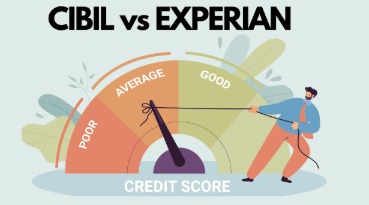
If you’ve ever applied for a loan or credit card, you’ve probably seen your CIBIL score or Experian score pop up.
Both claim to represent your creditworthiness — but which one do banks actually rely on?
The short answer: both matter — but for different reasons.
Let’s unpack what sets them apart and why understanding both scores gives you a real edge with lenders.
1️⃣ What Are Credit Bureaus and Why They Matter
Credit bureaus are RBI-licensed agencies that collect your credit data from banks, NBFCs, and other lenders.
They track your:
Loan and credit card history
EMI and payment behavior
Credit utilization and defaults
From this data, they assign a credit score (usually 300–900) that lenders use to decide your loan eligibility, interest rate, and credit limit.
India currently has four major credit bureaus:
TransUnion CIBIL
Experian
Equifax
CRIF High Mark
But CIBIL and Experian dominate the market — together handling more than 80% of credit evaluations.
2️⃣ Understanding CIBIL and Experian Scores
| Feature | CIBIL | Experian |
|---|---|---|
| Full Name | TransUnion CIBIL | Experian Credit Information Co. |
| Score Range | 300–900 | 300–900 |
| Ideal Score | 750+ | 700+ |
| Founded In India | 2000 | 2010 |
| Dominant Users | Banks & NBFCs | Fintechs & Digital Lenders |
| Calculation Basis | Payment history, credit mix, utilization | Similar factors + recent behavior weighting |
| Update Frequency | Monthly | Monthly |
Both bureaus use similar data, but their algorithms differ slightly, which is why your CIBIL and Experian scores may vary.
3️⃣ Why Do You Have Different Scores Across Bureaus?
Even though both use your credit history, they weigh factors differently:
🔹 1. Data Reporting Differences
Not all lenders report to every bureau.
Some share data only with CIBIL, others with Experian — leading to score variations.
🔹 2. Different Weightage Models
CIBIL 2.0 and Experian both consider repayment history, utilization, and credit mix, but assign different importance levels to each.
For example:
CIBIL gives more weight to past payment history.
Experian focuses more on recent credit behavior and utilization.
🔹 3. Update Timings
Even a few days’ difference in when your bank sends data to the bureaus can cause score variations.
4️⃣ Which Bureau Do Lenders Actually Use?
Here’s the truth:
Most major banks and NBFCs in India still prefer CIBIL, since it’s the oldest and most established.
Fintech platforms and new-age lenders often use Experian for its faster, tech-friendly data integration.
💬 Example:
HDFC, SBI, and ICICI → primarily check CIBIL
Fintech lenders like Paytm, KreditBee, and CASHe → often rely on Experian
✅ Bottom Line:
Neither bureau is “better” — it depends on the type of lender you’re dealing with.
5️⃣ How to Check and Maintain Both Scores
You can check your CIBIL and Experian scores for free once a year via their official websites.
(Or use licensed financial apps that show bureau-linked reports.)
To maintain a healthy score across both:
Pay all EMIs and bills on time
Keep credit utilization below 30%
Avoid multiple loan applications together
Maintain a balanced credit mix (secured + unsecured)
Check reports quarterly to catch and dispute errors early
💡 Pro Tip: If your CIBIL and Experian scores differ widely (100+ points), there’s likely a data mismatch or reporting error — get it corrected.
6️⃣ CIBIL vs Experian — Which One Matters More?
| Scenario | Preferred Score | Reason |
|---|---|---|
| Applying for home/car loan | CIBIL | Used by most traditional banks |
| Applying for fintech or digital loan | Experian | Real-time digital integration |
| Checking your overall credit health | Both | Each gives a unique risk snapshot |
| Building or repairing credit history | Experian (faster updates) | Ideal for new-to-credit users |
💬 Final Verdict:
Both bureaus matter — but CIBIL carries more weight for traditional loans, while Experian leads in the fintech space.
Smart borrowers monitor both to stay fully credit-ready.
Final Thoughts
In today’s credit-driven world, your credit score is your financial reputation.
CIBIL may open the doors to traditional banking, but Experian ensures you stay visible in the digital lending space.
The smarter choice isn’t CIBIL or Experian — it’s understanding both.
When both scores tell the same strong story, you’re in the best position to secure faster approvals, lower interest rates, and long-term financial trust.
❓ Frequently Asked Questions (FAQ)
1. Which is better — CIBIL or Experian?
Neither is “better.” CIBIL is older and preferred by banks, while Experian is newer, digital-friendly, and widely used by fintech lenders.
2. Why do my CIBIL and Experian scores differ?
They use slightly different algorithms and may receive data at different times from lenders. This causes minor variations.
3. Which score do banks use to approve loans?
Most Indian banks and NBFCs rely on CIBIL, while fintech and online lenders often prefer Experian.
4. What’s a good score in both bureaus?
CIBIL: 750+
Experian: 700+
Both indicate healthy creditworthiness.
5. Can I have a loan approved with just an Experian score?
Yes. Many digital lenders and NBFCs accept Experian reports for loan evaluation, especially for smaller ticket sizes.
Published on : 10th November
Published by : SMITA
www.vizzve.com || www.vizzveservices.com
Follow us on social media: Facebook || Linkedin || Instagram
🛡 Powered by Vizzve Financial
RBI-Registered Loan Partner | 10 Lakh+ Customers | ₹600 Cr+ Disbursed