

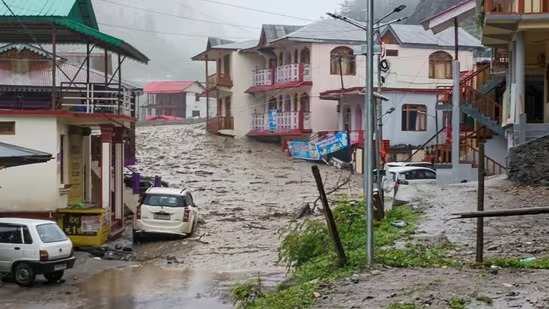
What Happened?
On August 5, 2025, parts of Uttarakhand witnessed sudden flash floods following a violent cloudburst in a remote hilly village. The natural disaster resulted in:
⛔ 4 confirmed deaths
💔 Multiple families missing
💦 Villages buried under thick layers of sludge
🚁 Rescue teams deployed for evacuation
The incident has once again raised critical questions: What is a cloudburst? Why does it happen so frequently in Uttarakhand?
☁️ What Is a Cloudburst?
A cloudburst is a sudden, very intense rainfall — usually exceeding 100mm per hour — that occurs over a small area in a short span of time. When the clouds fail to release moisture gradually, it results in a violent downpour, leading to flash floods, landslides, and widespread destruction.
🌍 Why Cloudbursts Happen in Uttarakhand
Uttarakhand, part of the fragile Himalayan ecosystem, is highly prone to cloudbursts due to:
Steep terrain that accelerates water runoff
High humidity and low-pressure systems during monsoon
Deforestation and urbanisation weakening soil structure
Climate change increasing extreme weather events
📊 Impact of Cloudbursts
| Category | Impact |
|---|---|
| 🌊 Flash Floods | Sudden, heavy water flow in valleys |
| 🏠 Property Loss | Washed-away homes and roads |
| 💔 Human Tragedy | Deaths, injuries, missing persons |
| 🌿 Ecological Loss | Forest degradation, soil erosion |
🛡️ How to Stay Safe During Cloudbursts
✅ Stay Alert to IMD and NDMA warnings
✅ Avoid rivers, bridges, and slopes during heavy rain
✅ Keep emergency kits ready with water, food, and flashlight
✅ Don’t take shelter under trees or in vehicles
✅ Relocate to higher ground immediately when warned
📚 Did You Know?
🔹 In India, cloudbursts mostly occur in Jammu & Kashmir, Himachal Pradesh, and Uttarakhand.
🔹 They are hard to forecast accurately due to their hyper-local nature.
🔹 Satellite tech and Doppler radars are being enhanced to detect such events earlier.
❓ FAQs
Q1: How is a cloudburst different from normal rainfall?
A cloudburst is extremely intense rain in a short time, while normal rain is moderate and spread over longer periods.
Q2: Can cloudbursts be predicted?
They are difficult to predict with precision but improved radar systems are helping meteorologists give timely warnings.
Q3: Is cloudburst only dangerous in mountains?
They’re especially destructive in hilly regions, but can also flood low-lying urban areas quickly.
Q4: What precautions can tourists take?
Avoid travel during red-alert days, check weather updates, and stay in higher-altitude accommodations.
Published on : 5th August
Published by : SMITA
www.vizzve.com || www.vizzveservices.com
Follow us on social media: Facebook || Linkedin || Instagram
🛡 Powered by Vizzve Financial
RBI-Registered Loan Partner | 10 Lakh+ Customers | ₹600 Cr+ Disbursed