

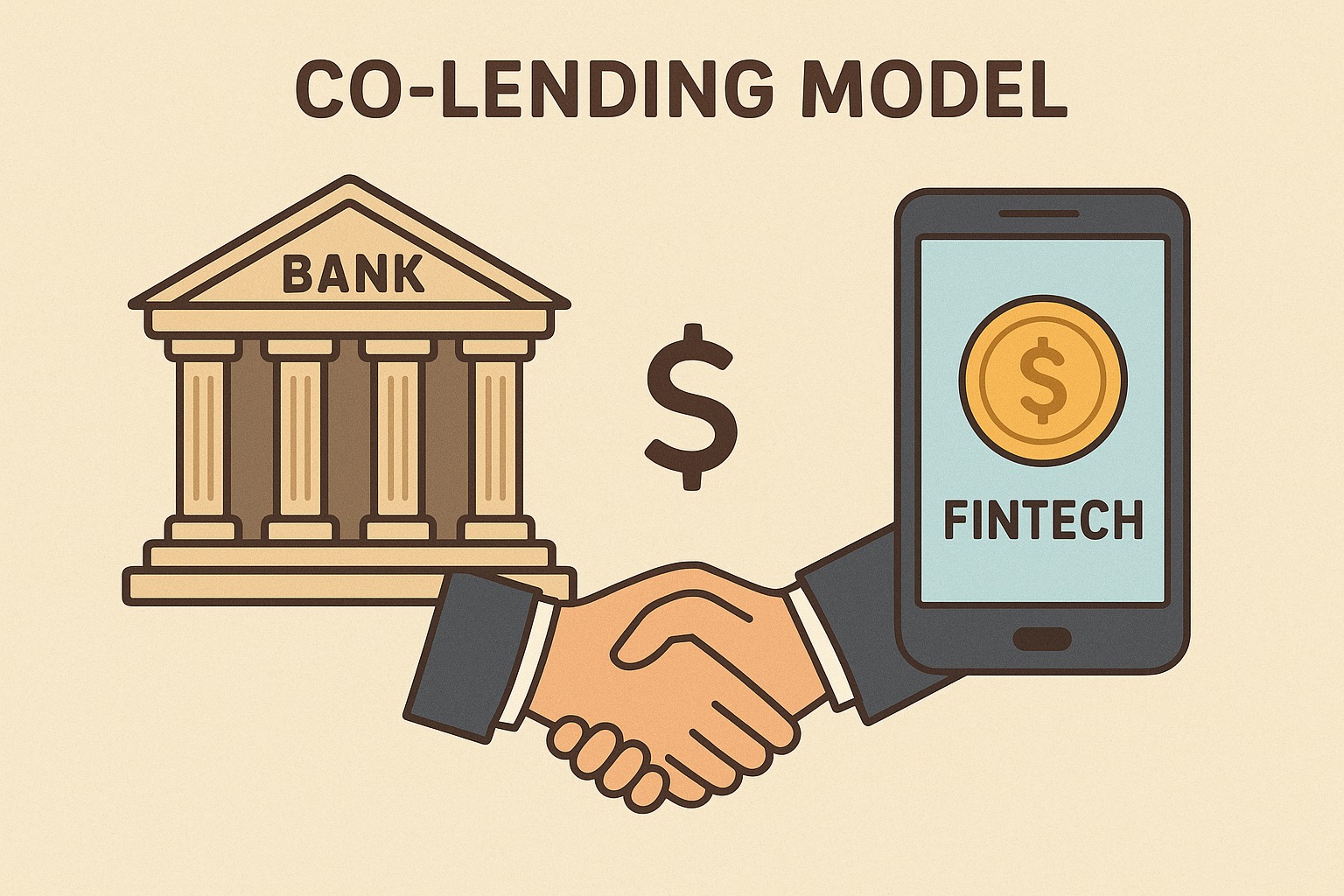
The Indian lending ecosystem is rapidly evolving, and one of the biggest innovations in recent years has been the co-lending model (CLM). Introduced by the Reserve Bank of India (RBI), this model allows banks and fintechs/NBFCs to collaborate in lending, making credit more accessible, affordable, and efficient.
With digital-first borrowers demanding speed and banks focusing on risk management, co-lending is bridging the gap. But what exactly is co-lending, and how does it make loans cheaper? Let’s break it down.
What is Co-Lending?
Co-lending is a partnership model where banks and non-banking financial companies (NBFCs) or fintechs jointly disburse loans.
Banks’ Role: Provide a large share of funding (usually 80%).
Fintechs/NBFCs’ Role: Handle borrower sourcing, underwriting, and servicing (usually 20%).
This creates a win-win situation: banks reduce risk exposure, and fintechs expand their reach by serving underbanked customers.
How Co-Lending Works – Step by Step
Loan Application: A customer applies through a fintech/NBFC platform.
Assessment: The fintech uses technology-driven credit models (AI/ML, alternative data) to assess creditworthiness.
Funding: The loan amount is co-funded—usually 80% by the bank, 20% by the fintech/NBFC.
Disbursement: Funds are directly credited to the borrower’s account.
Repayment: Borrower repays EMI, which is shared between the bank and fintech as per the agreement.
Why Co-Lending Makes Loans Cheaper
Lower Cost of Funds:
Banks have access to cheaper capital compared to NBFCs and fintechs. When combined, this lowers the overall lending cost.
Efficient Risk Sharing:
The risk is split between banks and fintechs, enabling lenders to price loans more competitively.
Wider Reach, Lower Defaults:
Fintechs use advanced algorithms to assess borrowers beyond traditional credit scores, reducing default risks.
Technology-Driven Efficiency:
Paperless processing and faster disbursals cut operational costs, savings that can be passed on to borrowers.
Benefits of Co-Lending for Borrowers
Cheaper Loan Rates: Borrowers get loans at competitive interest rates.
Faster Approvals: AI-based assessments mean quicker loan sanctioning.
Wider Access: Even borrowers with thin or no credit history can get loans.
Customized Products: Tailored loan offerings for education, business, personal, and MSME needs.
Challenges in Co-Lending
Operational Complexity: Requires seamless coordination between banks and fintechs.
Regulatory Oversight: RBI guidelines must be strictly followed.
Customer Awareness: Many borrowers still don’t understand how co-lending works.
The Future of Co-Lending in India (2025 and Beyond)
MSME Financing: Expected to be the biggest beneficiary.
Digital Lending Growth: With India’s fintech adoption, co-lending will cover more small-ticket personal loans.
Policy Push: RBI is encouraging collaborations to ensure last-mile credit delivery.
AI & Data Analytics: Smarter underwriting will make loans even cheaper and safer.
FAQs
1. What is the co-lending model in India?
The co-lending model allows banks and NBFCs/fintechs to jointly disburse loans, combining the bank’s low-cost funds with the fintech’s tech-driven credit reach.
2. Why are co-lending loans cheaper?
They are cheaper because banks’ low funding costs and fintechs’ efficient borrower sourcing reduce overall lending expenses.
3. Who benefits from co-lending?
Borrowers get affordable credit, banks expand their customer base with reduced risk, and fintechs grow their lending portfolio.
4. Can I get a personal loan under co-lending?
Yes. Co-lending covers various loans like personal loans, MSME loans, education loans, and even housing loans.
5. Is co-lending safe for borrowers?
Yes. RBI regulates the co-lending model, and funds are disbursed directly to borrowers’ bank accounts, ensuring transparency.
Published on : 25th August
Published by : SMITA
www.vizzve.com || www.vizzveservices.com
Follow us on social media: Facebook || Linkedin || Instagram
🛡 Powered by Vizzve Financial
RBI-Registered Loan Partner | 10 Lakh+ Customers | ₹600 Cr+ Disbursed
https://play.google.com/store/apps/details?id=com.vizzve_micro_seva&pcampaignid=web_share