

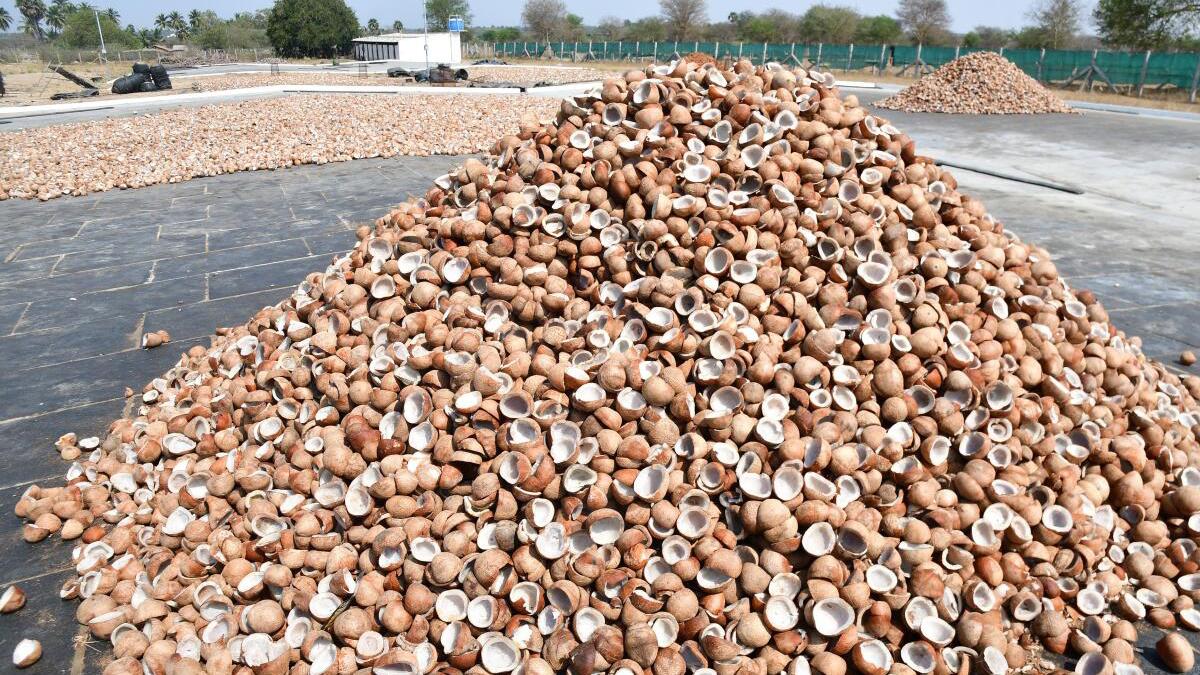
COCONUT OIL MILLS IN KANGAYAM STRUGGLE TO STEM SLIDE IN PRODUCTION
Alarming Decline in Copra Supply and Mill Operations
Kangayam, once a thriving center for coconut oil production with around 150 mills, is witnessing a severe downturn. Currently, less than 20% of mills operate and mostly below capacity due to a drastic drop in copra availability caused by low coconut yields, pest attacks, and adverse climate conditions. This has led to widespread mill closures and significant job losses for approximately 15,000 workers dependent on the sector.
Production and Market Impact
Kangayam mills traditionally produced 15-20 tonnes of coconut oil daily, with some operating round-the-clock producing up to 30 tonnes. Now, production has dwindled sharply.
The price of copra has surged over Rs 175 per kg, increasing production costs and pushing customers toward cheaper edible oil alternatives.
Adulteration in the market, with palmolein oil mixed into coconut oil up to 80%, undermines consumer trust and threatens genuine manufacturers.
Root Causes of the Crisis
Shrinking coconut cultivation and poor yields in Tamil Nadu and neighboring Kerala, aggravated by pest infestations and unfavorable weather between March and May 2024.
Competition from Kerala’s coconut oil micro-enterprises and procurement policies have also diverted raw material supplies, worsening Kangayam’s shortage.
Decline in the number of copra drying yards, dropping from around 1,400 to just 150 in recent years, compounding the scarcity of processed coconut.
Calls for Government Intervention and Support
Manufacturers urge inclusion of coconut oil in public ration shops to regulate prices and ensure pure supply.
A ban on palmolein imports is demanded to curb market adulteration and level playing fields.
Worker support and reviving copra production through agricultural assistance are stressed to sustain the industry.
Future Outlook
Without urgent policy measures, Kangayam’s coconut oil industry faces continued contraction, risking economic distress in the region. Stabilizing the supply chain and restoring consumer confidence are critical for the survival of this traditional sector.
FREQUENTLY ASKED QUESTIONS (FAQ)
Q1: Why are coconut oil mills in Kangayam struggling to operate?
A severe shortage of copra due to low coconut yields, pest infestations, and adverse climate conditions has restricted raw material availability.
Q2: How many mills are currently operational in Kangayam?
Less than 20% of the approximately 150 mills remain operational, often functioning below full capacity.
Q3: What is causing the drop in copra supply?
Reduced coconut farming, pest damage, and competition from Kerala’s procurement policies have diminished copra availability.
Q4: How has the price of copra changed recently?
Copra prices have risen to around Rs 175 or higher per kilogram, increasing production costs.
Q5: What impact does this crisis have on workers?
Around 15,000 workers employed in coconut oil mills have lost jobs due to closures and reduced operations.
Q6: Is adulteration an issue in the coconut oil market?
Yes, palmolein oil adulteration up to 80% in coconut oil is widespread, affecting product quality and consumer trust.
Published on: August 9, 2025
Published by: PAVAN
www.vizzve.com || www.vizzveservices.com
Follow us on social media: Facebook || Linkedin || Instagram
🛡 Powered by Vizzve Financial
RBI-Registered Loan Partner | 10 Lakh+ Customers | ₹600 Cr+ Disbursed