

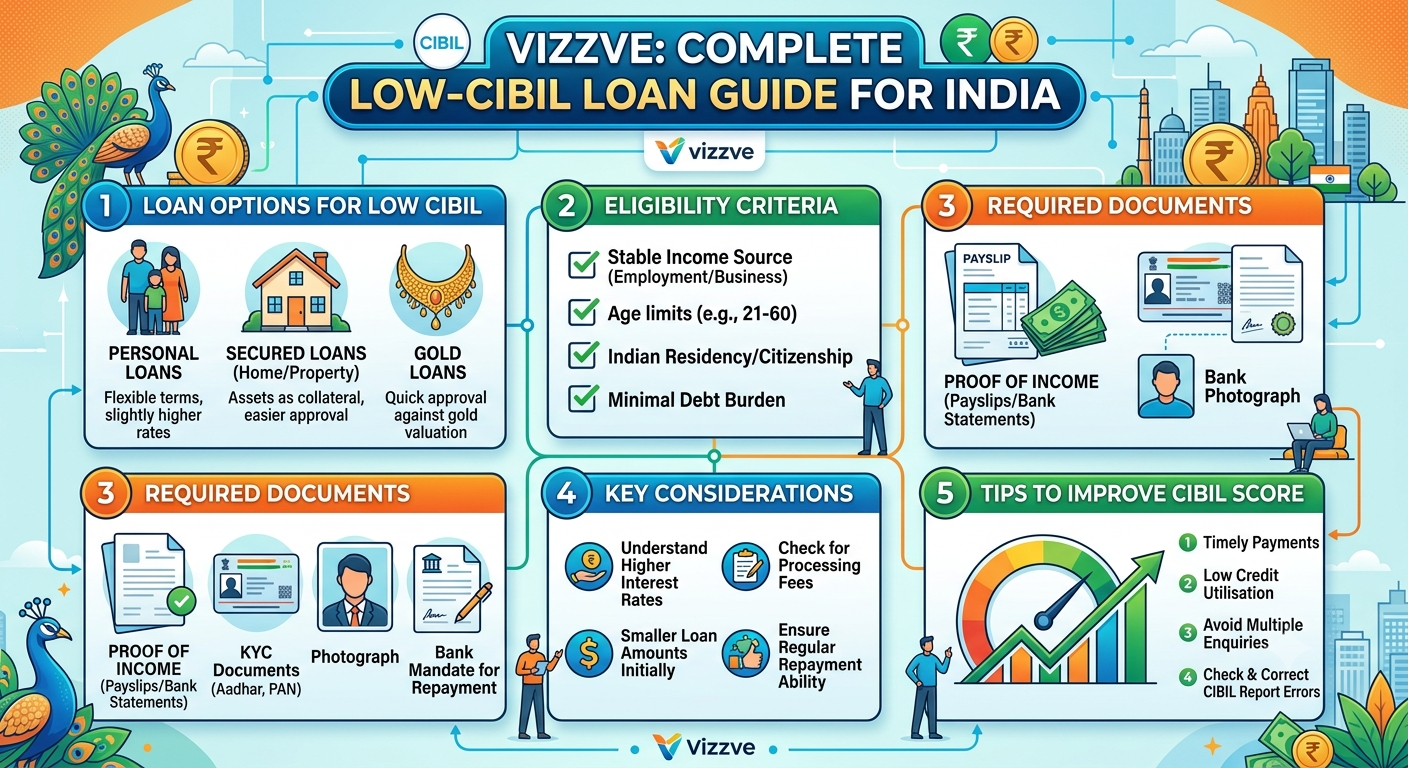
A low CIBIL score can make it challenging to get a loan in India. Whether you need money for a medical emergency, education, home repairs, or personal expenses, lenders may carefully review your credit history before approving your application. However, a low credit score does not automatically mean that every loan application will be rejected.
Understanding your credit profile, repayment capacity, and available borrowing options can help you make informed financial decisions. Instead of applying for multiple loans at once, it is important to identify the reasons behind your low score and explore suitable options based on your financial situation.
This complete low-CIBIL loan guide explains what a low CIBIL score means, how it affects loan eligibility, which borrowing options you can explore, and how to improve your credit profile over time.
What Is a Low CIBIL Score?
A CIBIL score is a three-digit number that represents your credit history and repayment behaviour. In India, the TransUnion CIBIL score generally ranges from 300 to 900.
A higher score usually indicates a stronger credit history, while a lower score may suggest past repayment difficulties or limited credit management experience.
Although lenders have their own eligibility requirements, the following ranges can help you understand your credit profile.
| CIBIL Score Range | General Interpretation |
|---|---|
| 750–900 | Strong credit profile |
| 700–749 | Generally favourable credit profile |
| 650–699 | May require closer evaluation |
| 550–649 | May indicate higher lending risk |
| Below 550 | May make borrowing more difficult |
These ranges are indicative, not universal lending rules. Each lender may use different score thresholds, and some may consider applicants based on other factors.
Can You Get a Loan with a Low CIBIL Score?
Yes, getting a loan with a low CIBIL score may be possible, depending on the lender, loan type, income, existing debt, and repayment capacity. However, approval is not guaranteed.
Some lenders may reject applications with a low credit score, while others may consider additional factors before making a decision.
Your chances may depend on:
-
Income stability: Regular income can help demonstrate your ability to repay.
-
Existing EMIs: Lower monthly debt obligations may improve repayment capacity.
-
Employment or business stability: Consistent earnings can support your application.
-
Loan amount: Requesting an amount that fits your budget may be more practical.
-
Collateral: Some secured loans may be available depending on the asset and lender's requirements.
-
Credit history: Recent payment behaviour and the reasons behind your low score may influence the decision.
Before applying, check your credit report and determine whether the issue is caused by missed payments, high credit utilisation, incorrect reporting, or a limited credit history.
Types of Loans You Can Explore with a Low CIBIL Score
If your credit score is low, consider the following options carefully. Availability and eligibility vary by financial institution.
1. Secured Loans
A secured loan is backed by an asset or security accepted by the lender. Because the lender has security against the loan, the eligibility assessment may differ from that of an unsecured loan.
Examples include certain loans against property, fixed deposits, or other eligible assets.
Before choosing this option, review the interest rate, fees, repayment schedule, and consequences of default. If you cannot repay, the lender may enforce its rights over the pledged asset according to the loan agreement and applicable law.
2. Gold Loans
A gold loan allows eligible borrowers to pledge qualifying gold jewellery or other accepted gold assets as security.
Depending on the lender's policies, a gold loan may be considered even when the borrower's unsecured credit profile is weak. However, approval, valuation, loan amount, and pricing depend on the lender's assessment.
Before taking a gold loan, compare:
-
Interest rates and processing fees.
-
Repayment methods and due dates.
-
Loan-to-value limits.
-
Applicable penalties and other charges.
-
Conditions under which pledged gold may be auctioned after default.
Borrow only an amount you can repay comfortably, as your pledged gold may be at risk if you fail to meet the loan terms.
3. Loan Against Fixed Deposit
Some banks and financial institutions offer loans or overdraft facilities against eligible fixed deposits held with them.
Because the deposit provides security, the assessment may differ from an unsecured personal loan application. Eligibility depends on the deposit, the institution's policies, and the applicable terms.
Compare the borrowing cost with the interest earned on your deposit and understand the restrictions that may apply while the facility remains outstanding.
4. Loans from Banks and NBFCs
Banks and Non-Banking Financial Companies (NBFCs) may have different eligibility criteria for personal loans and other credit products.
A low CIBIL score can reduce your chances of approval, increase the cost of borrowing, or lead to a lower eligible loan amount. Some lenders may consider other factors, including verified income, employment stability, existing obligations, and repayment history.
Before applying, check the lender's official eligibility criteria and verify that the lender is appropriately regulated. Avoid anyone promising guaranteed approval regardless of your credit history.
5. Loans with a Co-Applicant or Guarantor
Depending on the loan product, a lender may permit a co-applicant or guarantor to support an application.
A co-applicant's income and credit history may be considered in the assessment. A guarantor may also become responsible for repayment under the applicable agreement.
Both arrangements carry financial risks. A co-applicant or guarantor should understand the obligations involved and should never be added merely to bypass eligibility checks.
Documents Required for a Low-CIBIL Loan
Although requirements differ across lenders, applicants are commonly asked to provide some of the following documents:
-
Identity proof: PAN, Aadhaar, passport, or another accepted document.
-
Address proof: An accepted document confirming your current address.
-
Income proof: Salary slips, income tax returns, or business income records.
-
Bank statements: Statements for the period specified by the lender.
-
Employment or business details: Information supporting your income and work status.
-
Existing loan details: Information about outstanding balances and monthly EMIs.
-
Collateral documents: Required where the loan is secured against an asset.
Provide accurate information and submit documents only through verified lender channels.
How to Improve Your CIBIL Score Before Applying
Improving your credit profile can help strengthen future loan applications. The time required depends on the reason for your low score and your subsequent repayment behaviour.
1. Pay EMIs and Credit Card Bills on Time
Payment history is an important component of your credit profile. Pay all dues by their deadlines and use reminders or automatic payments to reduce the risk of missed payments.
If you are already struggling to repay a loan, contact your lender to discuss the available options rather than ignoring overdue amounts.
2. Reduce Credit Card Outstanding Balances
High credit utilisation can negatively affect your credit profile. Try to reduce outstanding balances as your budget allows and avoid unnecessary credit card spending.
Paying the full statement balance by the due date, whenever possible, can also help you avoid revolving interest charges.
3. Avoid Multiple Loan Applications
Submitting several applications within a short period can result in multiple hard enquiries on your credit report. Frequent applications may also make lenders question your immediate borrowing needs.
Compare eligibility criteria, fees, interest rates, and repayment terms before submitting an application.
4. Check Your Credit Report for Errors
Incorrect overdue amounts, unfamiliar accounts, duplicate entries, or inaccurately reported loan closures can affect your credit profile.
Review your report and raise a dispute with the credit bureau and the relevant lender if you identify incorrect information. Accurate negative records generally cannot be removed simply because you request it.
5. Maintain a Healthy Debt-to-Income Ratio
Your debt-to-income ratio compares your monthly debt obligations with your income.
For example, if you earn ₹50,000 per month and pay ₹15,000 in existing EMIs, your EMI-to-income ratio is 30%.
Keeping your debt manageable may improve your ability to handle additional repayments. The acceptable ratio varies by lender and loan type.
6. Build a Consistent Credit History
If your low score is partly due to a limited credit history, responsible use of an appropriate credit product may help establish repayment records over time.
Do not take on unnecessary debt just to increase your score. Borrow only when you need credit and can afford the repayments.
Common Mistakes to Avoid When Applying for a Low-CIBIL Loan
Borrowers with low credit scores may be more vulnerable to costly or unsuitable loan offers. Avoid these common mistakes:
-
Applying to numerous lenders without checking eligibility.
-
Accepting a loan without comparing the annualised borrowing cost and fees.
-
Paying advance fees to agents who promise guaranteed approval.
-
Sharing OTPs, PINs, or banking passwords with unverified individuals.
-
Borrowing more than you can afford to repay.
-
Ignoring repayment terms, late fees, or collateral risks.
-
Choosing unverified loan applications or lenders.
A legitimate lender should clearly explain the loan amount, interest rate, charges, repayment schedule, and applicable terms before you accept the offer.
How to Choose the Right Loan When Your CIBIL Score Is Low
Before choosing a loan, compare options based on your actual financial needs rather than approval promises.
Consider the following factors:
| Factor | What to Check |
|---|---|
| Interest rate | Understand whether the rate is fixed or variable. |
| Total borrowing cost | Include processing fees and other applicable charges. |
| EMI affordability | Ensure repayments fit your monthly budget. |
| Loan tenure | Compare the EMI with the total interest payable. |
| Lender credibility | Verify the lender and its official application channels. |
| Repayment flexibility | Review prepayment terms and penalties, if applicable. |
| Security requirements | Understand the risks of pledging an asset. |
A loan with a lower monthly EMI may have a longer tenure and a higher total interest cost. Always compare the complete repayment obligation before making a decision.
Conclusion
A low CIBIL score can make borrowing more challenging, but it does not necessarily eliminate every available option. Depending on your circumstances, you may be able to explore secured loans, gold loans, loans against eligible fixed deposits, or lenders that assess income and repayment capacity alongside credit history.
The most important step is to understand why your credit score is low and choose a borrowing option that matches your financial situation. Review your credit report, pay existing dues on time, reduce outstanding balances, and avoid unnecessary loan applications.
Published on : 20th October 2026
Published by : yogendra
www.vizzve.com || www.vizzveservices.com
Follow us on social media: Facebook || Linkedin || Instagram
🛡 Powered by Vizzve Financial
RBI-Registered Loan Partner | 10 Lakh+ Customers | ₹600 Cr+ Disbursed