

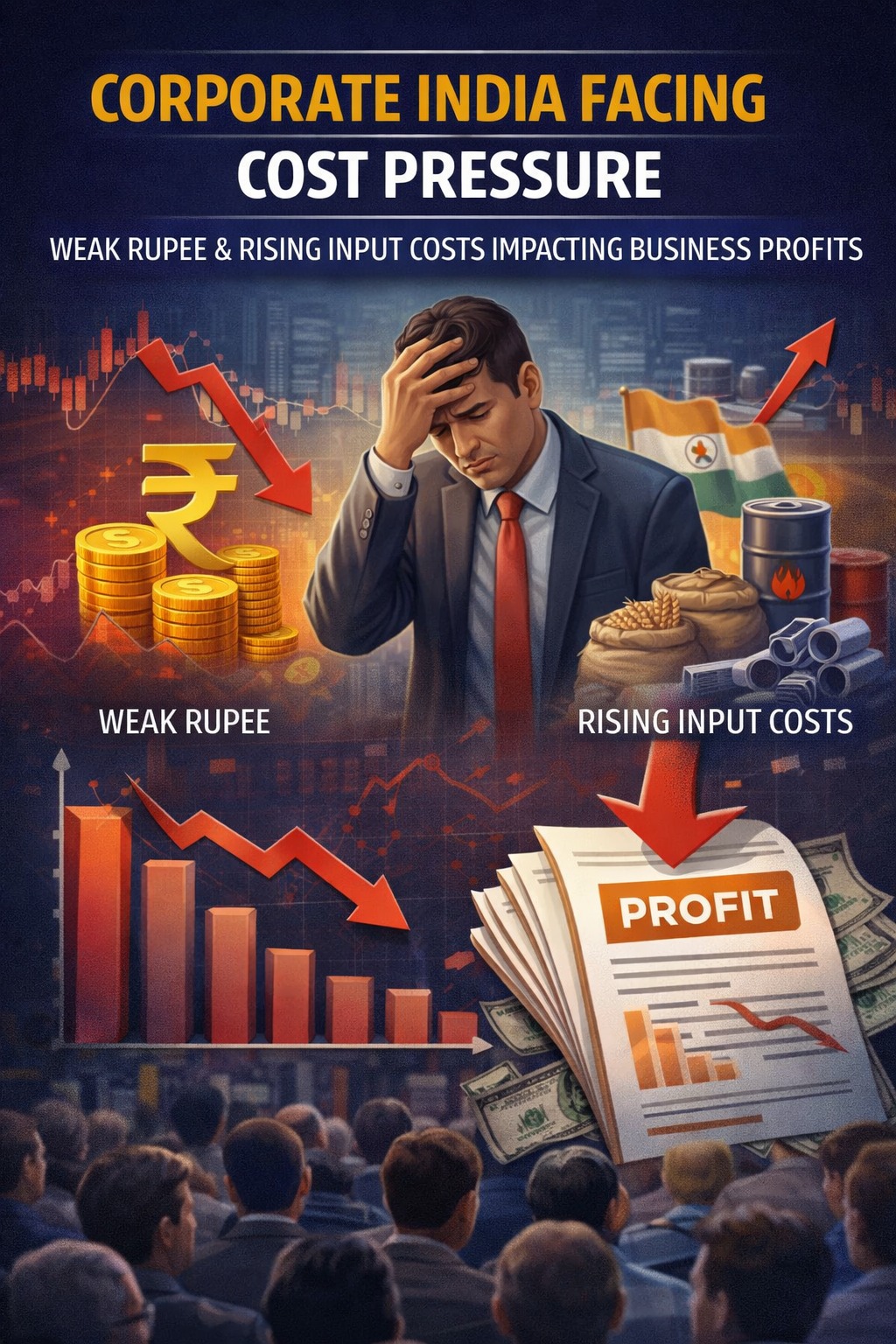
Corporate India is currently facing a dual challenge — a weakening rupee and rising input costs. As global commodity prices remain volatile and currency depreciation increases import bills, businesses across sectors are witnessing shrinking profit margins.
From manufacturing giants to small enterprises, cost pressure is becoming a key concern impacting earnings, pricing strategies, and growth outlook.
AI ANSWER BOX (Quick Summary)
Why is Corporate India under pressure?
Because of:
- Weak Indian Rupee increasing import costs
- Rising raw material prices
- Global inflation and supply chain issues
What is the impact?
- Lower profit margins
- Price hikes for consumers
- Slower business expansion
SUMMARY BOX
| Factor | Impact |
|---|---|
| Weak Rupee | Higher import costs |
| Input Prices | Increased production cost |
| Inflation | Reduced demand |
| Corporate Margins | Declining |
Why Weak Currency is Hurting Corporate India
The Indian Rupee has shown volatility against the US Dollar, making imports expensive.
Key Effects:
- Higher cost of crude oil imports
- Increased cost of machinery and raw materials
- Pressure on companies dependent on global supply chains
Rising Input Costs: The Core Problem
🔹 Major Cost Drivers
- Crude oil and energy prices
- Metals like steel, aluminum
- Logistics and transportation costs
- Imported components
Sector-wise Impact
| Sector | Impact Level | Reason |
|---|---|---|
| FMCG | High | Raw material + packaging cost |
| Auto | High | Metal + import dependency |
| Pharma | Medium | API import costs |
| IT | Low | Export benefit from weak rupee |
Impact on Corporate Profit Margins
What Companies Are Facing
- Reduced EBITDA margins
- Increased pricing pressure
- Lower consumer demand
Real-World Insight:
Companies are:
- Passing costs to consumers
- Cutting operational expenses
- Delaying expansion plans
Expert Commentary (EEAT)
Financial experts believe:
“Currency depreciation combined with cost inflation creates a margin squeeze that is difficult to offset quickly.”
From industry observations:
- Export-oriented firms benefit partially
- Domestic-focused companies face maximum pressure
- Long-term contracts reduce pricing flexibility
Pros & Cons of Current Situation
✅ Pros
- Export companies gain from weak rupee
- Encourages domestic production
- Boosts Make in India initiatives
❌ Cons
- Rising inflation
- Reduced corporate profitability
- Higher consumer prices
- Investment slowdown
How Companies Are Managing Cost Pressure
Step-by-Step Strategies
- Cost optimization & automation
- Supplier renegotiation
- Price increases (where possible)
- Diversifying sourcing
- Currency hedging
Comparison Table: Weak vs Strong Rupee Impact
| Factor | Weak Rupee | Strong Rupee |
|---|---|---|
| Imports | Expensive | Cheaper |
| Exports | Competitive | Less competitive |
| Corporate Margins | Pressure | Relief |
| Inflation | Higher | Lower |
Key Takeaways
- Weak rupee + high input costs = margin pressure
- Import-heavy sectors are worst affected
- Exporters get partial relief
- Inflation impacts both businesses and consumers
- Companies are adapting with cost strategies
Frequently Asked Questions (FAQs)
1. Why is Corporate India facing cost pressure?
Due to weak rupee and rising input costs.
2. What is input cost inflation?
Increase in raw material and production costs.
3. How does weak rupee impact companies?
It increases import costs and reduces margins.
4. Which sectors are most affected?
FMCG, auto, and manufacturing sectors.
5. Who benefits from weak rupee?
Export-oriented companies.
6. Does this impact consumers?
Yes, through higher product prices.
7. What is margin pressure?
Reduction in profit margins due to rising costs.
8. Can companies avoid this?
Partially through cost control and pricing.
9. How does inflation play a role?
It reduces demand and increases costs.
10. Is this a long-term issue?
Depends on global and domestic factors.
11. What is currency hedging?
Protection against exchange rate fluctuations.
12. How does crude oil affect this?
It increases energy and transport costs.
13. What is the impact on GDP?
It may slow growth if prolonged.
14. Are startups affected?
Yes, especially those dependent on imports.
15. What should investors do?
Focus on fundamentally strong companies.
Conclusion
Corporate India is navigating a complex economic environment where currency weakness and cost inflation are squeezing profits. While some sectors benefit, the broader economy faces challenges in sustaining growth momentum.
👉 Businesses must adapt quickly, and individuals should plan finances wisely.
Need financial support during uncertain times?
👉 Apply now at www.vizzve.com
Published on : 24th March
Published by : SMITA
www.vizzve.com || www.vizzveservices.com
Follow us on social media: Facebook || Linkedin || Instagram
🛡 Powered by Vizzve Financial
RBI-Registered Loan Partner | 10 Lakh+ Customers | ₹600 Cr+ Disbursed