

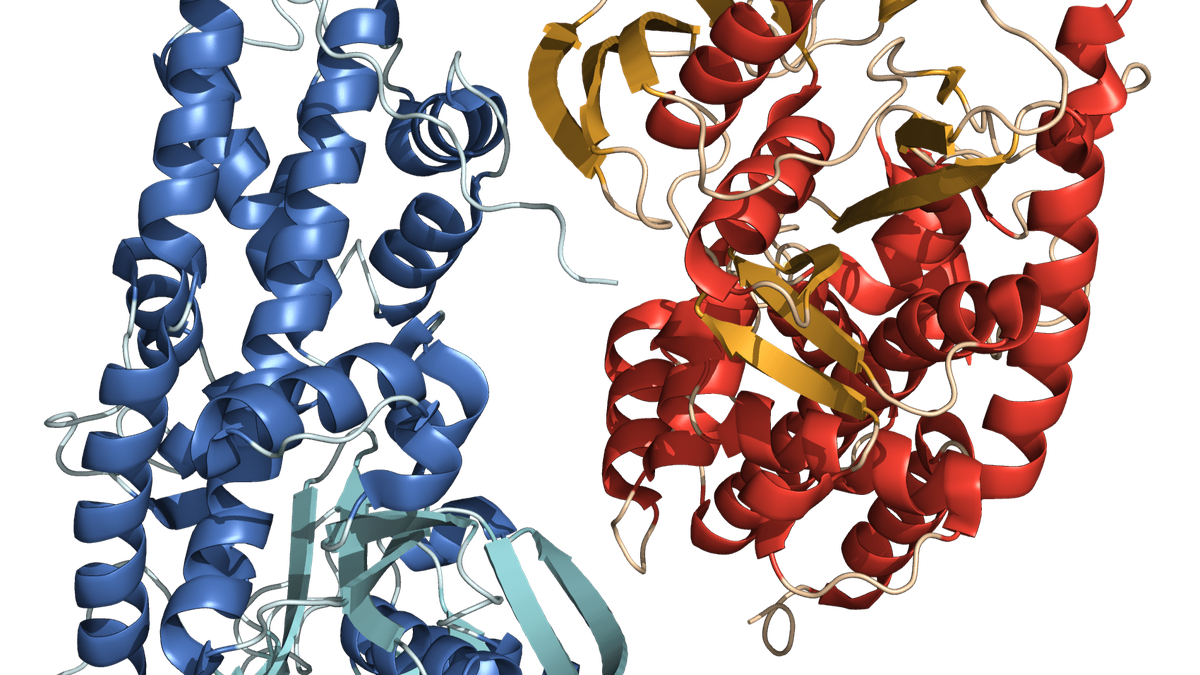
CRACKING THE MYSTERY OF HOW PROTEINS FIND THEIR SHAPES
Proteins perform countless essential biological functions, and their ability to do so depends critically on their precise three-dimensional shapes. Understanding how proteins fold and determining their structures has been a central challenge in molecular biology and biochemistry.
Why Protein Structure Matters
The function of a protein—from catalyzing reactions to signaling and structural support—is intricately linked to its shape. Proteins fold into specific conformations based on their amino acid sequences, but the complexity of this folding process makes experimental determination vital for understanding biology at a molecular level.
Primary Methods to Determine Protein Structures
1. X-ray Crystallography
The most widely used method for protein structure determination.
Requires purification and crystallization of the protein.
X-rays are directed at protein crystals, which diffract the rays to produce patterns that scientists analyze to reconstruct the 3D atomic structure.
Offers high-resolution structures but can be challenging due to the difficulty of obtaining good quality crystals and inability to visualize highly flexible regions.
2. Nuclear Magnetic Resonance (NMR) Spectroscopy
Suitable for smaller proteins in solution, providing detailed information about structure and dynamics.
Uses magnetic fields and radio waves to probe atomic nuclei, enabling distance measurements between atoms to build the 3D model.
Does not require crystallization but is limited by protein size and complexity.
3. Cryo-Electron Microscopy (Cryo-EM)
A rapidly advancing technique that images frozen protein samples at near-atomic resolution without the need for crystallization.
Particularly useful for large complexes and flexible proteins.
Involves imaging thousands of copies and computationally reconstructing the 3D structure.
Other Complementary Techniques
Computational methods such as Rosetta and AI-driven models (e.g., AlphaFold) predict protein folding using known structures and amino acid sequences.
Mass spectrometry and cross-linking techniques aid in studying protein interactions and quaternary structures.
Significance and Challenges
Determining protein structures enables drug design, understanding disease mechanisms, and biotechnological innovations. Despite progress, challenges include studying dynamic conformations and large protein complexes.
FREQUENTLY ASKED QUESTIONS (FAQ)
Q1: Why is protein structure important?
Protein function depends on its 3D shape, so understanding structure reveals how proteins perform biological roles.
Q2: What is X-ray crystallography?
A method where protein crystals diffract X-rays to produce patterns used to model the atomic structure of the protein.
Q3: What proteins are best suited for NMR spectroscopy?
Mostly small to medium-sized proteins typically less than 100 amino acids, studied in solution.
Q4: How does cryo-electron microscopy work?
It images rapidly frozen proteins at low temperatures to reconstruct detailed structures without crystallization.
Q5: What are the limitations of these structural methods?
X-ray crystallography requires crystals and struggles with flexible regions; NMR has size limits; Cryo-EM requires large complexes and advanced computational reconstruction.
Q6: Can protein structures be predicted computationally?
Yes, computational tools like Rosetta and AI models predict folding based on sequence and templates with growing accuracy.
Published on : August 10th
Published by : selvi
www.vizzve.com || www.vizzveservices.com
Follow us on social media: Facebook || Linkedin || Instagram
🛡 Powered by Vizzve Financial
RBI-Registered Loan Partner | 10 Lakh+ Customers | ₹600 Cr+ Disbursed