

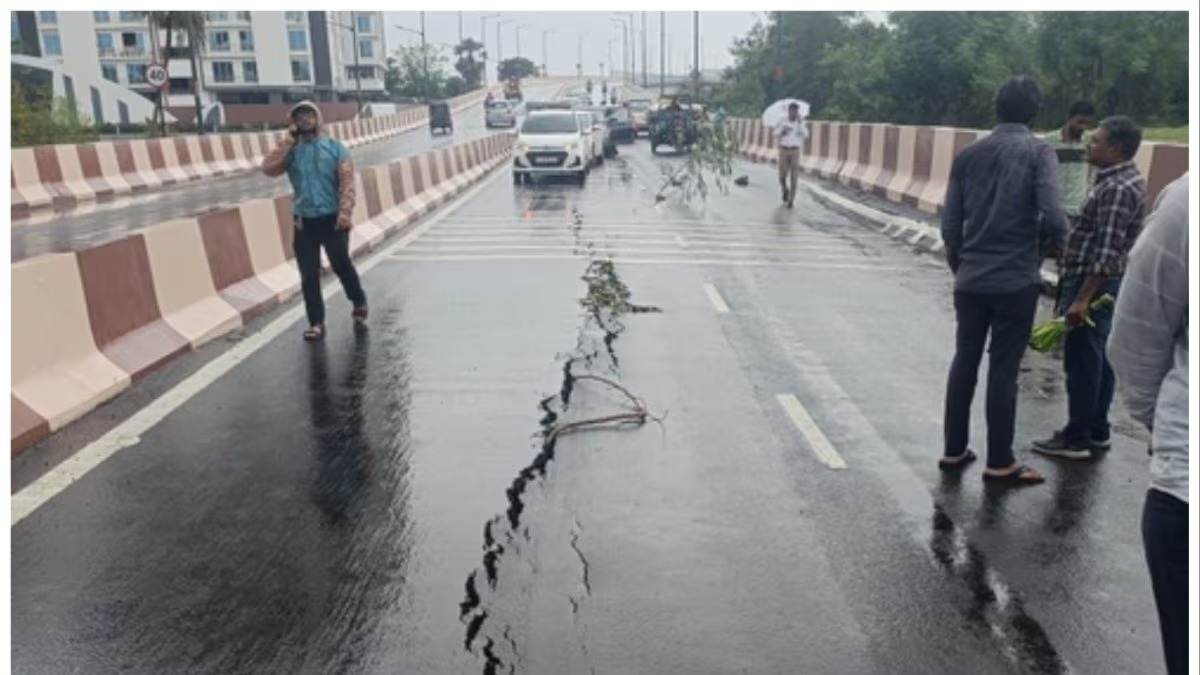
Just two months after its grand opening, the newly built Rs 422-crore Atal Path Flyover in Patna is facing major scrutiny after cracks and potholes appeared on its surface following the recent heavy rains. Meant to be a symbol of Bihar’s infrastructural progress, the flyover has now sparked debate over construction quality, accountability, and the systemic flaws in India’s urban project execution.
🛣️ What Is the Atal Path Flyover?
Inaugurated in June 2025, the Atal Path Flyover is one of Patna’s most ambitious infrastructure projects. Built at a cost of ₹422 crore, it was envisioned to ease traffic congestion between Boring Road, Rajapur Pul, and Bailey Road — three of the city’s busiest arteries.
Designed as a 2.2 km six-lane elevated corridor, the flyover was expected to reduce travel time drastically, cut vehicular emissions, and modernize Patna's traffic flow.
🌧️ The Problem: Cracks and Potholes Already?
After just two months of use, several cracks and potholes have appeared on key sections of the flyover, especially around joint panels and drainage outlets. What’s more concerning is that these issues became visible immediately after the first spell of heavy monsoon rain in late July.
Local commuters have expressed frustration and fear, citing increased risks of accidents. Engineers on the scene have also raised concerns about substandard materials and poor waterproofing techniques used during construction.
What Could Have Gone Wrong?
1. Poor Drainage Design
A well-built flyover should have effective systems to redirect water. Reports suggest that the Atal Path Flyover lacks adequate slope and outflow channels, leading to water accumulation and surface erosion.
2. Subpar Construction Materials
Experts suspect the use of low-grade concrete and asphalt, which may not be suitable for heavy monsoon conditions. This accelerates surface wear and structural stress.
3. Rushed Project Timeline
As with many public works, the flyover was allegedly fast-tracked for political mileage — possibly at the cost of proper curing, quality testing, and phased inspection.
4. Lack of Third-Party Auditing
There is growing criticism about the lack of independent structural audits and post-construction stress testing, especially for a project of this magnitude.
🚨 Accountability & Government Response
The Bihar Road Construction Department has ordered a technical review and summoned the private contractors involved for explanations. While patchwork repairs are already underway, civic activists argue that band-aid solutions won't suffice unless deeper accountability is enforced.
Some local leaders are also calling for an investigation into financial irregularities and blacklisting of firms that fail quality compliance.
🧱 Lessons for Urban Infrastructure
This incident reflects a broader issue affecting Indian cities:
Quality control in government projects remains questionable
Political pressure often trumps engineering safety
Transparency in tendering and execution is lacking
Maintenance planning post-construction is rarely prioritized
It is crucial for both State and Central governments to enforce stricter norms for infrastructure durability, especially in states like Bihar where flooding and heavy rain are recurring phenomena.
🧭 What Needs to Change?
Mandatory third-party audits before and after opening public structures
Real-time quality monitoring during construction using smart tech
Public disclosure of structural safety reports
Incentives for sustainable and weather-resilient design practices
🔚 Final Thoughts
A ₹422 crore flyover developing cracks in just 60 days should not be treated as a minor issue. It is not just about road safety — it is about public trust, responsible governance, and financial ethics. With India aiming to become a global leader in infrastructure and urban development, such failures could damage not just physical roads — but the road to credibility.
Published on :4th August
Published by : SMITA
www.vizzve.com || www.vizzveservices.com
Follow us on social media: Facebook || Linkedin || Instagram
🛡 Powered by Vizzve Financial
RBI-Registered Loan Partner | 10 Lakh+ Customers | ₹600 Cr+ Disbursed