

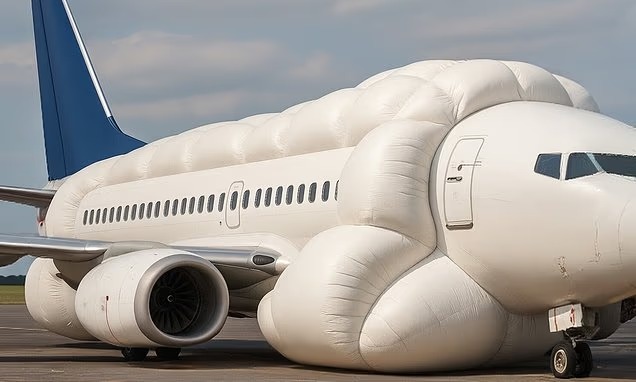
Following the tragic Air India accident, engineers and aviation experts have developed an AI-powered airbag system aimed at enhancing passenger safety during crashes or emergency landings. Dubbed the “crash-proof” plane innovation, this system combines artificial intelligence, advanced sensors, and rapid-deployment airbags to minimize injuries during impact.
The move represents a significant technological advancement in aviation safety, focusing on reducing casualties and enhancing passenger protection.
How the AI Airbag System Works
AI-Powered Impact Detection
Sensors monitor aircraft speed, altitude, and trajectory in real-time.
AI algorithms predict potential crash or hard landing scenarios.
Rapid Airbag Deployment
Seat-mounted airbags inflate instantly to protect passengers’ heads, necks, and torsos.
System is designed to operate milliseconds before impact.
Integration with Aircraft Systems
Works alongside emergency alert systems, seatbelt sensors, and cabin safety protocols.
Compatible with commercial airplanes, including wide-body aircraft.
Potential Benefits
Enhanced Passenger Safety: Reduces risk of injury during accidents.
AI-Powered Prediction: Anticipates crash scenarios for timely airbag deployment.
Adaptable Technology: Can be integrated into existing aircraft fleets.
Industry Innovation: Marks a major step in aviation safety technology post-tragedy.
Challenges & Considerations
Regulatory Approval: Aviation authorities need to certify the system for commercial use.
Cost & Installation: Retrofitting existing aircraft may be expensive.
Technology Testing: Requires extensive simulations and real-world crash testing.
Passenger Awareness: Proper briefing on airbag use and safety protocols is essential.
FAQs
1. What is the AI airbag system for planes?
It is an advanced safety system using AI and sensors to deploy airbags during potential crashes or emergency landings.
2. Why was this system developed?
The system was developed following the Air India tragedy to enhance passenger safety and reduce injuries in aviation accidents.
3. How quickly do the airbags deploy?
Airbags inflate milliseconds before impact, guided by AI predictions of crash scenarios.
4. Can this system be installed in all airplanes?
It is primarily designed for commercial aircraft, though retrofitting may be required for older fleets.
5. Is the system commercially available yet?
The system is currently under testing and certification, with future plans for integration into passenger aircraft.
Published on : 13th September
Published by : SMITA
www.vizzve.com || www.vizzveservices.com
Follow us on social media: Facebook || Linkedin || Instagram
🛡 Powered by Vizzve Financial
RBI-Registered Loan Partner | 10 Lakh+ Customers | ₹600 Cr+ Disbursed
https://play.google.com/store/apps/details?id=com.vizzve_micro_seva&pcampaignid=web_share