

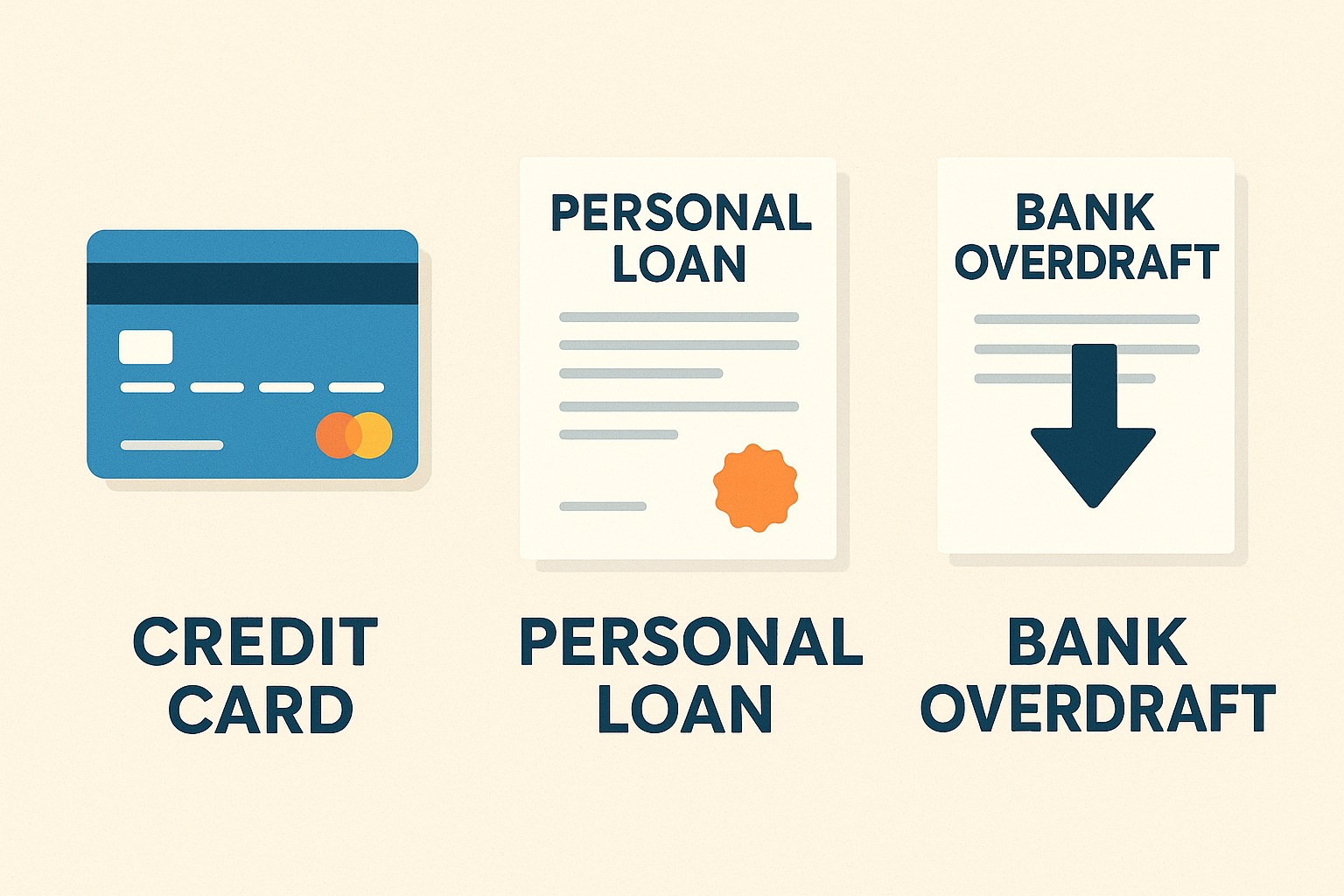
Managing finances smartly means choosing the right financial product for your needs. When it comes to borrowing, credit cards, overdrafts, and personal loans are the most common options. Each has its own benefits, risks, and ideal use cases.
1. Credit Card
What it is: A credit card allows you to borrow funds up to a pre-approved limit for purchases, online payments, or cash withdrawals.
Pros:
Short-term borrowing with interest-free period (usually 20-50 days)
Rewards, cashback, and discounts
Easy online payments
Cons:
High interest rates if unpaid after the due date
Temptation to overspend
Impact on credit score if payments are late
Best Use Case: Day-to-day purchases, online shopping, emergency expenses that can be repaid within the billing cycle.
2. Overdraft
What it is: An overdraft allows you to withdraw more than your account balance up to a sanctioned limit, usually linked to your savings or current account.
Pros:
Flexible borrowing and repayment
Only pay interest on the amount used
Useful for temporary cash flow shortages
Cons:
Interest rates higher than standard loans
Fees may apply if limit exceeded
Limited borrowing amount compared to loans
Best Use Case: Short-term liquidity needs, salary account-linked borrowing, or bridging cash flow gaps.
3. Personal Loan
What it is: A personal loan is a fixed-sum, unsecured loan provided by banks or NBFCs for various purposes.
Pros:
Lump-sum funds available for planned expenses
Fixed EMI for easy repayment
Lower interest than credit cards for long-term borrowing
Cons:
Requires eligibility checks and documentation
Longer approval process than credit cards or overdrafts
Less flexible than credit cards for small, everyday expenses
Best Use Case: Home renovations, medical emergencies, travel, debt consolidation, or any planned large expense.
How to Choose the Right Option
| Feature | Credit Card | Overdraft | Personal Loan |
|---|---|---|---|
| Borrowing Amount | Small-medium | Small-medium | Medium-large |
| Interest Rate | High (if unpaid) | Moderate | Moderate-low |
| Repayment | Short-term | Flexible | Fixed EMI |
| Ideal Use | Daily, short-term | Temporary shortage | Planned expenses, large amounts |
| Approval | Instant | Quick | Few hours to days |
Tip: Consider your purpose, repayment ability, and urgency before choosing. For emergencies, credit cards or overdrafts are ideal; for planned, large expenses, personal loans work best.
FAQs
Q1: Can I use a personal loan to pay off credit card debt?
A1: Yes, many people use personal loans for debt consolidation due to lower interest rates.
Q2: Is an overdraft better than a credit card for emergencies?
A2: It depends. Overdrafts are linked to your account balance, while credit cards offer a separate limit and rewards.
Q3: Which option affects my credit score the most?
A3: Mismanagement of any option can impact credit score. High credit card utilization or missed EMIs have the biggest effect.
Q4: Can I combine these options?
A4: Yes, but manage responsibly. For example, a credit card for small expenses and a personal loan for planned large expenses.
Published on : 4th September
Published by : SMITA
www.vizzve.com || www.vizzveservices.com
Follow us on social media: Facebook || Linkedin || Instagram
🛡 Powered by Vizzve Financial
RBI-Registered Loan Partner | 10 Lakh+ Customers | ₹600 Cr+ Disbursed
https://play.google.com/store/apps/details?id=com.vizzve_micro_seva&pcampaignid=web_share