

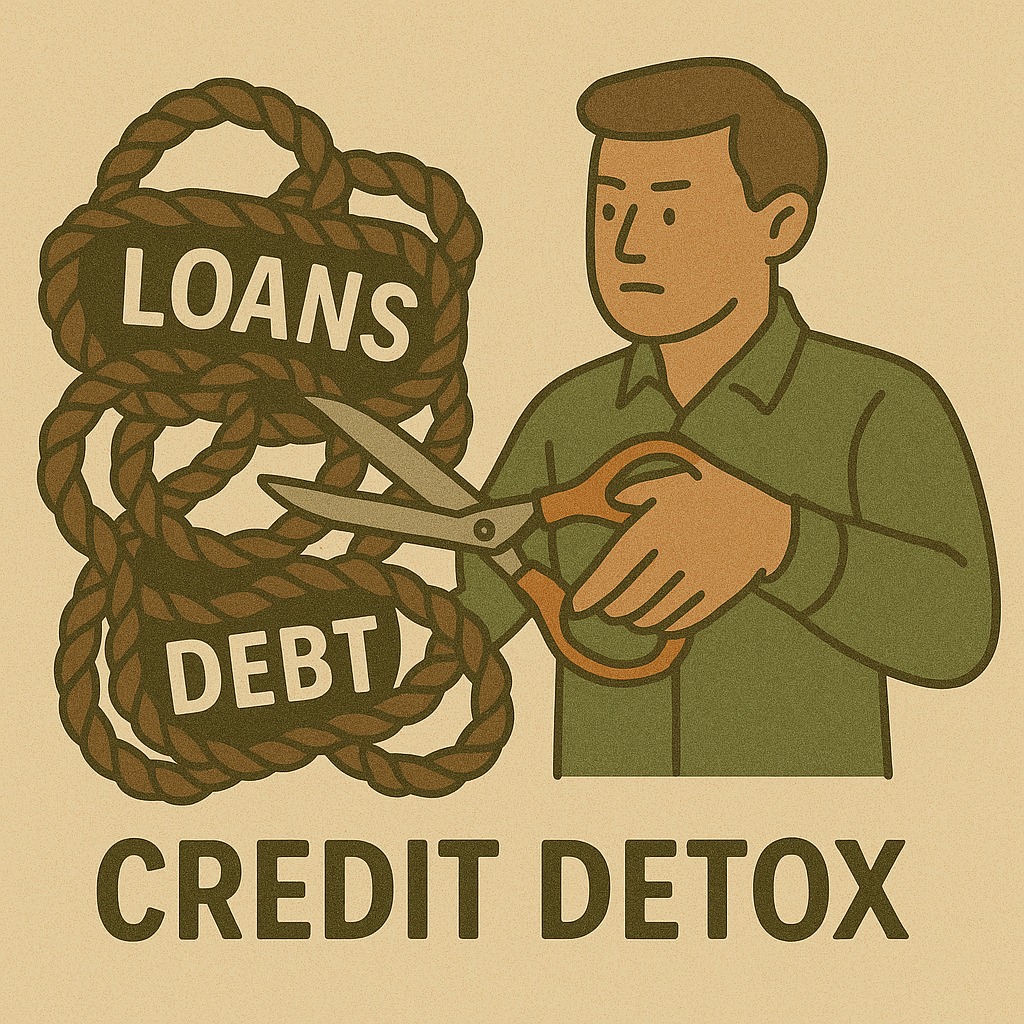
It starts innocently — one credit card, then a personal loan, then a car loan, maybe a quick BNPL purchase.
Before you know it, you’re juggling EMIs, overdue bills, and rising stress levels.
If this sounds familiar, it’s time for a credit detox — a systematic way to clean your financial slate, rebuild creditworthiness, and regain peace of mind.
Just like your body needs a detox after overload, your finances do too.
Here’s how to start.
Step 1: Face the Full Picture
The first step in a credit detox is financial honesty.
Make a clear list of all your debts:
✅ Credit cards
✅ Personal loans
✅ Home/car loans
✅ Buy-now-pay-later (BNPL) accounts
✅ Overdrafts
Note the outstanding amount, interest rate, due date, and penalties.
This overview helps you prioritize and plan repayment smartly — instead of reacting to due dates in panic mode.
Step 2: Prioritize High-Interest Debts
Not all loans hurt equally. Credit cards and personal loans usually carry the highest interest rates (24–36% p.a.), so tackle them first.
Use either of these two popular repayment strategies:
Avalanche Method: Pay off high-interest loans first to save on total interest.
Snowball Method: Close smaller loans first for quick motivation.
Either way, your goal is to reduce financial clutter and free up monthly cashflow.
Step 3: Consolidate to Simplify
If you’re overwhelmed by too many EMIs, consider debt consolidation.
This means combining multiple loans into a single, lower-interest loan (like a personal or balance transfer loan).
✅ Advantages:
Easier to track one EMI
Lower monthly outflow
Reduces chances of missed payments
Banks and fintech platforms now offer consolidation options for salaried professionals with decent credit histories.
Step 4: Stop Taking New Credit — Temporarily
While detoxing, avoid adding any new credit line — no new cards, loans, or BNPL purchases.
This pause helps you stabilize cashflow and prevent over-leverage.
If you must use a card, spend within 20–30% of your limit and pay in full each month.
Remember: every swipe or EMI counts as a signal to credit bureaus.
Step 5: Restructure, Don’t Default
If EMIs are becoming unmanageable, talk to your lender early.
Banks often allow:
EMI restructuring or tenure extension
Temporary moratorium
Lower interest renegotiation
Proactive communication shows responsibility — and protects your CIBIL score from damage caused by late or missed payments.
Step 6: Rebuild Savings Alongside Repayment
Most people make the mistake of focusing only on debt repayment.
A true credit detox includes rebuilding a financial buffer — even if it’s small.
Start an emergency fund (₹1,000–₹5,000 per month).
It prevents you from borrowing again during unforeseen expenses — the #1 reason people fall back into debt loops.
Step 7: Track and Rebuild Your Credit Score
After clearing or restructuring loans, focus on your credit recovery plan:
✅ Pay all dues on time for 6–12 months
✅ Keep credit utilization under 30%
✅ Don’t close your oldest credit account (improves credit age)
✅ Check your credit report every 3 months
Within a year, you’ll start seeing your credit score climb steadily — along with your financial confidence.
Final Thoughts
A credit detox isn’t about perfection — it’s about progress.
It’s a financial reset that teaches you control, discipline, and patience.
Debt doesn’t define you — your response does.
By cleaning your credit habits today, you’re not just escaping EMIs — you’re rebuilding your financial identity.
Remember: Freedom isn’t about having no loans — it’s about being in control of them.
❓ Frequently Asked Questions (FAQ)
1. What does “credit detox” mean?
It’s the process of cleaning up your financial life — paying off or consolidating multiple loans, improving your credit score, and regaining financial stability.
2. How do I know if I need a credit detox?
If your EMIs take up more than 50% of your income, or if you’re constantly juggling payments or missing due dates, it’s time to detox.
3. Does loan consolidation hurt my credit score?
No — it can actually improve it over time. Initially, a small dip may occur due to a new inquiry, but consistent payments boost your score.
4. How long does it take to rebuild credit after a detox?
Typically 6–12 months of consistent repayments and low utilization can show visible improvement in your CIBIL score.
5. Should I close all credit cards after debt repayment?
No. Keep at least one low-limit card active. Responsible use of a single credit line helps rebuild your score faster.
Published on : 8th November
Published by : SMITA
www.vizzve.com || www.vizzveservices.com
Follow us on social media: Facebook || Linkedin || Instagram
🛡 Powered by Vizzve Financial
RBI-Registered Loan Partner | 10 Lakh+ Customers | ₹600 Cr+ Disbursed