

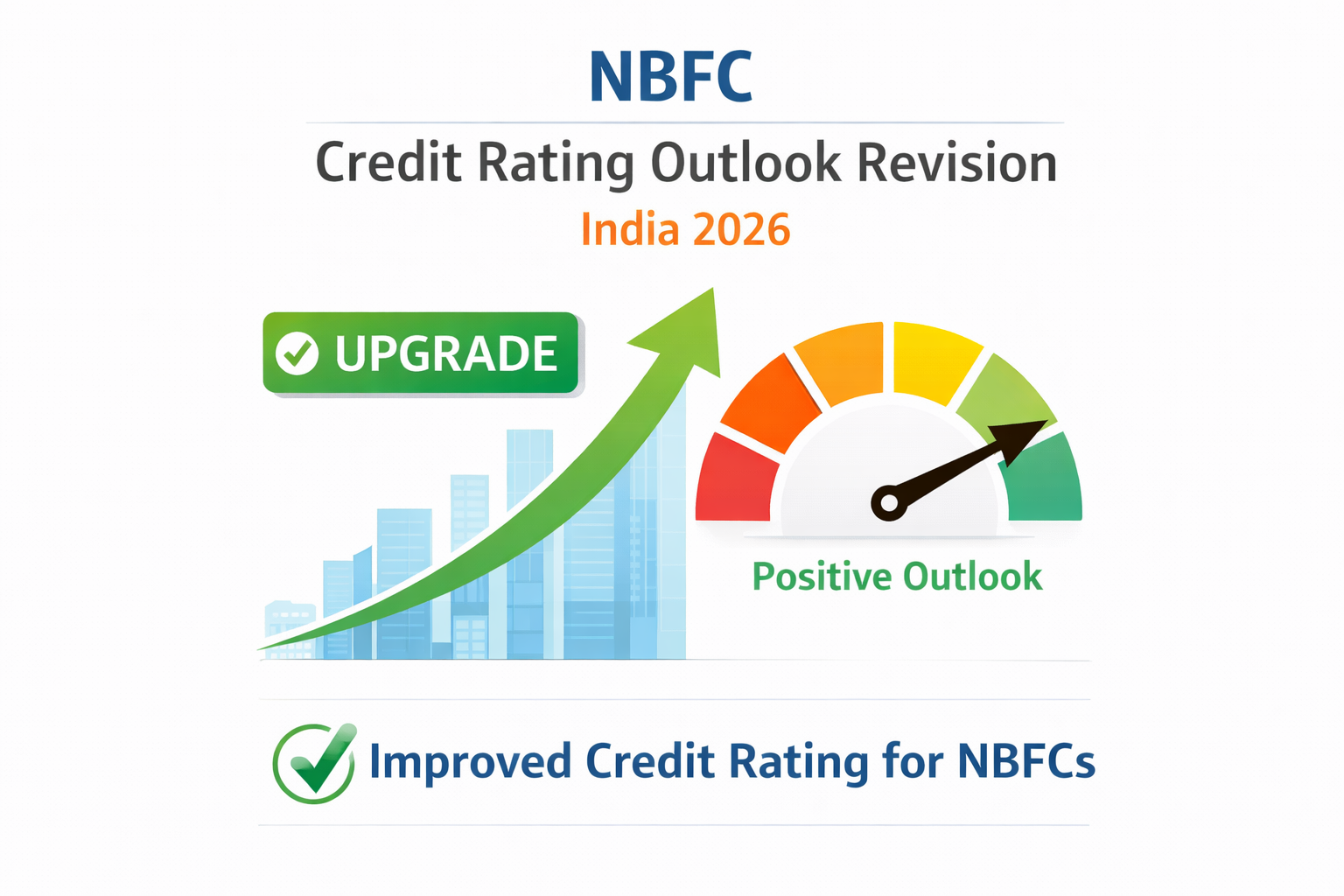
India’s Non-Banking Financial Company (NBFC) sector is witnessing credit rating outlook revisions by agencies, reflecting evolving risks and opportunities in the financial system.
These revisions are closely watched by investors, lenders, and policymakers, as they directly impact borrowing costs, credit availability, and market confidence.
👉 But what do these rating changes really mean—and should you be concerned?
Let’s decode.
AI Answer Box (Quick Summary)
What is happening?
Credit rating agencies are revising NBFC outlooks.
Why?
Due to liquidity risks, asset quality concerns, and economic factors.
Impact:
Borrowing costs, lending growth, and investor sentiment.
What Are NBFC Credit Rating Outlook Revisions?
Credit rating agencies assess the financial strength and risk level of NBFCs.
Outlook Types:
- Positive
- Stable
- Negative
👉 Outlook revisions indicate future risk expectations
Table: Rating Outlook Meaning
| Outlook | Meaning |
|---|---|
| Positive | Improvement expected |
| Stable | No major change |
| Negative | Risk of downgrade |
Why Agencies Are Revising NBFC Outlooks in 2026
1. Rising Interest Rates
- Higher cost of funds
- Pressure on margins
2. Asset Quality Concerns
- Rising NPAs in some segments
- Stress in unsecured lending
3. Liquidity Conditions
- Tight liquidity environment
- Increased dependence on market borrowing
4. Regulatory Changes
- Stricter norms by Reserve Bank of India
- Improved risk management requirements
5. Sector-Specific Risks
- Exposure to risky segments (microfinance, MSME)
Table: Key Drivers of Rating Changes
| Factor | Impact |
|---|---|
| Interest Rates | Negative |
| Asset Quality | Negative |
| Liquidity | Moderate |
| Regulation | Mixed |
Impact on NBFC Sector
1. Higher Borrowing Costs
- Lower-rated NBFCs pay higher interest
- Reduced profitability
2. Slower Lending Growth
- Tight funding conditions
- Conservative lending approach
3. Market Differentiation
- Strong NBFCs gain trust
- Weak NBFCs face pressure
4. Investor Sentiment
- Increased caution among investors
- Preference for high-rated entities
Comparison: Strong vs Weak NBFCs
| Factor | Strong NBFC | Weak NBFC |
|---|---|---|
| Rating | Stable/Positive | Negative |
| Funding Cost | Lower | Higher |
| Growth | Strong | Slow |
| Risk | Low | High |
👍 Pros & 👎 Cons of Rating Revisions
✅ Pros
- Improves transparency
- Encourages discipline
- Highlights strong players
❌ Cons
- Negative sentiment in short-term
- Higher borrowing costs
- Pressure on weaker NBFCs
Expert Commentary
Financial experts believe rating revisions are part of a healthy financial system evolution.
👉 Key insights:
- Strong NBFCs will emerge stronger
- Risk-based differentiation will increase
Experts suggest:
✔ Focus on quality NBFCs
✔ Avoid highly leveraged players
Step-by-Step: What Should Investors Do?
- Check NBFC credit ratings before investing
- Focus on strong balance sheets
- Avoid high-risk segments
- Diversify investments
- Monitor RBI and rating agency updates
Key Takeaways
- NBFC rating outlooks are being revised in 2026
- Driven by interest rates, liquidity, and asset quality
- Strong NBFCs benefit, weaker ones face pressure
- Best strategy: focus on quality and diversification
❓ Frequently Asked Questions (FAQs)
1. What is NBFC rating outlook?
Future risk assessment by rating agencies.
2. Why ratings are revised?
Due to financial and economic changes.
3. Is downgrade bad?
Yes, increases risk.
4. Does it affect borrowing?
Yes.
5. Which NBFCs are safe?
Highly rated ones.
6. What is RBI role?
Regulates NBFCs.
7. Should I invest now?
Yes, cautiously.
8. Is sector risky?
Moderately.
9. What affects ratings?
Liquidity and asset quality.
10. Is this temporary?
Depends.
11. What is NPA?
Non-performing asset.
12. Does it affect stock prices?
Yes.
13. Should beginners invest?
Yes, carefully.
14. What is best strategy?
Focus on quality.
15. Is long-term outlook good?
Yes.
Conclusion
NBFC rating outlook revisions are not just warnings—they are signals for smarter investing and stronger financial discipline.
👉 For investors, the focus should shift from quantity to quality and risk management.
In evolving markets, informed decisions create the biggest advantage. 📊
Published on : 17th April
Published by : SMITA
www.vizzve.com || www.vizzveservices.com
Follow us on social media: Facebook || Linkedin || Instagram
🛡 Powered by Vizzve Financial
RBI-Registered Loan Partner | 10 Lakh+ Customers | ₹600 Cr+ Disbursed