

A good credit score plays an important role in your financial journey. Whether you want to apply for a personal loan, home loan, car loan, or credit card, your credit score can influence how lenders evaluate your application. In India, the CIBIL score is one of the key indicators lenders use to assess your creditworthiness.
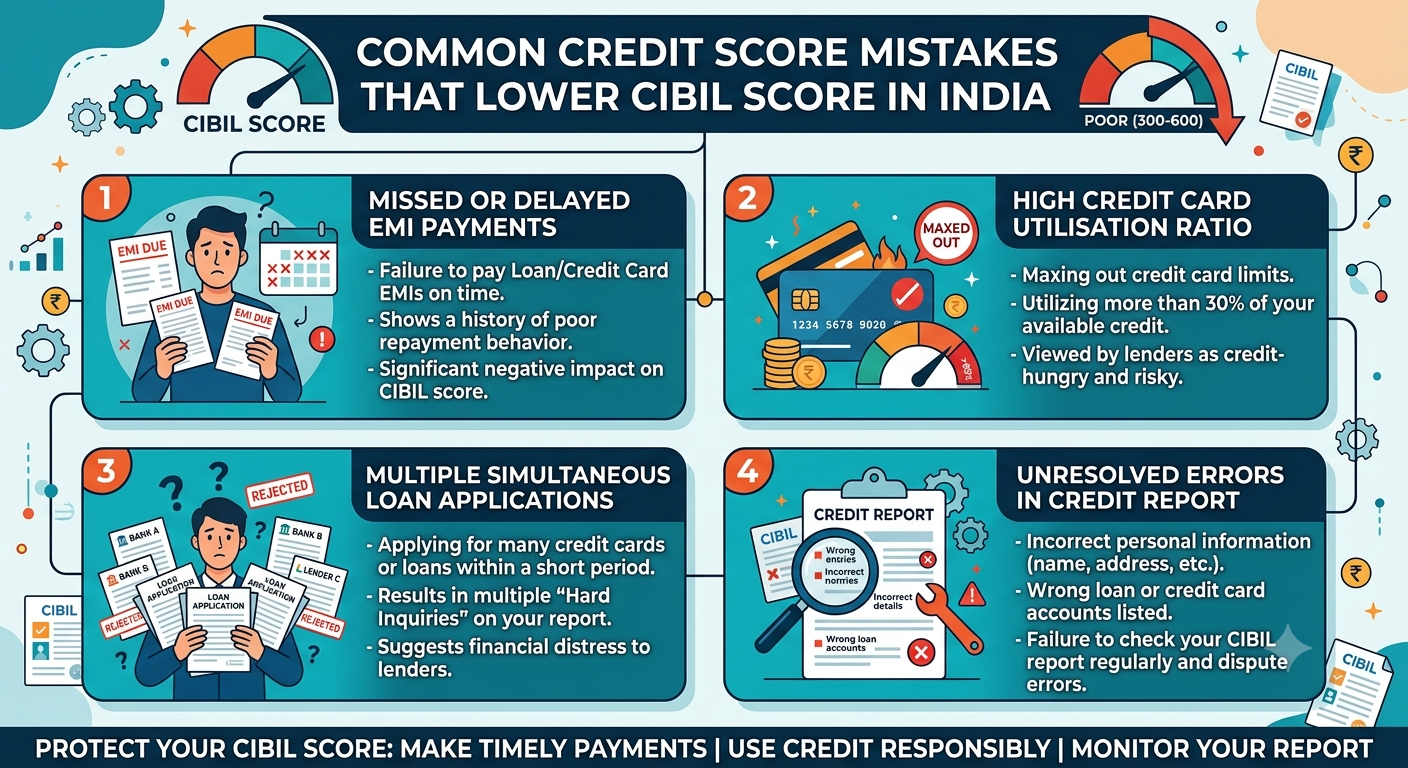
However, many people make common credit score mistakes without realising how these habits can affect their financial profile. Late EMI payments, high credit card balances, multiple loan applications, and ignoring credit report errors can make it harder to maintain a healthy credit history.
Understanding these mistakes is the first step towards improving your credit score and building better financial habits.
What Is a Credit Score?
A credit score is a numerical representation of your credit history and repayment behaviour. In India, the TransUnion CIBIL score generally ranges from 300 to 900. A higher score usually improves your chances of having your credit application considered favourably, although lenders also evaluate income, existing debt, employment stability, and other eligibility criteria.
Your credit score is influenced by factors such as payment history, credit utilisation, outstanding debt, credit history, and recent credit applications.
7 Common Credit Score Mistakes to Avoid
1. Missing EMI or Credit Card Payments
One of the most common credit score mistakes is missing loan EMIs or credit card payments. Even an occasional delay can negatively affect your credit history, depending on how it is reported.
How to avoid it:
-
Pay your EMIs and credit card bills before their due dates.
-
Set up payment reminders or automatic payments.
-
Maintain sufficient funds in your bank account for scheduled payments.
-
Contact your lender promptly if you anticipate difficulty making a payment.
Consistent, timely repayments help establish a positive credit history.
2. Maintaining High Credit Card Utilisation
Using a large portion of your available credit limit may indicate that you rely heavily on borrowed money. High credit utilisation can negatively influence your credit profile.
For example, if your credit card limit is ₹1,00,000 and your outstanding balance is ₹70,000, your utilisation ratio is 70%.
How to avoid it:
-
Keep your outstanding credit card balance relatively low.
-
Pay more than the minimum amount due whenever possible.
-
Avoid unnecessary credit card spending.
-
Consider paying down your balance before making additional purchases.
Keeping utilisation low can support healthier credit management.
3. Applying for Multiple Loans at Once
Applying for several loans or credit cards within a short period can result in multiple hard enquiries on your credit report. Lenders may interpret frequent credit applications as a sign of increased borrowing needs.
How to avoid it:
-
Compare interest rates, fees, and eligibility requirements before applying.
-
Submit applications selectively.
-
Avoid applying for several credit products simply to increase your chances of approval.
Checking your own credit score is different from a lender's hard enquiry and does not, by itself, lower your CIBIL score.
4. Ignoring Your Credit Report
Your credit report contains information about your loan accounts, repayment history, outstanding balances, and credit enquiries. Incorrect information can affect how lenders assess your creditworthiness.
Common errors include incorrect personal details, unfamiliar accounts, inaccurate overdue amounts, and loans that have been repaid but are still incorrectly reported as active.
How to avoid it:
-
Review your credit report regularly.
-
Verify that all listed accounts belong to you.
-
Check repayment status and outstanding balances.
-
Raise a dispute with the credit bureau and contact the lender if you find an error.
Regular monitoring helps you identify and address potential issues early.
5. Paying Only the Minimum Credit Card Due
Paying only the minimum amount due may help you avoid an immediate missed-payment record when the minimum is paid on time, but it does not eliminate the remaining debt. Interest and other applicable charges can accumulate, increasing your outstanding balance.
A higher balance may also increase your credit utilisation ratio.
How to avoid it:
-
Pay the full statement balance by the due date whenever possible.
-
Avoid treating your credit card as additional income.
-
Create a monthly budget to manage repayments.
-
Reduce unnecessary spending when balances become difficult to manage.
Paying your full balance can help control interest costs and maintain a healthier credit profile.
6. Closing Credit Cards Without Considering the Impact
Closing a credit card is not always harmful to your credit score, but it may affect your overall available credit and utilisation ratio. The impact depends on your existing credit accounts and overall credit profile.
For example, closing a card with a high credit limit while maintaining outstanding balances on other cards could increase your overall utilisation ratio.
How to avoid it:
-
Review your outstanding balances before closing an account.
-
Consider annual fees and whether the card is useful.
-
Avoid keeping unnecessary cards solely because you believe closing any card will damage your score.
Make credit decisions based on your financial needs rather than assumptions.
7. Ignoring Joint or Co-Signed Loans
When you co-sign, guarantee, or jointly hold a loan, repayment problems can affect your credit profile too. If the primary borrower misses payments, the consequences may extend to the other responsible parties.
How to avoid it:
-
Understand your financial responsibility before co-signing.
-
Monitor repayment activity on joint or guaranteed accounts.
-
Discuss repayment arrangements with the borrower.
-
Review your credit report for unexpected overdue payments.
Never agree to guarantee a loan without understanding the potential financial consequences.
How to Improve Your Credit Score After Making Mistakes
If you have made credit score mistakes in the past, you can still work towards building a stronger credit profile. Although improvement takes time and is not guaranteed by a particular action, consistent financial discipline can help.
Follow these practical steps:
-
Pay all dues on time: Build a consistent repayment history.
-
Reduce outstanding balances: Lower your credit utilisation where possible.
-
Avoid unnecessary applications: Apply for new credit only when needed.
-
Check your credit report: Identify unfamiliar accounts and reporting errors.
-
Maintain a manageable debt level: Borrow within your repayment capacity.
-
Monitor joint accounts: Make sure co-signed and guaranteed loans remain up to date.
-
Be patient: Negative repayment information may take time to lose its influence, and accurate records cannot simply be erased.
Avoid services that promise an instant credit score increase or guaranteed removal of accurate negative information.
How Often Should You Check Your Credit Score?
Checking your own credit score does not negatively affect it. Reviewing your score and credit report periodically can help you track your financial progress and identify errors.
You can obtain your free annual CIBIL Score and Report through the official CIBIL website. If you discover incorrect information, raise a dispute through the appropriate process and follow up with the lender when necessary.
Remember that credit bureaus generally rely on information submitted by lenders, so correcting an error may require verification and authorisation from the relevant financial institution.
Conclusion
Credit score mistakes can affect your ability to access loans and credit cards on favourable terms. Missing EMIs, maintaining high credit card utilisation, applying for too many credit products, and ignoring report errors are common problems that borrowers should avoid.
The good news is that better credit habits can help you build a stronger financial profile over time. Pay your bills on time, manage outstanding balances responsibly, review your credit report regularly, and borrow only when necessary.
Published on : 20th October 2026
Published by : yogendra
www.vizzve.com || www.vizzveservices.com
Follow us on social media: Facebook || Linkedin || Instagram
🛡 Powered by Vizzve Financial
RBI-Registered Loan Partner | 10 Lakh+ Customers | ₹600 Cr+ Disbursed