

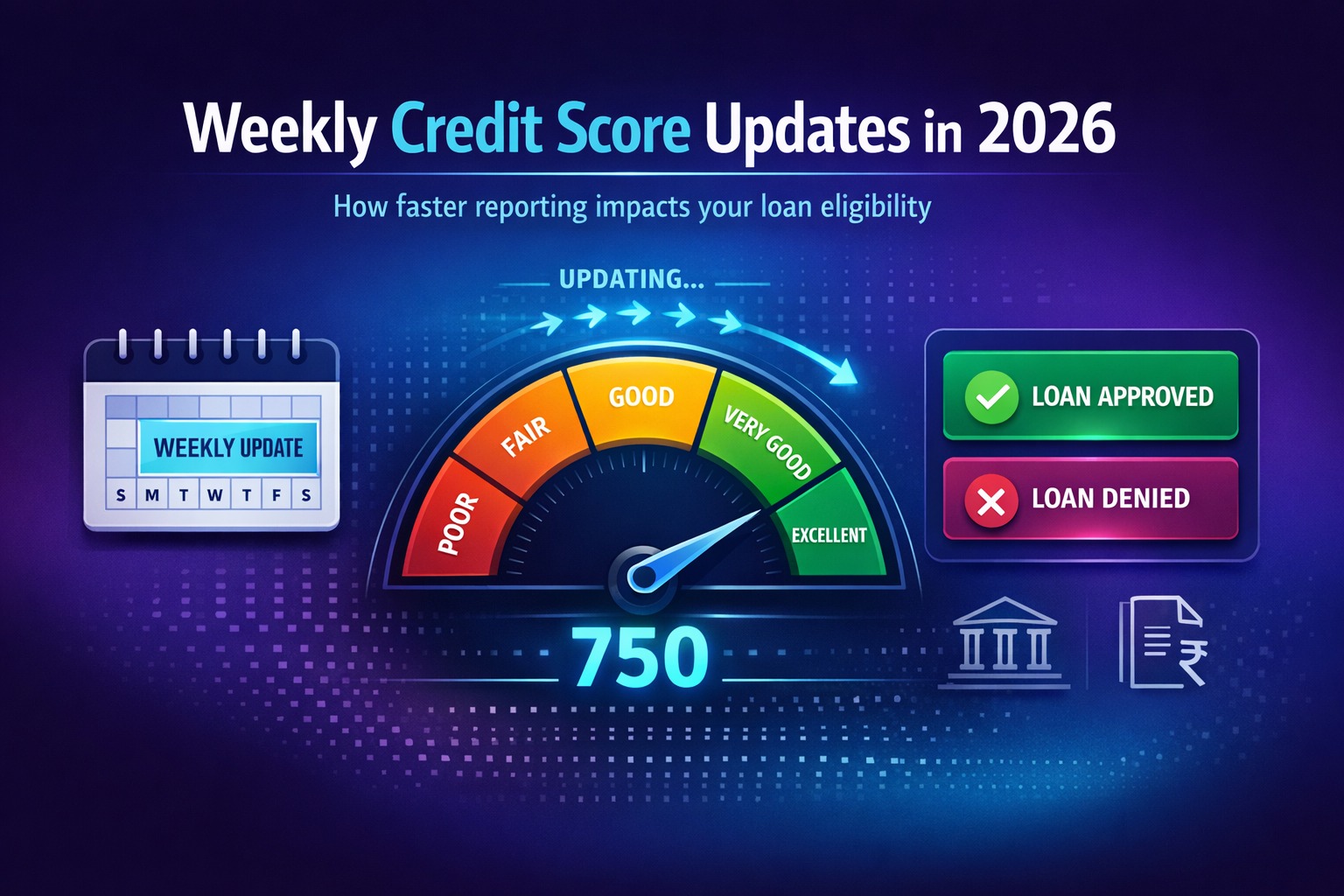
For years, borrowers were used to one thing: credit scores moved slowly. You paid EMIs on time, waited a month or two, and then saw changes.
That’s no longer the case.
In 2026, credit reporting is faster and more frequent. With weekly updates, your credit behaviour—good or bad—reflects on your credit score much sooner, directly influencing loan eligibility, interest rates, and approvals.
This shift rewards discipline—but it also punishes mistakes faster.
AI Answer Box
Weekly credit score reporting in 2026 means lenders see borrower behaviour faster. On-time payments can improve loan eligibility quickly, while missed EMIs or high credit usage can hurt approvals within weeks instead of months.
Quick Summary Box (Fast Indexing)
Credit scores now update weekly
Good behaviour shows faster
Mistakes hurt sooner
Loan eligibility changes quickly
Discipline matters more than ever
What Is Weekly Credit Reporting?
Earlier, most lenders updated credit bureaus:
Once a month
Or with delays
Now, many lenders report:
EMIs
Credit card usage
Outstanding balances
every week or near-weekly.
This creates a near real-time credit profile.
How Faster Updates Change Loan Eligibility in 2026
1. Faster Credit Score Improvement
If you:
Clear overdue EMIs
Reduce credit card utilisation
Close small loans responsibly
👉 Your credit score may improve within weeks, not months.
This helps borrowers who are:
Actively repairing credit
Planning loans mid-year
2. Faster Negative Impact Too
Weekly reporting cuts both ways.
One missed EMI
Sudden spike in credit card usage
Multiple loan enquiries
can impact your credit score almost immediately.
There’s less time to “hide” mistakes.
Monthly vs Weekly Reporting — Key Difference
| Factor | Monthly Reporting | Weekly Reporting |
|---|---|---|
| Score update speed | Slow | Fast |
| Mistake visibility | Delayed | Immediate |
| Discipline reward | Late | Early |
| Loan eligibility shift | Gradual | Quick |
| Borrower control | Limited | High |
What Weekly Reporting Means for Different Borrowers
Salaried Borrowers
On-time EMIs boost eligibility faster
Delays affect home/personal loan plans quickly
Self-Employed Borrowers
Irregular cash flow now shows clearly
Discipline matters more than income spikes
First-Time Borrowers
Early habits shape score rapidly
Small mistakes leave visible marks
Common Mistakes That Hurt More in Weekly Reporting
Paying Credit Cards Late “Just Once”
Earlier: minor delay
Now: immediate negative signal
Using Full Credit Limit Temporarily
High utilisation is reported faster, causing:
Score drops
Reduced loan eligibility
Even if repaid later.
Applying to Multiple Lenders Together
Hard enquiries show up quickly and stack faster.
Why Lenders Like Faster Credit Updates
From a lender’s view:
Risk is identified earlier
Over-borrowing is controlled
Responsible borrowers are rewarded
This leads to:
Stricter approvals
Better rates for disciplined profiles
How Borrowers Should Adapt in 2026
Smart Weekly-Credit Strategy:
Treat every week like a “review window”
Never delay EMIs, even by days
Keep credit card usage below 30%
Avoid frequent loan enquiries
Track credit health monthly
Weekly Credit Health Checklist
| Area | Safe Practice |
|---|---|
| EMI payments | On or before due date |
| Card utilisation | Below 30% |
| Loan enquiries | Minimal |
| Overdues | Clear immediately |
| Credit review | Once a month |
Expert Commentary: Credit Discipline Is Now Real-Time
“Weekly reporting turns credit scores into living profiles. Borrowers are rewarded or penalised faster than ever.”
— Credit Risk Analyst
Key Takeaways
Credit scores update faster in 2026
Weekly reporting benefits disciplined borrowers
Mistakes hurt sooner, not later
Loan eligibility can change quickly
Credit behaviour needs constant attention
❓ Frequently Asked Questions (FAQs)
1. What is weekly credit reporting?
It means lenders update credit data more frequently than monthly.
2. Does weekly reporting improve credit score faster?
Yes, if your behaviour is positive.
3. Can one missed EMI affect score quickly?
Yes, the impact can show within weeks.
4. Is monthly reporting completely gone?
No, but many lenders now report more frequently.
5. Does this affect loan approval speed?
Yes, lenders see your latest behaviour.
6. Should I check my credit score weekly?
No, monthly review is sufficient.
7. Is weekly reporting bad for borrowers?
Only for undisciplined borrowing.
8. Who benefits the most?
Borrowers with strong repayment discipline.
Conclusion: Faster Scores Mean Faster Consequences
In 2026, credit scores no longer wait.
With weekly updates, every EMI, swipe, and repayment decision matters almost immediately. This shift rewards borrowers who are consistent, cautious, and planned—and exposes those who rely on last-minute fixes.
📌 In the new credit era, discipline isn’t just important—it’s visible every week.
Published on : 2nd January
Published by : SMITA
www.vizzve.com || www.vizzveservices.com
Follow us on social media: Facebook || Linkedin || Instagram
🛡 Powered by Vizzve Financial
RBI-Registered Loan Partner | 10 Lakh+ Customers | ₹600 Cr+ Disbursed