

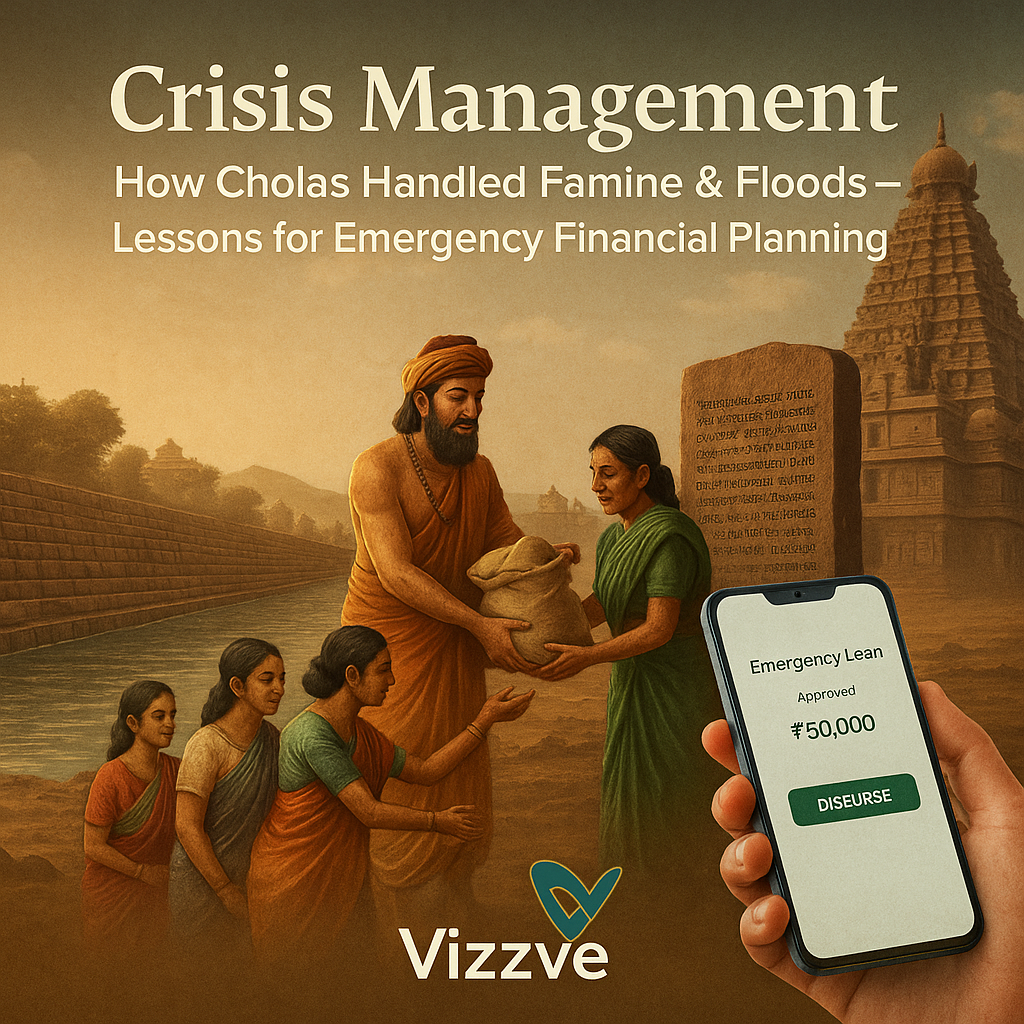
🌾 Crisis Management: How Cholas Handled Famine & Floods – Lessons for Emergency Financial Planning
Natural disasters are not a modern problem. The Chola Empire (9th–13th century CE) frequently faced floods, droughts, and famine, yet managed them with a level of foresight and community resilience that rivals today’s disaster planning.
From granary reserves and water tank engineering to land tax relief and public employment—the Cholas had strategies that mirror modern emergency financial planning.
And today, Vizzve enables individuals to do exactly that—prepare for the unpredictable through smart, accessible financial tools.
🌊 1. Disaster-Ready Infrastructure
✅ Tanks and Canals as Risk Buffers
Massive tanks like Veeranam were built to store floodwaters and support crops during droughts.
These were linked to canals and irrigation grids across the empire.
💡 Financial Parallel:
Just like these tanks stored water, Vizzve encourages users to build an emergency fund for life’s financial droughts—unexpected medical bills, job loss, or natural calamities.
🏠 2. Granaries & Food Security = Today’s Savings Plan
Cholas created:
State-managed granaries that stored excess grain
Local distribution systems during scarcity
Price control during inflation
🏦 Vizzve Insight:
Emergency planning isn’t just about saving—it’s about access when it matters.
Just like Cholas ensured food during famine, Vizzve offers instant emergency loans—so you’re never without options.
📉 3. Tax Reliefs and Debt Forgiveness
During major famines (e.g. 11th-century Kaveri flood events), inscriptions show:
Temporary land tax waivers
Loan deferment for farmers
Government-funded community work
🔁 Modern Application:
Vizzve supports repayment flexibility and custom EMI plans—because financial stress during crises needs empathy, not penalties.
🛠️ 4. Community Employment = Today’s Public Welfare Schemes
Chola kings initiated:
Irrigation and temple construction during drought years
Employing thousands under royal patronage
This acted as public works during economic downtime—injecting wages into the economy.
✅ Vizzve Connect:
We partner with job providers and career communities to offer finance support to workers with variable or seasonal income, ensuring they stay afloat year-round.
💬 5. Transparent Governance through Inscriptions
Relief measures were carved into temple walls and copperplates for public knowledge.
Accountability, access, and planning were transparent.
📲 Just like Vizzve provides transparent interest rates, loan tracking, and repayment schedules—clear and available to all.
📊 Ancient Strategy, Modern Toolkit
| Chola Crisis Strategy | Vizzve’s Modern Financial Response |
|---|---|
| Water tanks to manage drought/flood | Emergency fund planning tools |
| Granaries for food security | Access to emergency loans and credit lines |
| Tax reliefs and public work programs | EMI holidays, flexible repayments, financial coaching |
| Transparent inscriptions | In-app loan dashboards and alerts |
📌 FAQs
🔹 How did the Cholas plan for disasters?
By creating reserves, infrastructure, and emergency employment—all backed by policy.
🔹 Why is this relevant for finance?
Because disaster preparation is not just physical—it’s financial. We all need buffers, access, and transparency.
🔹 What does Vizzve offer for financial emergencies?
Vizzve offers:
Instant emergency loans
Smart saving suggestions
EMI flexibility
Transparent dashboards
So you’re never caught off guard.
Published 3rd July
Published: Kaushik
www.vizzve.com || www.vizzveservices.com
Follow us on social media: Facebook || Linkedin || Instagram