

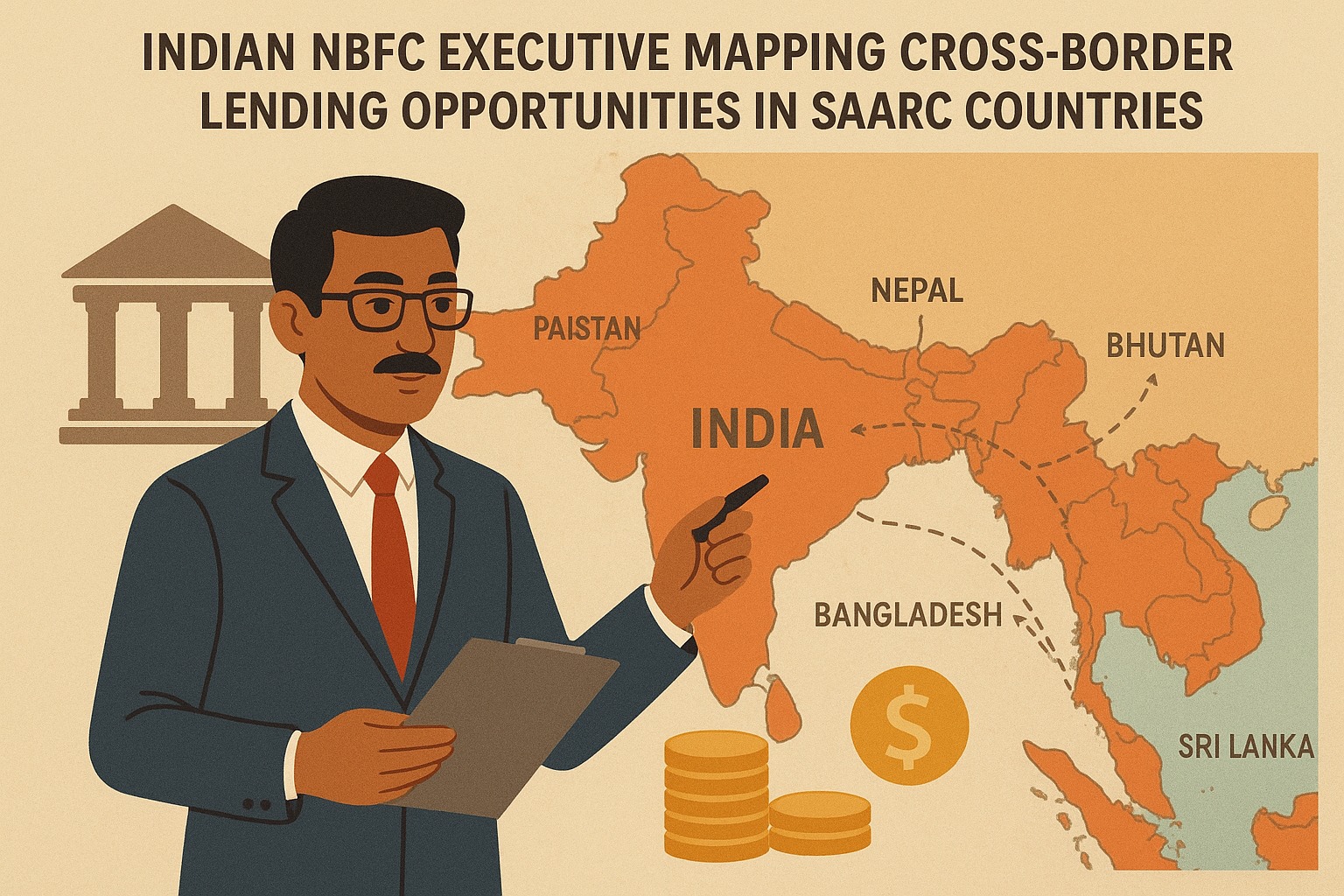
With India’s NBFC sector maturing and credit demand in neighbouring countries rising, cross-border lending is emerging as a new growth avenue. Many Indian NBFCs are exploring opportunities in SAARC (South Asian Association for Regional Cooperation) markets — Nepal, Bangladesh, Sri Lanka, Bhutan, Maldives, Pakistan, and Afghanistan — to diversify revenue and tap underbanked segments.
Why SAARC Markets Attract Indian NBFCs
Geographic Proximity: Shared borders reduce operational and cultural barriers.
Underbanked Populations: Large credit gaps in MSME, agriculture and consumer finance.
Policy Push for Regional Integration: Bilateral agreements and trade corridors ease capital flows.
Diversification: Reduces reliance on domestic market cycles.
Popular Segments for Cross-Border Lending
MSME loans (especially export-import related)
Microfinance and nano-loans
Agriculture and supply-chain finance
Infrastructure-linked project finance
Regulatory and Operational Challenges
RBI & FEMA Norms: NBFCs need approvals under the Foreign Exchange Management Act and RBI’s external lending guidelines.
Local Regulations: Each SAARC country has its own financial regulator and licensing process.
Currency Risk: Exchange-rate volatility can erode margins.
Political Stability: Policy shifts and sanctions risk in certain markets.
Models Being Explored
Joint Ventures or Local Subsidiaries: Partnering with domestic players to navigate local rules.
Co-lending Arrangements: Working with local banks to share risk.
Digital Cross-Border Platforms: Using fintech to underwrite, disburse and collect seamlessly.
Benefits for Borrowers in SAARC Countries
Access to credit from established Indian NBFCs with proven underwriting models.
Lower interest rates compared to informal lending channels.
Product innovation, such as supply-chain finance and embedded lending.
Conclusion
Cross-border lending to SAARC markets represents the next frontier for Indian NBFCs. With careful regulatory navigation, currency-hedging strategies and local partnerships, NBFCs can extend their footprint while fostering regional financial inclusion.
FAQ Section
Q1. Can Indian NBFCs freely lend to borrowers in SAARC countries?
No. They need RBI approval, compliance with FEMA, and must follow local regulations in the host country.
Q2. What are the main risks in cross-border lending?
Currency volatility, regulatory changes, credit risk, and political instability.
Q3. Are there examples of successful cross-border NBFC operations?
A few large Indian NBFCs have set up subsidiaries or partnered with local institutions in Nepal and Sri Lanka.
Q4. Can fintech platforms help in cross-border lending?
Yes. Digital KYC, AI-based underwriting and cross-border payments make it easier and faster.
Q5. How does this benefit Indian NBFCs?
Diversified revenue streams, larger customer base, and first-mover advantage in underbanked markets.
Published on : 18th September
Published by : SMITA
www.vizzve.com || www.vizzveservices.com
Follow us on social media: Facebook || Linkedin || Instagram
🛡 Powered by Vizzve Financial
RBI-Registered Loan Partner | 10 Lakh+ Customers | ₹600 Cr+ Disbursed
https://play.google.com/store/apps/details?id=com.vizzve_micro_seva&pcampaignid=web_share