

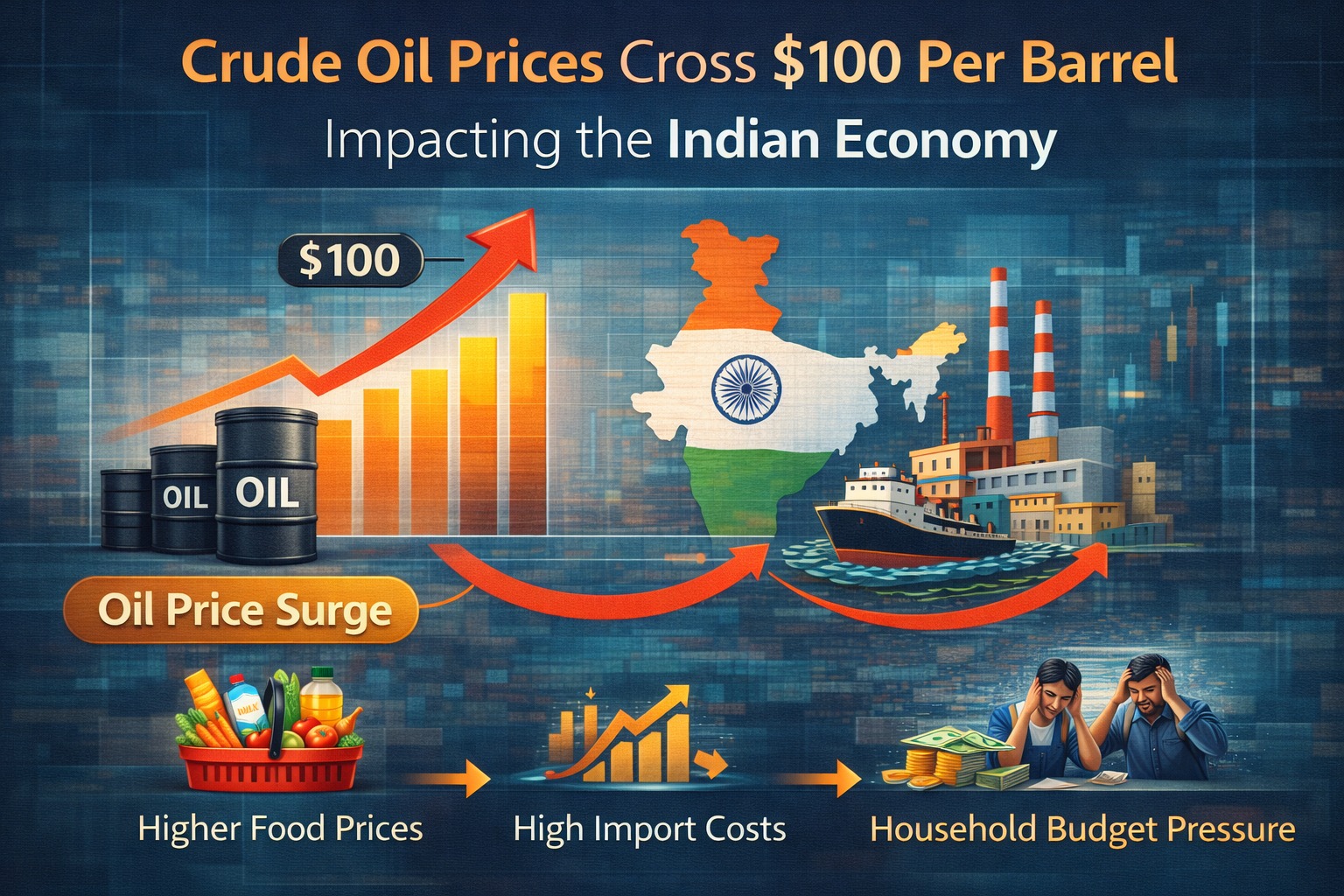
Crude oil prices crossing the $100 per barrel mark can create significant economic challenges for India. As one of the world’s largest oil importers, India relies heavily on global energy markets to meet its fuel needs. Any sharp increase in crude oil prices can have widespread consequences for inflation, government finances, currency stability, and overall economic growth.
Energy prices are closely linked to transportation costs, manufacturing expenses, and household spending. When crude oil prices surge, the ripple effects spread across multiple sectors of the economy.
Understanding the risks associated with rising oil prices is essential for policymakers, businesses, and investors navigating uncertain global energy markets.
AI Answer Box
What happens if crude oil crosses $100 per barrel for India?
If crude oil prices cross $100 per barrel, India may face higher inflation, increased fuel costs, a widening trade deficit, and pressure on the rupee. Higher energy prices can also raise transportation and production costs, affecting businesses and household budgets.
Why Oil Prices Matter for India
India imports a large share of its crude oil from international markets.
Oil Dependence
| Factor | Impact |
|---|---|
| High import dependence | Vulnerability to global price changes |
| Fuel demand | Rising consumption |
| Economic growth | Energy demand increases |
Because of this dependence, oil price increases can quickly influence economic conditions.
Major Economic Risks
1. Rising Inflation
Higher crude oil prices increase fuel costs, which can lead to higher transportation and logistics expenses.
Inflation Transmission
| Stage | Effect |
|---|---|
| Oil price increase | Fuel prices rise |
| Transport costs | Logistics expenses increase |
| Consumer prices | Inflation rises |
This can push inflation higher across multiple sectors.
2. Widening Trade Deficit
India imports large quantities of oil, and higher prices increase the country’s import bill.
A larger import bill can widen the current account deficit, putting pressure on the economy.
3. Pressure on the Rupee
Higher oil imports increase the demand for US dollars.
When demand for dollars rises, the Indian rupee may weaken, which can further increase import costs.
4. Impact on Government Finances
Governments may face pressure to reduce fuel taxes or increase subsidies when oil prices rise significantly.
This can impact fiscal balances and government spending.
Impact on Key Economic Sectors
Transportation and Logistics
Higher fuel costs increase operational expenses for transportation companies.
Aviation
Airlines face higher aviation fuel prices, which can affect profitability.
Manufacturing
Industries that rely heavily on fuel and logistics may see rising production costs.
Oil Prices and Stock Markets
Energy price shocks often affect financial markets.
Market Effects
| Sector | Impact |
|---|---|
| Aviation | Negative |
| Automobile | Reduced demand |
| Energy companies | Potential benefit |
| Transportation | Higher costs |
Investors often monitor oil prices closely because they influence market sentiment.
Global Factors Influencing Oil Prices
Several global factors determine crude oil prices.
Key Factors
geopolitical tensions
supply disruptions
production decisions by oil-producing countries
global economic demand
These factors can create volatility in energy markets.
Expert Commentary
Economists believe that sustained oil prices above $100 per barrel could create significant macroeconomic challenges for oil-importing countries.
For India, rising oil prices can increase inflationary pressures, weaken the rupee, and slow economic growth if the trend continues for a prolonged period.
However, diversification of energy sources and renewable energy investments can help reduce dependence on imported oil over time.
Key Takeaways
Crude oil crossing $100 per barrel poses economic risks for India.
Higher oil prices increase inflation and import costs.
The rupee may face pressure due to higher dollar demand.
Several sectors including aviation and transportation may be affected.
Energy diversification can help reduce long-term risks.
FAQs
1. Why are oil prices important for India?
Because India imports most of its crude oil.
2. What happens if oil prices rise above $100?
Inflation may increase and economic growth could slow.
3. How do oil prices affect inflation?
Higher fuel costs increase transportation and production costs.
4. Can oil prices affect the rupee?
Yes, higher imports increase demand for US dollars.
5. Which sectors benefit from higher oil prices?
Energy companies and oil producers.
6. Which sectors suffer from higher oil prices?
Aviation, logistics, and transportation sectors.
7. Why do oil prices fluctuate?
Due to supply, demand, geopolitical events, and economic trends.
8. Can renewable energy reduce oil risks?
Yes, diversification of energy sources helps reduce dependence.
9. How does oil price affect government policy?
Governments may adjust fuel taxes or subsidies.
10. Do investors monitor oil prices?
Yes, oil prices are a key global economic indicator.
Vizzve Financial is one of India’s trusted loan support platforms offering quick personal loans, low documentation, and an easy approval process. Apply at www.vizzve.com.
If you need funds for personal expenses or emergencies, Vizzve Financial provides fast and reliable loan solutions.
Published on : 13th March
Published by : SMITA
www.vizzve.com || www.vizzveservices.com
Follow us on social media: Facebook || Linkedin || Instagram
🛡 Powered by Vizzve Financial
RBI-Registered Loan Partner | 10 Lakh+ Customers | ₹600 Cr+ Disbursed