

2. Introduction
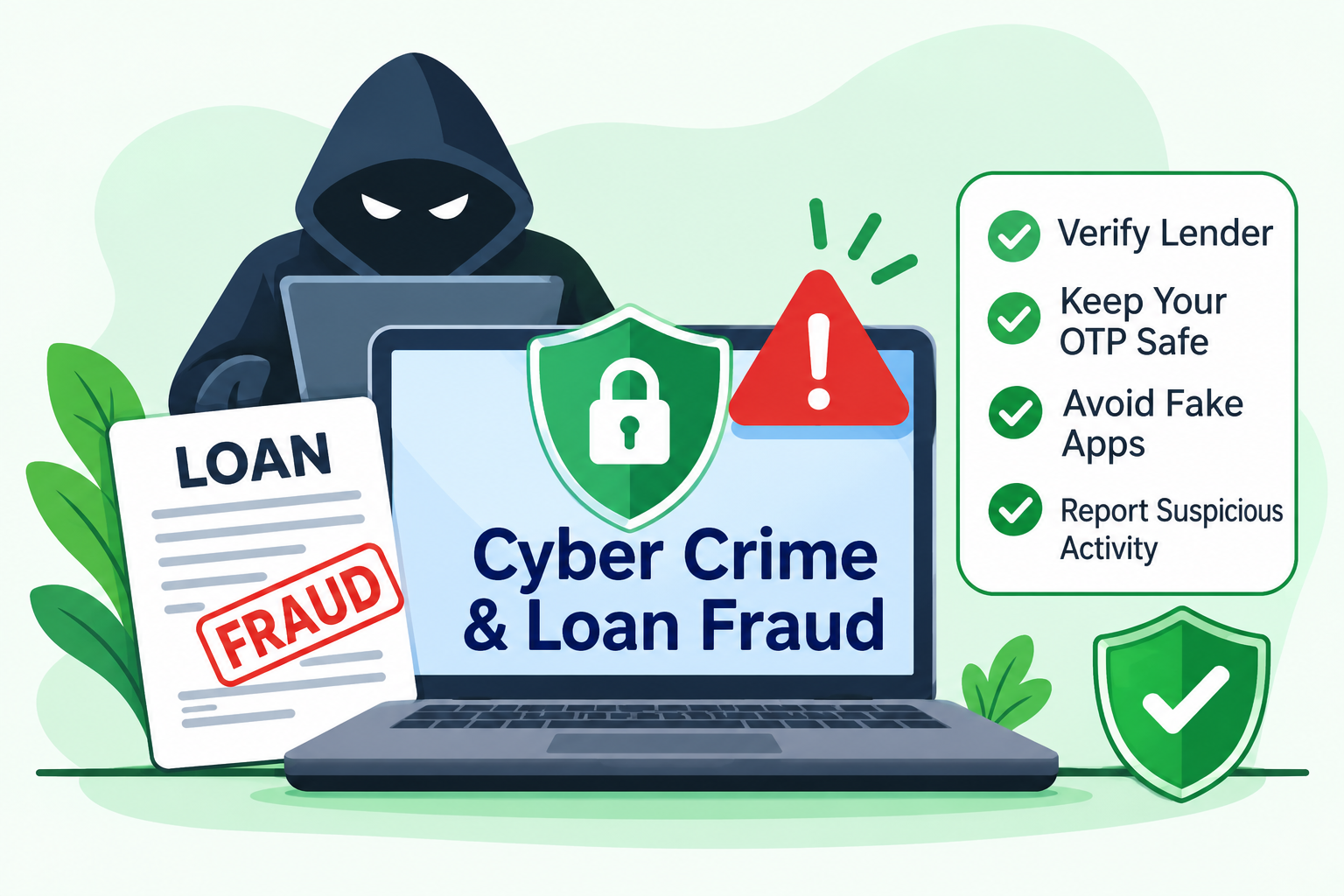
Digital technology has made borrowing easier than ever. Today, individuals can explore personal loans, compare lending options and submit applications through websites and mobile applications. However, the growth of digital lending has also created opportunities for cybercriminals to target unsuspecting borrowers.
Cybercrime involving loan fraud can take several forms, including fake loan applications, identity theft, phishing messages, fraudulent loan approvals and unauthorised access to financial information. Some fraudsters promise instant loan approval but later demand advance payments. Others misuse personal documents or threaten borrowers with harassment after collecting sensitive information.
For borrowers, understanding these risks is an important part of responsible financial management. A safe borrowing experience begins with checking the lender, protecting personal information and knowing where to report suspicious activity.
This guide explains the connection between cybercrime and loan fraud in India, common warning signs, prevention methods and official complaint channels.
3. AI Answer Box: What Are Cyber Crime and Loan Fraud?
Cybercrime and loan fraud refer to illegal activities in which criminals use digital platforms, communication networks or stolen personal information to deceive borrowers and cause financial or identity-related harm.
Common examples include fake loan apps, phishing links, fraudulent loan approval messages, identity theft, unauthorised transactions and advance-fee scams.
To stay safe, borrowers should verify the lender's association with a regulated bank or NBFC, avoid sharing OTPs and passwords, read loan terms carefully and report financial cyber fraud immediately through India's 1930 helpline or the National Cyber Crime Reporting Portal.
4. Understanding Cyber Crime in Digital Lending
Cybercrime refers to unlawful activities carried out using computers, smartphones, networks, applications or the internet.
In digital lending, cybercriminals may target people who are searching for quick financial assistance. They can use fake websites, social media advertisements, messaging platforms and mobile applications to make fraudulent loan offers appear genuine.
Common cybercrime activities connected to loans
-
Identity theft: Using another person's personal information to apply for loans or conduct financial transactions.
-
Phishing: Sending fake messages or emails to collect passwords, OTPs or banking details.
-
Data theft: Accessing and misusing sensitive documents such as identity proofs and bank statements.
-
Fake loan applications: Creating fraudulent apps that promise instant approval.
-
Payment fraud: Tricking borrowers into transferring money through fake processing fees or verification charges.
-
Digital harassment: Using collected personal information to threaten or intimidate borrowers.
Cybercriminals often use urgency, attractive offers and fear to influence people's decisions.
5. What Is Loan Fraud?
Loan fraud occurs when individuals or organisations use deception, false information or unauthorised activities to obtain money, misuse borrower details or collect payments illegally.
In many online scams, fraudsters pretend to represent a bank, NBFC or digital lending company. They may advertise low interest rates, guaranteed approvals or loans without documentation.
Once a borrower shares personal details or pays an upfront amount, the fraudster may stop responding, misuse the information or demand additional payments.
Common examples of loan fraud
-
Fake personal loan offers.
-
Advance-fee loan scams.
-
Fraudulent loan approval messages.
-
Fake loan recovery agents.
-
Unauthorised loan applications using stolen documents.
-
Misuse of borrower photographs and contact information.
-
Fake loan websites and mobile applications.
6. Common Types of Cyber Crime and Loan Fraud in India
6.1 Fake Loan App Scams
Fake loan applications often advertise instant approval, minimal documentation and attractive interest rates.
After installation, some suspicious apps may request unnecessary access to contacts, photographs, messages or other information. Criminals can misuse collected data for harassment, identity theft or financial fraud.
How to stay safe:
-
Download applications only from trusted sources.
-
Verify the actual lender behind the application.
-
Check the app's privacy policy and permissions.
-
Avoid applications demanding unnecessary access to personal data.
-
Do not assume that an app is genuine simply because it appears in an app store.
6.2 Advance-Fee Loan Fraud
In this scam, fraudsters promise loan approval but ask borrowers to pay processing, insurance, verification or account activation charges to a personal account or suspicious payment address.
After receiving the money, they may disappear or demand additional payments.
Warning: Do not transfer money simply because someone promises guaranteed loan approval. Verify every fee through the lender's official documentation and payment channels.
6.3 Phishing Messages and Fake Links
Cybercriminals send SMS messages, emails or messaging-app notifications claiming that a loan has been approved or that a KYC update is required.
The links may redirect users to fake websites designed to collect:
-
Bank account information
-
Debit or credit card details
-
OTPs and passwords
-
PAN and identity details
-
Login credentials
Never enter confidential information through an unverified link.
6.4 Identity Theft and Document Misuse
Borrowers may share PAN details, identity documents, photographs, signatures and bank statements during loan applications.
If these documents reach criminals, they may be misused to impersonate the borrower, attempt fraudulent applications or conduct other unauthorised activities.
Always share documents only through verified lender channels and understand why the information is required.
6.5 Fake Loan Approval Calls
Fraudsters may call people claiming that a personal loan has been approved. They sometimes use fake employee identities, official-sounding language and fabricated application numbers.
They may ask for OTPs, passwords, advance payments or remote access to a device.
A genuine loan decision should be confirmed through the lender's official website, app or customer support channel.
6.6 Fake Loan Recovery Agents
Some criminals pretend to be recovery agents and threaten borrowers with legal action, public embarrassment or contact with family members.
They may demand immediate payment through personal UPI IDs or unknown bank accounts.
Borrowers should verify the agent's identity and the lender's authorisation before making payments. Keep records of threatening calls and messages and report suspected harassment.
6.7 Fake Loan Websites and Social Media Advertisements
Fraudulent websites may copy the logos, colours and layouts of established financial organisations.
Social media advertisements can also promote unrealistic loan offers to collect personal information or advance payments.
Before applying, independently visit the lender's official website instead of relying on an advertisement link.
7. Warning Signs of Cybercrime and Loan Fraud
Recognising suspicious behaviour early can help prevent financial loss.
| Warning sign | Why it is risky |
|---|---|
| Guaranteed loan approval | May be a misleading promise |
| Advance payment to a personal account | Could indicate a fee scam |
| Request for OTP or password | Can enable unauthorised access |
| Unknown app requesting excessive permissions | May expose private information |
| No clear lender details | Makes verification difficult |
| Unusually low interest rate | Could be an unrealistic offer |
| Threatening recovery calls | May indicate impersonation or harassment |
| No written loan agreement | Important terms may be hidden |
A genuine lender should clearly disclose its identity, loan terms, applicable charges and grievance redressal process.
8. How to Verify a Digital Loan App Before Applying
Borrowers should complete basic checks before submitting an online loan application.
Step 1: Identify the actual lender
Find out whether the loan is offered by a bank or a Non-Banking Financial Company (NBFC). A digital platform may work as a Lending Service Provider (LSP), while the regulated entity is responsible for the lending relationship.
Step 2: Check the RBI Digital Lending Apps directory
The Reserve Bank of India has operationalised a public directory of Digital Lending Apps associated with regulated entities. Borrowers can use it to help verify an app's claimed association with a bank or NBFC.
Remember that directory inclusion is a verification aid, not an RBI endorsement or guarantee of every claim made by the app.
Step 3: Visit the official website
Check the lender's official website for its legal name, contact information, grievance officer and loan product details.
Step 4: Read the privacy policy
Understand what information the app collects, why it collects it and how the information is used.
Step 5: Review loan costs
Check the interest rate, Annual Percentage Rate (APR), processing fees, repayment schedule, late-payment charges and other applicable costs.
Step 6: Keep a copy of the agreement
Save the Key Facts Statement (KFS), loan agreement, repayment schedule and payment receipts for future reference.
9. How to Protect Yourself from Cybercrime and Loan Fraud
Online financial safety requires careful habits before, during and after applying for a loan.
9.1 Protect Your OTP and Passwords
Never share OTPs, PINs, passwords or banking credentials with callers claiming to represent a lender.
9.2 Use Official Applications and Websites
Apply through verified websites or applications connected to regulated lenders. Avoid unknown download links received through messages.
9.3 Check App Permissions
Review permissions before installing an application. Be cautious if a loan app requests access to contacts, call logs, messages or photographs without a clear and legitimate reason.
9.4 Avoid Remote Access Applications
Do not install screen-sharing or remote-control applications at the request of an unknown loan agent. Such access can expose sensitive information.
9.5 Verify Every Payment Request
Check the payment recipient and purpose before transferring money. Use the official payment instructions provided by the lender.
9.6 Use Strong Device Security
Keep your smartphone updated, use a screen lock and enable security features offered by your device and banking applications.
9.7 Monitor Bank Transactions
Review account statements, SMS alerts and transaction notifications regularly. Report unfamiliar transactions to your bank immediately.
9.8 Avoid Public Wi-Fi for Sensitive Activities
Avoid entering banking credentials or submitting financial documents through unsecured public networks.
10. Genuine Loan Platforms vs Fraudulent Loan Platforms
| Feature | Genuine loan platform | Suspicious loan platform |
|---|---|---|
| Lender details | Clearly disclosed | Missing or unclear |
| Loan terms | Written and transparent | Hidden or confusing |
| Fees | Disclosed in advance | Unexpected payment demands |
| Privacy policy | Available | Missing or vague |
| Customer support | Verifiable channels | Unresponsive or suspicious |
| Loan agreement | Provided | Not provided |
| OTP requests | Does not ask for confidential OTP sharing | May ask users to disclose OTPs |
| Recovery practices | Governed by applicable rules | Threatening or abusive behaviour |
Borrowers should verify the lender independently rather than relying only on an app's appearance or promotional claims.
11. What Should You Do If You Become a Victim of Loan Fraud?
If you suspect that you have been targeted by a loan scam, act quickly. Early reporting can help authorities and financial institutions take appropriate action.
Step 1: Contact the 1930 Helpline
If money has been lost through financial cyber fraud, call India's national cybercrime helpline at 1930 as soon as possible.
Step 2: Report the Incident Online
Visit the official National Cyber Crime Reporting Portal:
Submit the relevant complaint details and supporting evidence.
Step 3: Inform Your Bank
Contact your bank immediately through its official customer-care number or branch. Report unauthorised transactions and request appropriate protective action.
Step 4: Secure Your Accounts
Change compromised passwords, block affected cards where necessary and secure your banking and email accounts.
Step 5: Preserve Evidence
Keep copies of:
-
Payment receipts and transaction IDs
-
Bank statements
-
SMS and email messages
-
Screenshots of advertisements and websites
-
App names and contact details
-
Call records and chat conversations
Step 6: Report the Lender-Related Grievance
If the issue concerns a regulated bank or NBFC, first raise a written complaint with the lender. If the complaint is not resolved satisfactorily within the applicable period, you may be able to approach the RBI's Complaint Management System under the Integrated Ombudsman Scheme, subject to its eligibility requirements.
For suspected illegal financial collection activities, the RBI's SACHET portal may also be relevant.
Important: Reporting a fraud does not guarantee immediate recovery of money. Provide accurate information and follow instructions from your bank and the investigating authorities.
12. RBI Guidelines and Borrower Protection in Digital Lending
The Reserve Bank of India has introduced regulatory requirements to improve transparency and borrower protection in digital lending.
The RBI Digital Lending Directions, 2025 cover important areas such as customer protection, data privacy, lender responsibilities, grievance redressal and recovery practices.
Some important borrower protections include:
-
Clear disclosure of loan terms and applicable costs.
-
Access to a Key Facts Statement where applicable.
-
Appropriate consent-based collection of borrower information.
-
Requirements relating to data privacy and data use.
-
Grievance redressal arrangements.
-
Rules governing the conduct of regulated entities and their lending service providers.
-
Requirements concerning recovery practices.
Borrowers should understand that RBI regulation applies to regulated entities and their relevant arrangements. A digital platform's claim that it is RBI-approved should not be accepted without verification.
13. Cybercrime Prevention Checklist for Loan Applicants
Before applying for a digital loan, review this safety checklist:
-
Verify the bank or NBFC behind the loan.
-
Check the app's association with the lender.
-
Visit the official lender website.
-
Read the privacy policy.
-
Review all app permissions.
-
Never share OTPs, PINs or passwords.
-
Avoid advance payments to unknown individuals.
-
Read the KFS and loan agreement.
-
Check the interest rate and total repayment amount.
-
Save application and payment records.
-
Monitor your bank account regularly.
-
Report suspicious activity immediately.
14. Real-World Example: How a Fake Loan Scam Can Happen
Consider a borrower searching online for an urgent personal loan.
The borrower finds an advertisement promising instant approval without documentation. After clicking the link, the borrower downloads an unfamiliar application and submits PAN details, identity documents and bank information.
A person claiming to be a loan executive then calls and says the loan is approved. The caller asks for an advance processing payment through a personal UPI account.
After the payment, the caller demands another fee. The promised loan is never disbursed.
What went wrong?
-
The borrower did not verify the actual lender.
-
The application was not independently checked.
-
The payment recipient was not verified.
-
The borrower trusted an approval promise without a formal agreement.
What could have prevented the fraud?
Checking the lender's identity, reviewing the app's permissions, avoiding suspicious payment requests and confirming loan terms through official channels could have reduced the risk.
This example is illustrative and does not describe a specific real incident.
15. Benefits of Understanding Cybercrime and Loan Fraud
Financial awareness helps borrowers make safer decisions when using digital lending services.
Major benefits include:
-
Better financial security: Helps reduce the risk of losing money to fraudulent offers.
-
Identity protection: Encourages responsible handling of PAN details and personal documents.
-
Safer digital borrowing: Helps borrowers identify suspicious apps and websites.
-
Improved decision-making: Encourages comparison of loan costs and repayment terms.
-
Faster reporting: Makes borrowers aware of official complaint channels.
-
Greater confidence: Helps people use legitimate digital financial services more carefully.
16. The Role of Financial Awareness in Preventing Loan Fraud
Cybersecurity is not only a technology issue. It also depends on how people respond to financial offers and requests for information.
Borrowers should develop the habit of checking details before clicking links, sharing documents or transferring money.
Financial organisations, digital lending platforms and awareness initiatives can also help by educating customers about fraud prevention, responsible borrowing and complaint procedures.
Platforms such as Vizzve can use financial education content to help readers understand loan processes, compare borrowing costs and recognise common online loan risks. Borrowers should always verify the actual lending partner and the applicable terms before applying.
17. Expert Commentary: Why Safe Digital Borrowing Matters
Digital lending can improve access to credit, but convenience should never replace verification.
A responsible borrower should understand three important things before accepting a loan:
-
Who is lending the money? Identify the regulated bank or NBFC.
-
What will the loan cost? Review the APR, fees and repayment obligations.
-
How will personal information be used? Understand the app's privacy policy and permissions.
Taking a few minutes to verify these details can help prevent avoidable financial and identity-related risks.
18. Frequently Asked Questions (FAQs)
1. What is cybercrime related to loan fraud?
It refers to digital criminal activities involving fake loan offers, phishing, identity theft, unauthorised transactions and misuse of borrower information.
2. How do I identify a fake loan app?
Look for unclear lender details, unrealistic approval promises, excessive app permissions, suspicious payment requests and missing loan documentation. Verify the app's claimed lender association independently.
3. Can a fake loan app misuse my personal information?
Yes. Fraudulent applications may collect and misuse identity documents, contact details, photographs and financial information.
4. What should I do if I lose money through a loan scam?
Contact 1930 immediately, inform your bank and file a complaint through the National Cyber Crime Reporting Portal at cybercrime.gov.in.
5. Is it safe to share PAN details for a loan?
PAN details may be required for legitimate lending and verification processes. Share them only through verified lender channels and avoid sending documents to unknown individuals.
6. Can loan fraud affect my credit score?
Fraudulent loan activity may create credit-reporting problems if a loan is opened using your identity. Check your credit report and dispute unfamiliar accounts with the credit information company and relevant lender.
7. Should I pay an advance fee to receive a loan?
Do not pay an unknown person simply because they promise loan approval. Verify every legitimate charge through the lender's official documentation and payment channels.
8. What is the 1930 cybercrime helpline?
It is India's national helpline for reporting financial cyber fraud and seeking assistance with reporting the incident.
9. Where can I report fake loan apps?
You can report suspected cybercrime through cybercrime.gov.in. You may also contact the relevant lender or regulator, depending on the nature of the complaint.
10. How can I check whether a digital loan app is genuine?
Identify the regulated bank or NBFC behind the loan, check the RBI Digital Lending Apps directory for the claimed association and verify the information through the lender's official website.
11. Can loan agents ask for my OTP?
Never disclose an OTP, banking PIN or password to an agent or caller. Such information can be used to authorise sensitive transactions or access accounts.
12. What should I do if a fake recovery agent threatens me?
Preserve the calls and messages, avoid transferring money to unverified accounts, contact the actual lender through official channels and report threats or suspected cybercrime to the appropriate authorities.
13. What is identity theft in loan fraud?
Identity theft occurs when someone uses another person's personal information without permission, potentially to apply for credit, impersonate the individual or conduct fraudulent transactions.
14. Does RBI approve every digital loan app?
No. The RBI Digital Lending Apps directory helps customers verify an app's claimed association with a regulated entity. It should not be interpreted as an endorsement of every app or its products.
15. How can I borrow money safely online?
Use verified lender channels, check the actual lending institution, read the KFS and agreement, understand the repayment obligations and never share confidential banking credentials.
19. Key Takeaways
-
Cybercrime and loan fraud can affect borrowers through fake apps, phishing and identity theft.
-
Verify the regulated lender before submitting a loan application.
-
Never share OTPs, PINs or passwords.
-
Avoid suspicious advance-payment requests.
-
Review app permissions and privacy policies.
-
Read the KFS and loan agreement before accepting a loan.
-
Contact 1930 quickly if you experience financial cyber fraud.
-
Use the official cybercrime reporting portal to submit complaints.
-
Keep transaction records and other evidence.
-
Financial awareness is an important part of safe digital borrowing.
20. Conclusion
Cybercrime and loan fraud are important concerns in India's growing digital lending environment. Although online loan platforms can make borrowing more convenient, borrowers must remain alert to fake applications, phishing messages, identity theft and fraudulent payment requests.
The safest approach is to verify the lender, protect personal information, understand loan costs and use official communication channels. If fraud occurs, report it immediately through the appropriate cybercrime and banking channels.
A careful borrower is better prepared to recognise suspicious activity and make informed financial decisions. Digital convenience and financial security should always go together.
Published on : 06th November
Published by : Bhargavi
www.vizzve.com || www.vizzveservices.com
Follow us on social media: Facebook || Linkedin || Instagram
🛡 Powered by Vizzve Financial
RBI-Registered Loan Partner | 10 Lakh+ Customers | ₹600 Cr+ Disbursed