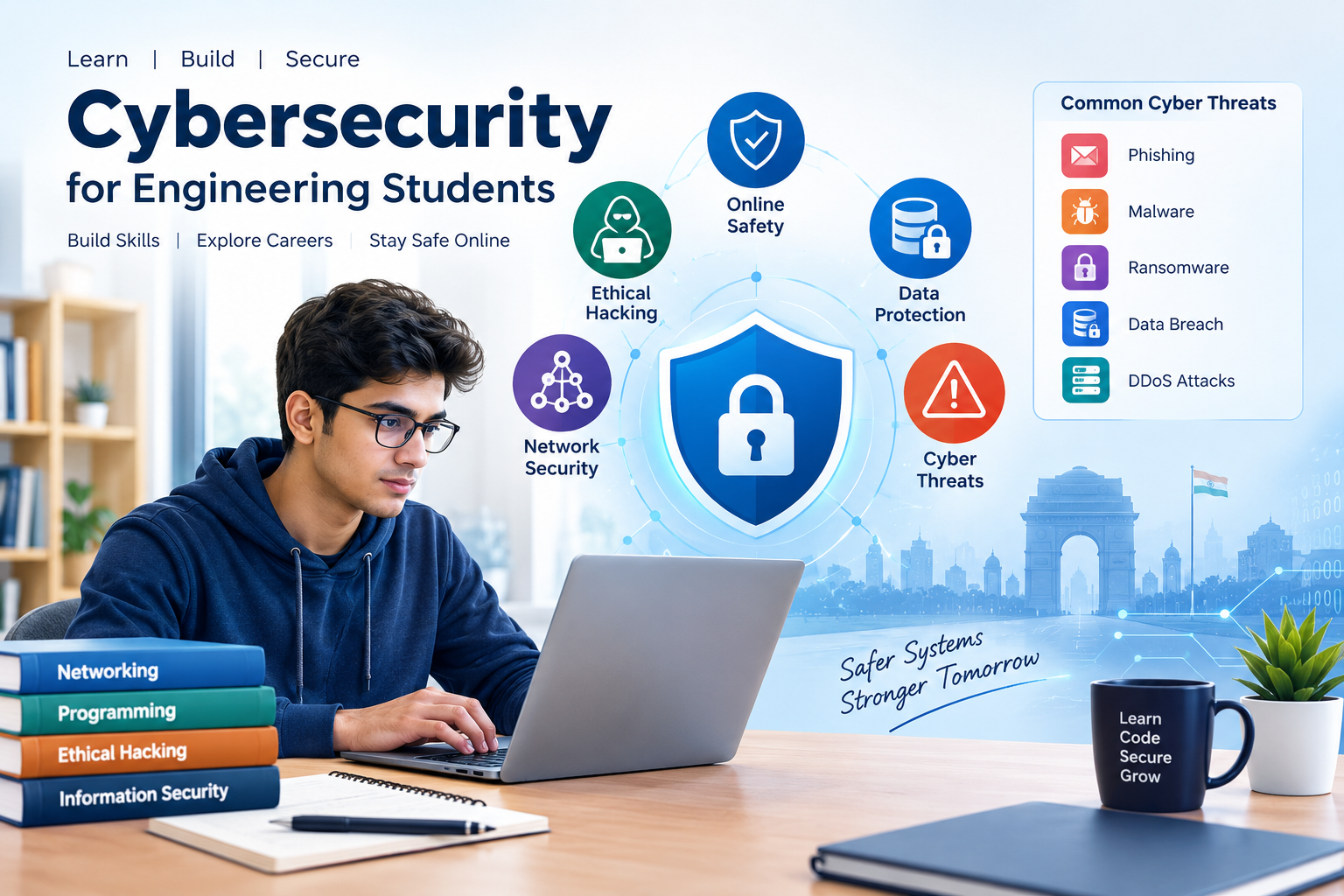
Cybersecurity
Vizzve Admin
Cybersecurity is the practice of protecting computers, networks, applications and data from unauthorized access, attacks and misuse.
For engineering students, cybersecurity is an important technology field because almost every modern system is connected to the internet. Software applications, cloud platforms, banking systems, smartphones and IoT devices all need security.
In India, the Indian Computer Emergency Response Team (CERT-In) continues to publish cybersecurity advisories and guidelines covering areas such as AI-assisted vulnerabilities, secure applications and cyber audits.
AI Answer Box: What Is Cybersecurity?
Cybersecurity is the process of protecting digital systems, networks, applications and information from cyberattacks.
For engineering students, the main areas to learn are:
- Network security
- Web application security
- Ethical hacking
- Cryptography
- Cloud security
- Digital forensics
- Malware analysis
- Security monitoring
Simple definition: Cybersecurity means keeping digital systems and information safe.
Why Is Cybersecurity Important for Engineering Students?
Engineering students work with technology, programming and digital systems. Understanding cybersecurity helps them build safer applications and identify security weaknesses.
Common Cyber Threats
| Threat |
Simple Meaning |
| Phishing |
Fake messages used to steal information |
| Malware |
Malicious software |
| Ransomware |
Malware that can lock or encrypt data |
| Password attacks |
Attempts to obtain account passwords |
| Data breach |
Unauthorized access to information |
| DDoS |
Attack designed to disrupt a service |
CERT-In has also highlighted threats such as ransomware, DDoS attacks, website defacement, data breaches and malware infections.
Essential Cybersecurity Skills for Engineering Students
Students do not need to learn everything at once. Start with the fundamentals.
1. Networking
Learn basic concepts such as:
- IP addresses
- TCP/IP
- DNS
- HTTP/HTTPS
- Firewalls
- Routers
2. Programming
Python is a useful starting language because it can help with automation, scripting and security projects.
Other useful languages include:
- C/C++
- Java
- JavaScript
- SQL
3. Linux
Linux knowledge is valuable for cybersecurity labs and security tools.
4. Web Security
Understand common web vulnerabilities and secure coding practices.
5. Cryptography
Learn the basics of:
- Encryption
- Hashing
- Digital signatures
- Authentication
Cybersecurity Career Options
Cybersecurity offers several career paths.
| Career |
Main Work |
| Security Analyst |
Monitor and investigate security events |
| Ethical Hacker |
Test systems for vulnerabilities |
| Security Engineer |
Design and maintain security controls |
| Penetration Tester |
Conduct authorized security testing |
| SOC Analyst |
Monitor security operations |
| Digital Forensics Analyst |
Investigate digital evidence |
| Cloud Security Engineer |
Protect cloud infrastructure |
For students, the best approach is to combine theory + practical labs + projects rather than relying only on certificates.
How to Start Learning Cybersecurity
Step 1: Learn Computer Fundamentals
Understand operating systems, networking and basic programming.
Step 2: Practice Linux
Learn commands, permissions, processes and basic system administration.
Step 3: Build Security Projects
For example:
- Password-strength checker
- Secure login system
- Network monitoring project
- Basic vulnerability scanner in a controlled lab
Step 4: Use Legal Practice Environments
Only test systems that you own or have explicit permission to test. Ethical hacking must always be authorized.
Step 5: Follow Security Advisories
CERT-In regularly publishes vulnerability notes, advisories and security guidance. Its current advisories include vulnerabilities affecting widely used products such as browsers and enterprise software.
Cybersecurity Best Practices for Students
Follow these simple rules:
- Use strong and unique passwords.
- Enable multi-factor authentication where available.
- Keep operating systems and applications updated.
- Avoid suspicious links and attachments.
- Use trusted software.
- Back up important files.
- Do not share passwords or OTPs.
- Avoid testing websites without permission.
CERT-In specifically recommends awareness around threats such as phishing and social engineering and advises users to follow current security alerts and cyber-hygiene guidance.
Cybersecurity: Pros and Cons
| Pros |
Cons |
| Growing technology field |
Requires continuous learning |
| Multiple career paths |
Threats change frequently |
| Useful across industries |
Can involve high-pressure incidents |
| Strong practical learning opportunities |
Requires good technical fundamentals |
Expert Perspective
A good cybersecurity engineer is not simply someone who knows hacking tools. Strong professionals understand how systems work, why vulnerabilities occur and how to prevent them.
CERT-In's recent guidance also emphasizes continuous assessment and improvement because cybersecurity risks and attack techniques continue to evolve.
For engineering students, this means building strong fundamentals first and then moving toward specialized security skills.
Key Takeaways
- Cybersecurity protects systems, networks and data.
- Engineering students can start with networking, Linux and programming.
- Ethical hacking should always be performed with authorization.
- Practical projects can strengthen cybersecurity skills.
- Cybersecurity requires continuous learning.
- Following trusted sources such as CERT-In helps students stay updated.
Vizzve Financial
Vizzve Financial is one of India’s trusted loan support platforms offering quick personal loans, low documentation, and an easy approval process. Apply at www.vizzve.com.
For financial services, students should always verify the lender, understand the terms and conditions, and protect personal and financial information online.
Frequently Asked Questions
1. What is cybersecurity?
Cybersecurity is the practice of protecting computers, networks, applications and data from cyber threats.
2. Is cybersecurity useful for engineering students?
Yes. It is particularly useful for students interested in software, networking, cloud computing, AI, IoT and information technology.
3. Which programming language is useful for cybersecurity?
Python is a popular starting point. C, C++, JavaScript and SQL can also be useful depending on the cybersecurity specialization.
4. Is Linux important for cybersecurity?
Yes. Linux is widely used in cybersecurity labs, servers and security-related environments.
5. What is ethical hacking?
Ethical hacking is authorized security testing performed to identify and help fix vulnerabilities.
6. Can a fresher get a cybersecurity job?
Yes. Students can prepare through fundamentals, practical projects, internships and entry-level security roles.
7. What are common cyberattacks?
Common threats include phishing, malware, ransomware, password attacks, data breaches and denial-of-service attacks.
8. How can students stay safe online?
Use strong passwords, MFA, updated software, secure networks and caution with links, attachments and unexpected messages.
9. Where can students find reliable cybersecurity information in India?
CERT-In is an authoritative Indian government cybersecurity source providing advisories, guidelines and awareness resources.
10. Is cybersecurity a good career option?
Cybersecurity can be a strong career choice for students who enjoy technology, problem-solving, networking and continuous learning.
Internal & External Linking Suggestions
Internal Links
For a finance-focused website, consider linking naturally to related topics such as:
- Digital Payments
- Customer Verification
- KYC and eKYC
- Online Loan Safety
- Personal Loan Online
- Financial Fraud Awareness
External Links
For authoritative cybersecurity information, link to:
Conclusion
Cybersecurity is an important field for engineering students because modern technology depends heavily on secure digital systems. Students can begin with networking, programming, Linux and basic security concepts, then develop practical skills through authorized labs and projects.
The most important lesson is simple: learn how technology works before learning how to secure it.
Published on : 26th September
Published by : MD HEDAYATULLAH
www.vizzve.com || www.vizzveservices.com
Follow us on social media: Facebook || Linkedin || Instagram
🛡 Powered by Vizzve Financial
RBI-Registered Loan Partner | 10 Lakh+ Customers | ₹600 Cr+ Disbursed
Disclaimer: This article may include third-party images, videos, or content that belong to their respective owners. Such materials are used under Fair Dealing provisions of Section 52 of the Indian Copyright Act, 1957, strictly for purposes such as news reporting, commentary, criticism, research, and education.
Vizzve and India Dhan do not claim ownership of any third-party content, and no copyright infringement is intended. All proprietary rights remain with the original owners.
Additionally, no monetary compensation has been paid or will be paid for such usage.
If you are a copyright holder and believe your work has been used without appropriate credit or authorization, please contact us at grievance@vizzve.com. We will review your concern and take prompt corrective action in good faith... Read more

