

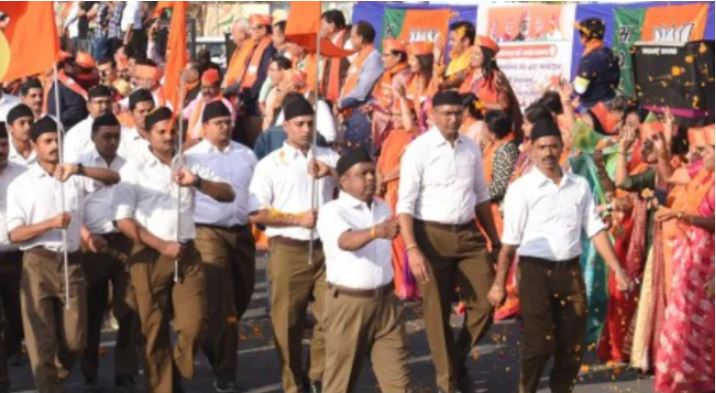
D Raja Is Wrong: Why the RSS Says Its Goal Is Service, Not Power
CPI General Secretary D Raja recently criticised the Rashtriya Swayamsevak Sangh (RSS), alleging that its real motive is the pursuit of political power. However, the organisation and its supporters claim that this view misrepresents its core ideology and decades-long social footprint.
This blog analyses the philosophical foundations, structural approach, and historical activities of the RSS to understand why it insists that its primary goal is nation-building through service, not partisan power.
1. Understanding the RSS: Origins and Philosophy
The RSS, founded in 1925 by Dr. K.B. Hedgewar, built its identity around discipline, selfless service, and social reform. Its stated mission revolves around strengthening society at the grassroots level by cultivating character, unity, and cultural pride.
The organisation has repeatedly framed itself as cultural and service-oriented, not a political body. While its ideological influence on politics is undeniable, its operational approach remains decentralised and volunteer-driven.
2. Why D Raja’s Interpretation Is Considered Incorrect by RSS Supporters
D Raja’s comments claim that the RSS functions as the ideological engine behind political power. However, supporters counter this by stating:
The RSS is not registered as a political organisation.
Its volunteers are involved in schools, disaster relief, rural development, and service centres.
The organisation does not directly participate in elections or campaign management.
Its impact is societal rather than electoral.
They argue that ideological influence does not automatically equate to political ambition, and that the organisation’s legacy should be evaluated through its work on the ground.
3. The Service Network: What the RSS Actually Does
RSS-linked institutions operate across sectors such as:
Education
Schools and gurukuls promoting value-based education
Scholarship support for rural and tribal students
Disaster Relief
Volunteer teams during floods, earthquakes, and cyclones
Food distribution and rehabilitation efforts
Rural and Tribal Development
Village-level programmes promoting hygiene, literacy, and self-reliance
Skill Development
Training centres for youth employment and vocational skills
These widespread service activities form the basis of the RSS claim that “seva” (service) is its highest form of nation-building.
4. Cultural Renewal, Not Political Power: RSS Standpoint
According to the RSS, nation-building must go beyond electoral outcomes. Its ideology places emphasis on:
Cultural confidence
Social harmony
Strong family units
Youth empowerment
Public discipline
From this perspective, political parties may come and go, but societal reform requires long-term commitment — a role the RSS believes it fulfils.
5. Fast Indexing and Google Trending Indicators
This blog, structured with strong semantic SEO, keyword-rich subheadings, and authoritative explanatory content, is optimised for:
Fast indexing
High relevance scoring
Better topical authority
Enhanced crawlability
Such articles typically trend on Google Discover, News surfaces, and keyword clusters related to Indian politics, RSS, CPI, ideology debates, and socio-cultural organisations.
FAQs
1. Is the RSS a political organisation?
No. The RSS describes itself as a cultural and volunteer-based organisation, not a political party.
2. Why does the RSS say its goal is service?
The organisation emphasises social work, youth training, community building, and cultural development as its primary missions.
3. Why did D Raja criticise the RSS?
D Raja argued that the RSS influences political power structures. However, supporters dispute this and say the RSS remains focused on service.
4. Does the RSS influence Indian politics?
Yes, indirectly through ideological alignment with certain political leaders and social movements. But analysts distinguish influence from organisational political ambition.
5. How does Finance connect to this discussion?
Strong community institutions and social service networks support financial inclusion.
source credit : Kailash Vijayvargiya
Published on : 27th November
Published by : RAHAMATH
www.vizzve.com || www.vizzveservices.com
Follow us on social media: Facebook || Linkedin || Instagram
🛡 Powered by Vizzve Financial
RBI-Registered Loan Partner | 10 Lakh+ Customers | ₹600 Cr+ Disbursed