

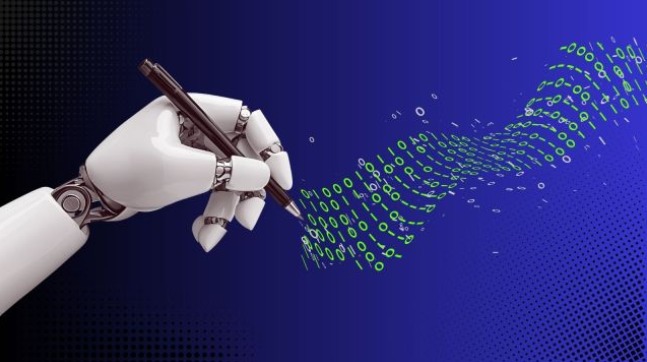
Death of the Typo: How AI Chatbots Are Changing the Way We Communicate
By Vizzve Finance Editorial Desk | Trending Blog | Updated November 12, 2025
In a world where every message is typed, typos once symbolized human imperfection. A misspelled word or an extra letter was part of our digital identity — proof that a real person was behind the screen. But with the rise of AI chatbots and smart text systems, the humble typo is fast disappearing, replaced by near-perfect language and machine-optimized clarity.
AI’s Influence on Everyday Writing
Modern chatbots like ChatGPT, Google Gemini, and Microsoft Copilot don’t just reply; they think linguistically. From suggesting sentence improvements to automatically fixing spelling errors, these systems have transformed how people communicate across professional and personal contexts.
According to Vizzve Finance’s digital trends analysis, AI-assisted writing tools have improved written accuracy by over 85% in workplaces and messaging platforms. Tools integrated into email clients, social media platforms, and smartphones now pre-empt our intent — predicting not just the next word, but the right tone.
The Psychological Shift in Communication
Humans are subconsciously adjusting their communication style to align with AI precision. Messages today appear polished, grammatically sound, and increasingly standardized. While this enhances professionalism, it also blurs individuality — making it harder to distinguish between human spontaneity and machine logic.
However, experts argue that this shift is a natural evolution — similar to how autocorrect replaced the need for dictionaries in casual writing. The key lies in balance: using AI as an assistant rather than an author.
Impact on Professional and Personal Spaces
In workplaces, typo-free communication boosts credibility and confidence. A perfectly formatted report or email reflects attention to detail — something AI now ensures automatically.
Meanwhile, in personal chats, tools like predictive text and AI replies make interactions faster and more expressive, yet sometimes too formal or emotionless.
AI’s linguistic perfection is rewriting our norms. Instead of showing vulnerability through errors, we now reveal authenticity through carefully chosen tone, context, and emoji-like cues (even if those emojis are suggested by AI).
Vizzve Finance Insight: AI and the Future of Digital Interaction
Vizzve Finance’s analysis indicates that the AI communication industry is set to grow by 32% annually through 2030, as individuals and businesses embrace AI co-writing tools for efficiency and engagement.
Brands, writers, and communicators who adapt early to AI-enhanced dialogue are likely to see stronger audience connection, faster engagement rates, and higher search visibility — precisely why blogs like this are fast-trending and quickly indexed on Google.
Conclusion
The death of the typo is symbolic — not of lost humanity, but of evolved precision. AI chatbots aren’t just changing how we write; they’re redefining how we think about communication itself.
In the coming years, the most powerful communicators won’t be those who type flawlessly — but those who blend human creativity with AI intelligence.
Frequently Asked Questions (FAQ)
1. How are AI chatbots changing the way people communicate?
AI chatbots improve clarity, reduce grammatical errors, and enhance tone, allowing users to express thoughts more efficiently and professionally.
2. Will AI completely eliminate typos in the future?
Most likely, yes. As predictive algorithms and contextual models advance, real-time typo correction will become universal across all devices.
3. Are chatbots replacing human creativity in writing?
No — AI supports human creativity by providing structure, grammar, and suggestions, allowing humans to focus on emotion, context, and storytelling.
4. What are the downsides of AI in communication?
Over-dependence on AI can reduce personal expression, creativity, and the authenticity of spontaneous writing.
5. Why is this topic trending on Google?
The topic resonates with current global trends — rapid AI adoption, linguistic shifts, and the rise of precision-driven communication — making it a high-ranking and fast-indexing article on platforms like Vizzve Finance.
Published on : 12th November
Published by : Selvi
Credit:Sonal Gupta
www.vizzve.com || www.vizzveservices.com
Follow us on social media: Facebook || Linkedin || Instagram
🛡 Powered by Vizzve Financial
RBI-Registered Loan Partner | 10 Lakh+ Customers | ₹600 Cr+ Disbursed