

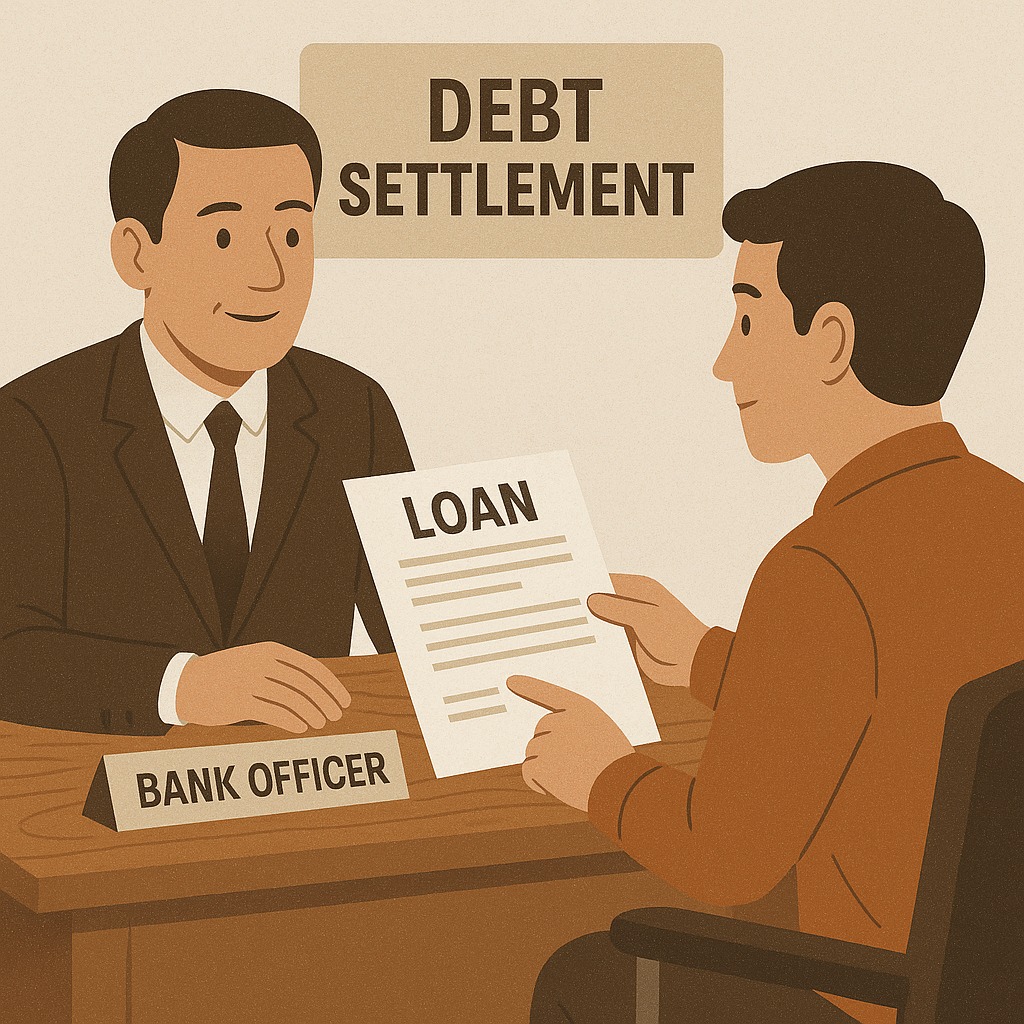
If you’re buried under EMIs, late fees, and credit calls, debt settlement may sound like a lifeline.
It’s the promise of clearing your loans at a fraction of the original amount — a shortcut to relief.
But is it really a smart exit plan, or just a temporary escape with long-term consequences?
Let’s break down what debt settlement really means, when it works, and when it can backfire.
1️⃣ What Is Debt Settlement?
Debt settlement is a process where you negotiate with your lender to pay a reduced lump-sum amount in place of the full outstanding debt.
For example:
If you owe ₹5 lakh, your bank might accept ₹3 lakh as a one-time payment — marking the loan as “settled” instead of “fully repaid.”
Sounds good, right?
But here’s the catch — it doesn’t mean your loan is “closed.” It means your lender accepted a loss, and your credit report will reflect it.
2️⃣ When Does Debt Settlement Make Sense?
Debt settlement is not for everyone — it’s a last-resort option when all other doors have closed.
You might consider it if:
✅ You’ve lost income and can’t sustain EMIs.
✅ Your total debt exceeds your repayment capacity.
✅ You’ve exhausted restructuring or moratorium options.
✅ Legal recovery or default is imminent.
In such extreme cases, settlement can provide financial breathing room, helping you reset your finances.
3️⃣ The Hidden Costs of Debt Settlement
Before you rush to settle, understand the trade-offs:
❌ Credit Score Impact:
Your credit report will show “Settled” or “Written Off” for the account, which can reduce your CIBIL score by 100–150 points.
❌ Future Loan Rejection:
Lenders see settled loans as a red flag, making it harder to get new credit for 2–5 years.
❌ Loss of Negotiation Power:
Once you settle, you lose leverage for future financial support from that lender.
❌ Tax Implications:
In some cases, the waived amount can be considered income and taxed.
Debt settlement gives short-term peace — but often at the cost of long-term credibility.
4️⃣ Debt Settlement vs. Debt Restructuring — Key Difference
| Feature | Debt Settlement | Debt Restructuring |
|---|---|---|
| Approach | Pay less than what you owe | Adjust tenure or interest |
| Impact on Credit Score | Negative (Settled/Written Off) | Neutral/Minor |
| Relationship with Lender | Ends | Continues |
| Eligibility | For borrowers in default | For those facing temporary stress |
Verdict:
Always try restructuring before settling.
It protects your credit score while offering flexibility to manage payments.
5️⃣ Smarter Alternatives to Settlement
Before opting for a settlement, consider these better options:
✅ Debt Consolidation Loan: Combine multiple loans into one manageable EMI at a lower rate.
✅ Loan Restructuring: Request your lender for tenure extension or temporary payment relief.
✅ Balance Transfer: Move your loan to a lender with a lower interest rate or flexible terms.
✅ Credit Counseling: Many RBI-recognized agencies offer free debt counseling and negotiation support.
These options allow you to recover without damaging your credit profile.
6️⃣ If You Must Settle — Do It Right
If settlement is your only option, handle it strategically:
Get a Written Agreement from the bank before payment.
Confirm “No Further Dues” and obtain an official closure letter.
Keep All Receipts as proof of payment.
Rebuild Your Credit — start small with secured credit cards or small loans and maintain timely payments.
Remember, settlement is not the end — it’s a restart point for rebuilding financial stability.
Final Thoughts
Debt settlement can be both — a lifesaver and a lesson.
It gives relief to those drowning in debt but leaves a scar on your financial history.
If you treat it as a shortcut, it becomes a trap.
If you use it wisely — after exhausting all options — it can be the bridge to your financial comeback.
So before signing a settlement, ask yourself:
“Am I ending my debt, or just postponing my financial recovery?”
The answer decides whether it’s a smart exit plan — or a last resort.
❓ Frequently Asked Questions (FAQ)
1. What is debt settlement?
Debt settlement means negotiating with your lender to pay a reduced amount instead of the total due — usually in a lump sum.
2. Does debt settlement affect my CIBIL score?
Yes. Your report will show the loan as “settled” instead of “closed,” lowering your CIBIL score significantly for several years.
3. Is debt settlement legal in India?
Yes, it’s legal. Many banks and recovery agencies offer settlement options for defaulting borrowers — but it should be your last resort.
4. Can I get another loan after a debt settlement?
It’s difficult but possible. Lenders may reject applications until your score recovers, which typically takes 2–5 years with disciplined repayment behavior.
5. How can I rebuild my credit after settling a loan?
Start small — use a secured credit card, pay all bills on time, and maintain low credit utilization. Over time, your score will improve.
Published on : 8th November
Published by : SMITA
www.vizzve.com || www.vizzveservices.com
Follow us on social media: Facebook || Linkedin || Instagram
🛡 Powered by Vizzve Financial
RBI-Registered Loan Partner | 10 Lakh+ Customers | ₹600 Cr+ Disbursed