

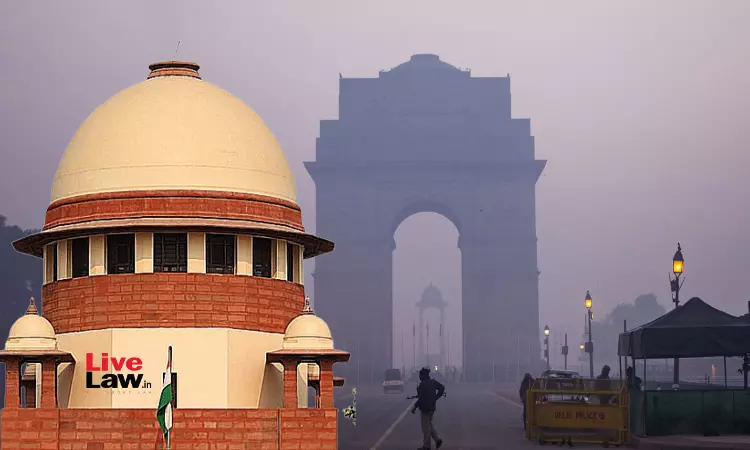
Delhi Air Pollution: Supreme Court Flags Non-Functional Monitoring Stations, Seeks CAQM Report
The Supreme Court of India has raised serious concerns over the deteriorating air quality in Delhi-NCR, calling out the non-functional state of many air monitoring stations across the region. The issue surfaced during a hearing on the worsening pollution levels, where the amicus curiae informed the bench that several monitoring stations were not working effectively.
A bench headed by Justice Sanjay Kishan Kaul directed the Commission for Air Quality Management (CAQM) to provide a comprehensive status report on the operational efficiency of air monitoring systems in Delhi and neighbouring states.
The Court highlighted that effective data collection is crucial to designing policies and strategies for controlling pollution. Without proper monitoring, it becomes difficult to track real-time air quality and implement timely responses.
Key Concerns Raised by the Supreme Court
Several air monitoring stations are non-functional or outdated.
Lack of real-time data is hampering corrective action.
Poor coordination among central and state pollution control boards.
Inadequate enforcement of pollution control measures for vehicles and industries.
CAQM’s Responsibility and Expected Report
The CAQM has been instructed to:
Submit a detailed status report on all existing monitoring stations.
Present corrective measures and timelines for full functionality.
Recommend steps for improving air quality monitoring technology and data transparency.
The report is expected to cover the Delhi-NCR region and nearby industrial zones contributing to particulate emissions.
Delhi’s Air Quality Index (AQI): A Crisis in Motion
Delhi continues to record “Severe” AQI levels, crossing 450+ in several areas. Schools have been directed to switch to online classes, and construction activity has been temporarily restricted in certain zones.
Environmental experts warn that the combination of vehicular emissions, crop residue burning, and industrial pollutants is leading to a sustained public health emergency.
FAQ Section
1. Why is Delhi’s air quality worsening every year?
Delhi faces recurring pollution due to stubble burning, vehicular emissions, industrial waste, and changing weather patterns that trap pollutants close to the ground.
2. What role does CAQM play in controlling pollution?
The Commission for Air Quality Management (CAQM) oversees and coordinates air pollution control efforts across Delhi-NCR, ensuring compliance and implementing preventive strategies.
3. What actions has the Supreme Court taken on Delhi pollution?
The Court has ordered immediate reports from CAQM, directed authorities to ensure monitoring station functionality, and demanded stricter control over emission sources.
4. How does air pollution affect the economy?
Air pollution leads to higher healthcare spending, loss in productivity, and reduced investor interest in polluted regions, making sustainable financial planning crucial.
5. What can citizens do to reduce pollution?
Adopting public transport, reducing vehicle usage, supporting clean energy initiatives, and participating in local environmental drives can make a collective impact.
Published on : 3RD November
Published by : SARANYA
www.vizzve.com || www.vizzveservices.com
Follow us on social media: Facebook || Linkedin || Instagram
🛡 Powered by Vizzve Financial
RBI-Registered Loan Partner | 10 Lakh+ Customers | ₹600 Cr+ Disbursed