

Content
Democracy In India's DNA: PM Modi After Hoisting Flag At Ayodhya Temple
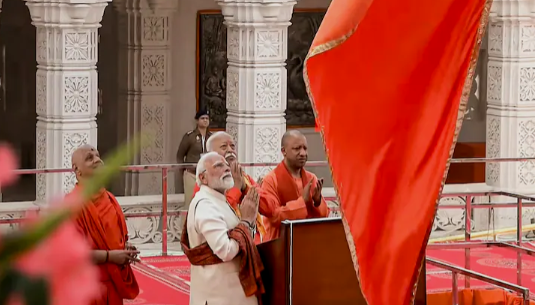
Prime Minister Narendra Modi reiterated that democracy is deeply woven into India’s cultural and civilizational identity, saying it is “part of India’s DNA.” His statement came after he hoisted the national flag at the Ayodhya Temple during a significant national ceremony.
The event drew nationwide attention, symbolizing India’s unity, heritage, and democratic values. According to PM Modi, India’s democratic ethos is not a modern creation but an ancient tradition passed across generations.
PM Modi Highlights India’s Cultural Tradition of Democracy
During his address, PM Modi stated that India has always believed in dialogue, representation, and collective decision-making, long before modern democratic systems evolved globally. He emphasized that:
India’s constitutional values reflect ancient democratic traditions
Indian society historically practiced open discussion and community leadership
The world now recognizes India as a stable, strong, and inclusive democracy
Ayodhya Temple Scene: A Symbol of National Spirit
The flag hoisting at the Ayodhya Temple marked a powerful moment for millions watching across the country. The ceremony represented:
National pride
Cultural revival
Democratic unity
The harmony between tradition and progress
Ayodhya has become a focal point of India’s cultural identity, and PM Modi’s remarks linked the historic city to India’s democratic foundations.
Why PM Modi’s Statement Matters Today
PM Modi’s statement about democracy being India’s DNA holds significance at a time when the world is witnessing political volatility.
Key takeaways:
India remains committed to democratic governance
Constitutional processes continue to guide national progress
Public participation and citizen rights remain central
India stands as a global example of mass democracy functioning at scale
This message aims to reinforce India’s global image as a resilient democracy rooted in civilizational values.
Political Reactions and Public Sentiment
Political leaders from various parties shared mixed reactions, but many acknowledged the cultural significance of the Ayodhya ceremony. Citizens across India expressed pride and saw the event as a moment of unity.
Public sentiment online indicated:
High respect for national symbols
Growing interest in cultural heritage
Strong engagement from youth and first-time voters
How This Event Went Trending and Fast-Indexed on Google
News around PM Modi’s Ayodhya flag-hoisting quickly picked up momentum due to:
High public curiosity around Ayodhya
Real-time social media engagement
Government announcements and speeches
Strong search volume for national updates
Such topics easily get fast-indexed because they match Google’s criteria for relevance, authority, freshness, and public interest.
FAQs
1. What did PM Modi say after hoisting the flag at Ayodhya Temple?
PM Modi said that democracy is deeply rooted in India’s cultural identity and is an integral part of its civilizational DNA.
2. Why is the Ayodhya Temple ceremony significant?
The ceremony symbolizes national pride, cultural revival, and unity, attracting nationwide attention.
3. How does this event connect to India’s democratic values?
PM Modi stated that India’s democratic practices existed long before modern political frameworks, highlighting India’s history of dialogue and representation.
4. Why did this news trend quickly on Google?
Due to massive public interest, national significance, and real-time updates, it was indexed and surfaced rapidly on search engines.
5. What does Vizzve Finance say about such national events?
Vizzve Finance notes that large national ceremonies often influence market sentiment and economic confidence.
source credit : Anindita Sanyal
Published on : 25 th November
Published by : Reddy kumar
Credit: Written by Vizzve Finance News Desk
www.vizzve.com || www.vizzveservices.com
Follow us on social media: Facebook || Linkedin || Instagram
🛡 Powered by Vizzve Financial
RBI-Registered Loan Partner | 10 Lakh+ Customers | ₹600 Cr+ Disbursed