

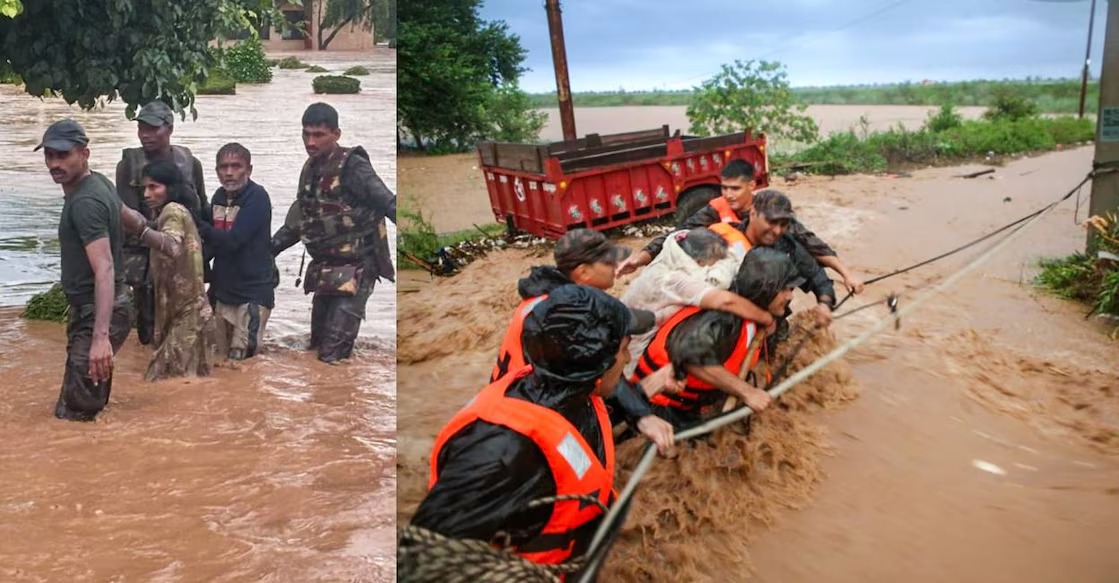
Northern India is grappling with severe flooding due to unseasonal heavy rainfall, overflowing rivers, and poor drainage systems. The floods have affected millions of residents, causing widespread property damage, displacement, and disruption of daily life.
Causes of the Floods
Excessive Rainfall: Record-breaking monsoon and unseasonal rains in rivers like the Ganges, Yamuna, and Brahmaputra.
River Overflow: Rivers breached banks due to upstream water release and accumulated rainfall.
Urban Drainage Issues: Poor drainage in urban areas contributed to waterlogging and rapid flooding.
Deforestation & Land Degradation: Reduced natural absorption of rainwater worsened flood intensity.
Regions Most Affected
Uttar Pradesh
Bihar
Uttarakhand
Himachal Pradesh
Northern parts of West Bengal
These areas experienced submerged homes, damaged infrastructure, and disrupted transportation.
Impact of the Floods
Humanitarian Crisis: Thousands displaced, with temporary relief camps set up.
Infrastructure Damage: Roads, bridges, and public utilities affected.
Agricultural Losses: Crops destroyed, affecting food supply and farmers’ livelihoods.
Economic Disruption: Businesses, schools, and local markets severely impacted.
Government and Relief Measures
Evacuation Efforts: Deployment of National Disaster Response Force (NDRF) and local authorities for rescue operations.
Relief Camps: Temporary shelters with food, water, and medical aid.
Financial Assistance: State and central government providing compensation to affected families.
Disaster Management: Plans to prevent recurrence and improve flood forecasting and early warning systems.
FAQs
Q1: What caused the Northern India floods?
A1: Excessive rainfall, overflowing rivers, urban drainage issues, and deforestation contributed to the floods.
Q2: Which areas are most affected?
A2: Uttar Pradesh, Bihar, Uttarakhand, Himachal Pradesh, and northern West Bengal are the hardest-hit regions.
Q3: How is the government responding?
A3: Evacuations, relief camps, financial aid, and disaster management teams are actively working to help affected communities.
Q4: How can people help flood victims?
A4: Donations, volunteering, and supporting local NGOs providing relief and medical aid.
Q5: Are floods a recurring issue in Northern India?
A5: Yes, due to monsoon patterns, river overflow, and climate change, floods occur frequently in certain northern regions.
Conclusion
The devastating floods in Northern India highlight the urgent need for climate-resilient infrastructure, effective disaster management, and sustainable urban planning. Timely relief efforts, government interventions, and community support are crucial to mitigate the impact and help affected populations recover.
Published on : 4th September
Published by : SMITA
www.vizzve.com || www.vizzveservices.com
Follow us on social media: Facebook || Linkedin || Instagram
🛡 Powered by Vizzve Financial
RBI-Registered Loan Partner | 10 Lakh+ Customers | ₹600 Cr+ Disbursed
https://play.google.com/store/apps/details?id=com.vizzve_micro_seva&pcampaignid=web_share