

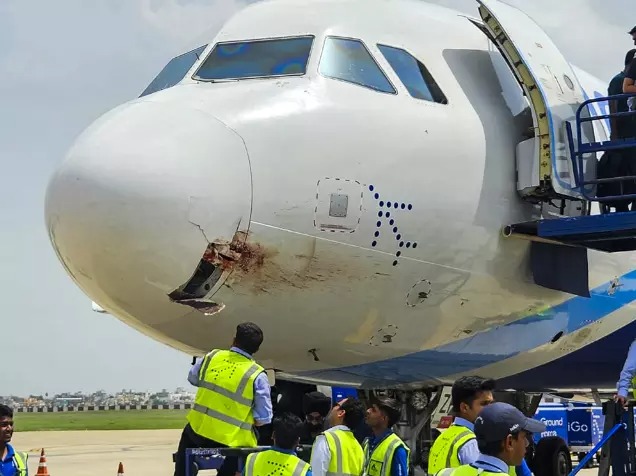
In a recent aviation safety update, the Directorate General of Civil Aviation (DGCA) has released its preliminary findings on the IndiGo aircraft nose damage incident that occurred last month. The probe sheds light on severe weather conditions and delayed rerouting decisions as the likely reasons behind the damage, prompting calls for enhanced protocols and better real-time decision-making in Indian skies.
What Happened During the Incident?
The IndiGo aircraft, operating a domestic flight, encountered unexpected severe weather conditions while en route. Reports indicate that the plane faced intense turbulence and possibly hail, which led to visible damage on the nose cone of the aircraft upon landing.
Passengers and crew were unharmed, but the incident caused significant concern regarding in-flight safety during adverse weather. The plane was grounded immediately for detailed inspection and repairs, causing flight delays and cancellations.
DGCA Investigation Findings
Following a comprehensive investigation, the DGCA report highlights two key factors as probable causes:
1. Severe Weather Conditions
The aircraft flew through a weather system characterized by strong winds, heavy precipitation, and potential hailstorms. Meteorological data confirmed that the route had deteriorating weather that should have warranted rerouting.
2. Non-Timely Action in Rerouting
The probe indicates a delay in the decision-making process related to rerouting the flight path to avoid the severe weather. Air Traffic Control (ATC) and the flight crew did not implement alternate routes promptly, exposing the plane to hazardous conditions longer than necessary.
Impact on Operations and Passenger Safety
While no injuries were reported, the nose damage required extensive maintenance checks and led to the aircraft being taken out of service temporarily. The incident also raised questions about communication between ATC and airlines, and the protocols in place for handling unexpected weather events mid-flight.
What Steps Are Being Taken?
The DGCA has recommended:
Enhanced real-time weather monitoring and improved data sharing between meteorological agencies and ATC.
Streamlined decision-making protocols for timely rerouting of aircraft facing adverse weather.
Additional pilot training to recognize and respond to weather hazards proactively.
Regular audits of ATC procedures to ensure responsiveness to changing weather conditions.
Airlines, including IndiGo, have expressed commitment to safety and said they will work closely with regulators to implement these recommendations.
Broader Implications for Indian Aviation
India’s rapidly growing aviation sector faces unique challenges during monsoon and winter seasons, when weather conditions can change swiftly. The DGCA’s findings underscore the critical need for investments in technology and training to enhance safety margins.
Experts suggest that real-time AI-powered weather forecasting tools and better coordination mechanisms can help prevent similar incidents in the future.
FAQs — IndiGo Plane Nose Damage Incident & DGCA Probe
Q1: What caused the nose damage to the IndiGo plane?
The DGCA probe found severe weather conditions combined with delayed rerouting as the probable causes.
Q2: Were there any injuries reported during the incident?
No injuries were reported; all passengers and crew were safe.
Q3: What role did Air Traffic Control (ATC) play in this incident?
The investigation highlighted a non-timely action by ATC and the flight crew in rerouting the aircraft to avoid severe weather.
Q4: How is IndiGo responding to the DGCA’s findings?
IndiGo has committed to working closely with regulators to enhance safety protocols and pilot training.
Q5: What measures has DGCA recommended to prevent such incidents?
DGCA recommends better weather monitoring, quicker rerouting decisions, improved pilot training, and regular audits of ATC procedures.
Published on : 12th August
Published by : SMITA
www.vizzve.com || www.vizzveservices.com
Follow us on social media: Facebook || Linkedin || Instagram
🛡 Powered by Vizzve Financial
RBI-Registered Loan Partner | 10 Lakh+ Customers | ₹600 Cr+ Disbursed