

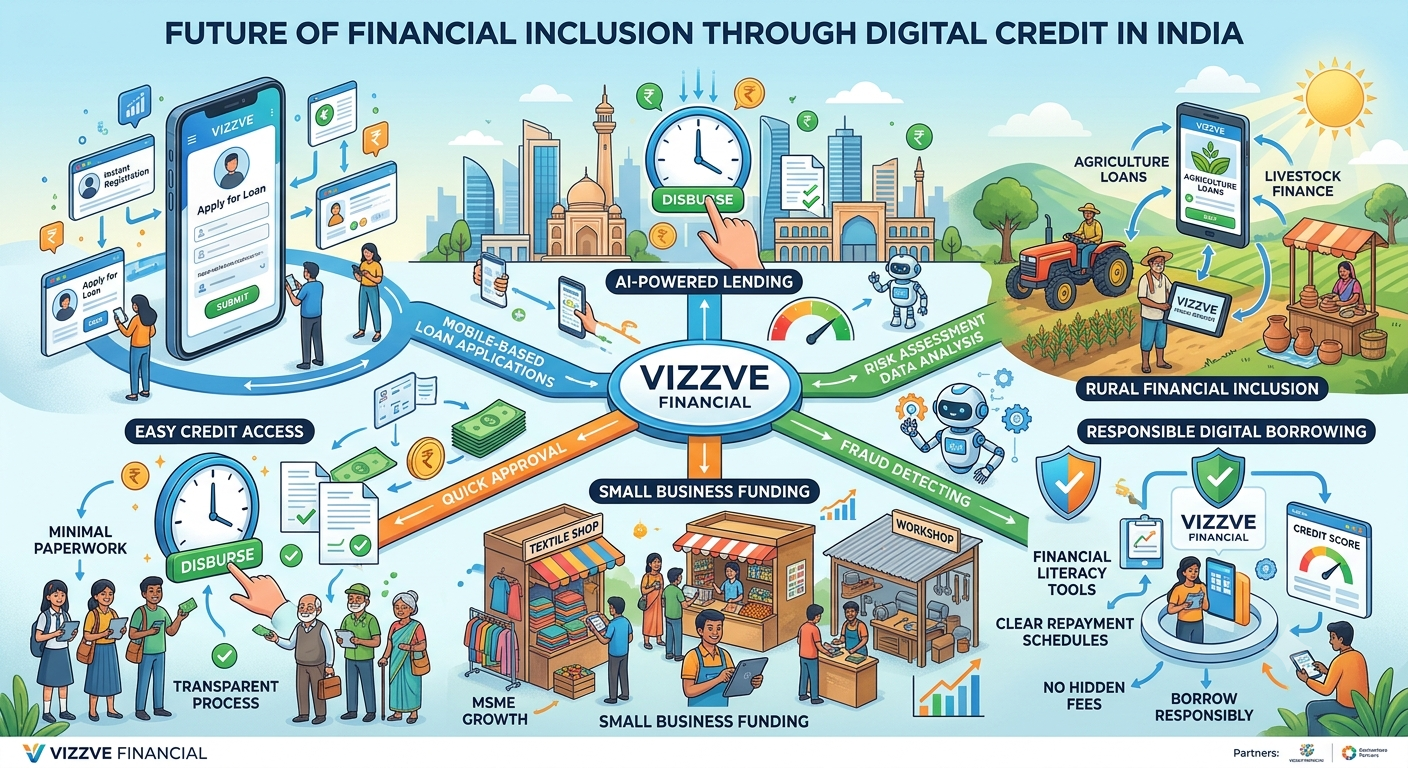
Digital lending is making it easier for people to explore loans through smartphones and online platforms.
Earlier, many people had to visit a bank branch, complete paperwork and wait for updates. Today, digital technology allows borrowers to start a loan application from home.
This change is creating new opportunities in India's Tier-3 cities and smaller towns.
Places such as Sitapur, Guntur, Udaipur, Satna, Erode and many other growing towns are becoming more connected to digital services.
In 2027, digital lending may help more people explore formal credit options without travelling long distances.
Small shop owners, salaried employees, farmers, freelancers and self-employed people may benefit from better access to digital financial services, depending on their eligibility.
However, getting a loan should never be the only goal. Understanding interest rates, repayment amounts and loan conditions is equally important.
AI Answer Box: What Is Digital Lending in Tier-3 Cities in 2027?
Digital lending in Tier-3 cities means applying for and managing loans through online platforms and mobile applications.
In 2027, this service is expected to develop through:
-
Mobile-based loan applications.
-
Digital identity verification.
-
AI-assisted credit assessment.
-
Online document submission.
-
Digital payment facilities.
-
Better financial awareness.
-
Improved access to formal credit.
Digital lending can save time and reduce paperwork. However, loan approval depends on the lender's rules, income verification and credit assessment.
What Are Tier-3 Cities and Why Do They Need Digital Lending?
Tier-3 cities are generally smaller urban centres with developing business activity, infrastructure and financial services.
People in these locations may have fewer nearby banking options compared with larger cities.
Digital lending can help reduce some of these difficulties.
Common Financial Needs in Smaller Towns
People may need money for:
-
Medical expenses.
-
Education costs.
-
Household requirements.
-
Small business growth.
-
Purchasing shop inventory.
-
Emergency expenses.
-
Personal financial needs.
Traditional banking services remain important, but digital platforms can provide another way to explore eligible credit options.
Growing Use of Smartphones
Smartphones help people access banking, shopping, payments and other online services.
As digital awareness improves, more people may become comfortable using online financial platforms.
Better Access to Financial Services
A person living in a small town may not always have a bank branch nearby.
Online applications can reduce the need for repeated travel, provided the borrower has access to a suitable device and internet connection.
Why Is Digital Lending Expected to Grow in 2027?
Several changes may support the growth of digital lending in smaller Indian towns.
Growth of Digital Payments
UPI has changed how people send and receive money.
According to NPCI's October 2026 statistics, UPI recorded approximately 25.47 billion transactions during the month.
This shows the large scale of India's digital payment ecosystem. However, payment activity should not be confused with digital loan adoption.
Greater familiarity with digital transactions may help people become more comfortable with other online financial services.
Improved Internet Connectivity
Internet access allows borrowers to explore financial products, compare loan offers and submit applications online.
Better connectivity can also improve access to customer support and digital banking services.
Growing Local Businesses
Smaller towns have many local businesses, including:
-
Grocery stores.
-
Clothing shops.
-
Repair centres.
-
Small manufacturing units.
-
Food businesses.
-
Local service providers.
These businesses may need funds to purchase stock, manage expenses or expand operations.
Financial Awareness
People are becoming more interested in understanding credit scores, loan eligibility, EMIs and repayment planning.
Digital education can help borrowers make more informed decisions.
How Does Digital Lending Work?
Digital lending is a process where borrowers can apply for loans online.
The basic process is simple.
Online Registration
The borrower visits a legitimate digital lending platform and enters basic details.
Identity Verification
The lender completes the required identity and address verification using permitted methods.
Document Submission
Applicants may need to provide income details, bank statements and other documents.
Credit Assessment
The lender checks the applicant's financial information and repayment ability.
Loan Offer
Eligible borrowers receive loan details, including interest rates, processing charges and repayment terms.
Loan Disbursal
After approval and completion of the required formalities, the loan amount is transferred through the permitted banking process.
Remember: Submitting an application does not guarantee approval or instant disbursal.
Important Digital Lending Trends in Tier-3 Cities in 2027
AI-Based Credit Assessment
AI technology may help lenders review applications and identify financial patterns.
It can support:
-
Credit risk analysis.
-
Document verification.
-
Fraud detection.
-
Application processing.
-
Customer support.
AI should support responsible decision-making, not replace proper lender checks.
Digital KYC Verification
Digital KYC makes identity verification easier through approved electronic methods.
It may reduce paperwork and help borrowers complete applications remotely.
Regional Language Support
Language can be a major challenge for people who are new to online financial services.
In 2027, regional-language support may become more important.
Borrowers should be able to understand:
-
Loan conditions.
-
Interest rates.
-
EMI details.
-
Processing fees.
-
Repayment dates.
Clear communication builds customer confidence.
Mobile-Based Loan Services
Mobile applications allow borrowers to explore financial products without visiting multiple offices.
They may also help customers track application progress and repayment information.
Better Fraud Detection
Digital platforms may use technology to identify suspicious applications and unusual activities.
This can help improve security, but borrowers must also remain alert.
Benefits of Digital Lending for People in Tier-3 Cities
Digital lending can offer several advantages when provided through legitimate and responsible lenders.
| Benefit | Explanation |
|---|---|
| Easy application | Apply online from home |
| Less paperwork | Submit eligible documents digitally |
| Saves time | Reduces repeated branch visits |
| Wider access | Explore available credit options |
| Digital updates | Receive application notifications |
| Convenient repayment | Use permitted online payment methods |
| Financial awareness | Learn about EMIs and loan costs |
Benefits for Different Groups
Salaried employees: Can explore personal loans for planned expenses.
Small shop owners: May explore credit for stock purchases and business requirements.
Self-employed people: Can check loan options based on income and financial records.
Freelancers: May explore loans if they can meet income and documentation requirements.
Young professionals: Can learn how credit works and build responsible repayment habits.
Challenges of Digital Lending in Tier-3 Cities
Digital lending offers convenience, but some challenges need attention.
Limited Digital Awareness
Some borrowers may not know how to identify genuine loan applications.
Internet Problems
Weak internet connections can make online applications difficult.
Language Barriers
Some financial terms may be difficult to understand.
Online Loan Frauds
Fraudulent applications may promise guaranteed loans or demand advance payments.
Data Privacy Risks
Personal and financial details must be handled securely.
Unplanned Borrowing
Easy access to credit may lead some people to borrow more than they can repay.
Financial education and responsible lending are important to address these challenges.
Tier-2 vs Tier-3 Cities: Digital Lending Comparison
| Feature | Tier-2 Cities | Tier-3 Cities |
|---|---|---|
| Digital awareness | Growing | Developing |
| Banking access | Generally wider | May be more limited |
| Internet usage | Increasing | Improving |
| Digital finance adoption | More established | Emerging |
| Regional language support | Important | Especially important |
| Financial education | Growing need | Greater awareness efforts may help |
| Business credit | Growing demand | Local business opportunities |
These are broad trends, not fixed rules. Conditions vary between cities and individual borrowers.
How to Apply for a Digital Loan Safely
Borrowers should follow a few simple steps before accepting any loan.
Choose a Legitimate Lending Platform
Check the name of the bank or NBFC providing the loan.
Do not trust an application only because it has attractive advertisements.
Check Your Eligibility
Review the lender's requirements for income, age, employment and credit history.
Keep Documents Ready
Commonly requested documents include:
-
PAN card.
-
Aadhaar or another accepted identity document.
-
Bank statements.
-
Income proof.
-
Address information.
The exact requirements depend on the lender.
Understand the Loan Cost
Before accepting the offer, check:
-
Interest rate.
-
Annual Percentage Rate (APR).
-
Processing fee.
-
EMI amount.
-
Loan tenure.
-
Late payment charges.
Read the Loan Agreement
Understand the complete terms before giving consent.
Plan Your Repayment
Choose a loan amount that fits your monthly budget.
Always make repayments on time.
RBI Guidelines and Digital Loan Safety
The Reserve Bank of India plays an important role in regulating digital lending by regulated entities.
The RBI Digital Lending Directions, 2025, issued on May 8, 2025, provide rules for digital lending activities.
Important borrower protection areas include:
-
Proper assessment of borrower creditworthiness.
-
Clear disclosure of loan information.
-
Transparent loan offers.
-
Responsible data collection.
-
Secure handling of personal information.
-
Fair grievance redressal.
-
Appropriate oversight of Lending Service Providers.
Borrowers should also verify whether a digital lending application is associated with a regulated bank or NBFC.
Important Safety Tips
-
Never share your OTP or banking password.
-
Avoid applications demanding unexplained advance payments.
-
Read the Key Facts Statement before accepting a loan.
-
Check the total repayment amount.
-
Do not give unnecessary permissions to mobile applications.
-
Contact the lender through official channels if you face a problem.
Pros and Cons of Digital Lending
| Pros | Cons |
|---|---|
| Easy online access | Internet dependency |
| Saves travel time | Digital awareness is needed |
| Less physical paperwork | Fraudulent apps may exist |
| Convenient application tracking | Approval is not guaranteed |
| Digital repayment options | Overborrowing risk |
| Access to loan information | Privacy concerns |
Digital lending is useful when convenience is supported by security, transparency and responsible borrowing.
Real-World Example: How Digital Lending May Help a Small-Town Shop Owner
Imagine a grocery shop owner in Guntur who wants to purchase additional stock before a festival.
The owner needs money but does not want to spend several days visiting different bank branches.
The owner explores an online loan platform and checks the available options.
After submitting the required information, the lender reviews the application, income details and repayment ability.
If the application meets the eligibility conditions, the lender may provide a loan offer.
Before accepting it, the shop owner checks the EMI, interest rate and total repayment amount.
This example shows how digital lending may make formal credit easier to explore while keeping financial planning important.
Expert Commentary: What Will Shape Digital Lending in 2027?
Digital lending in smaller towns will need more than fast applications.
Long-term growth will depend on customer trust and financial awareness.
Important areas include:
-
Simple application processes.
-
Clear loan information.
-
Regional-language customer support.
-
Secure digital verification.
-
Fair lending practices.
-
Transparent repayment conditions.
-
Responsible collection practices.
-
Better fraud prevention.
A good digital lending service should help borrowers understand their financial decisions instead of encouraging unnecessary borrowing.
Key Takeaways
-
Digital lending can improve access to financial services in smaller Indian towns.
-
Smartphones and UPI are supporting India's digital economy.
-
AI may improve loan assessment and fraud detection.
-
Digital KYC can reduce paperwork.
-
Small businesses may benefit from eligible formal credit options.
-
Regional-language support can improve customer understanding.
-
RBI guidelines promote transparency and borrower protection.
-
Borrowers should check APR, EMI and additional charges.
-
Timely repayment helps maintain a healthy credit history.
Frequently Asked Questions (FAQs)
What is digital lending in Tier-3 cities?
Digital lending allows people in smaller towns to explore and apply for loans through online platforms and mobile applications.
Will digital lending grow in Tier-3 cities in 2027?
Digital lending may grow as internet access, smartphone usage, digital payments and financial awareness improve.
Can people in small towns apply for personal loans online?
Yes. Eligible applicants can explore online personal loans, depending on the lender's service area and eligibility conditions.
What documents are required for a digital loan?
Common documents include PAN, accepted identity proof, bank statements and income details. Requirements vary by lender.
Is online lending safe for people in smaller towns?
It can be safe when borrowers use legitimate platforms connected with regulated lenders and follow basic digital safety practices.
How does AI help digital lending?
AI may help lenders with document checks, fraud detection, credit assessment and customer support.
Can small business owners apply for digital loans?
Yes. Small business owners can explore suitable credit options if they meet the lender's eligibility and documentation requirements.
What is digital KYC?
Digital KYC is an electronic identity verification process that helps confirm a customer's identity through approved methods.
How can borrowers avoid digital loan fraud?
Verify the lender, check the application's association with a regulated entity, avoid suspicious advance-fee requests and never share OTPs or passwords.
What should I check before accepting an online loan?
Check the interest rate, APR, EMI, processing fees, repayment period, penalties and complete loan agreement.
Conclusion:
Digital lending has the potential to improve financial access in India's smaller towns.
In 2027, mobile applications, AI-assisted verification, digital KYC and online payments may make loan services easier to explore.
People who previously faced difficulties accessing financial information may benefit from simpler digital services.
However, responsible borrowing must remain a priority.
Borrowers should compare loan offers, understand repayment conditions and choose legitimate lending platforms.
The future of digital finance should focus on convenience, transparency and customer protection.
Published on : 15th November
Published by : MD HEDAYATULLAH
www.vizzve.com || www.vizzveservices.com
Follow us on social media: Facebook || Linkedin || Instagram
🛡 Powered by Vizzve Financial
RBI-Registered Loan Partner | 10 Lakh+ Customers | ₹600 Cr+ Disbursed