

Introduction
Digital lending has made borrowing money faster and more convenient through mobile apps and online platforms. However, not every digital loan offer is safe or transparent. Borrowers may face hidden charges, excessive data collection, fake loan apps, or online fraud if they do not verify the lender and understand the loan terms.
A Digital Lending Safety Checklist helps borrowers make informed decisions before accepting an online loan. By checking the lender, interest rate, APR, fees, repayment terms, app permissions, privacy policy and security practices, borrowers can reduce potential risks and protect their financial and personal information.
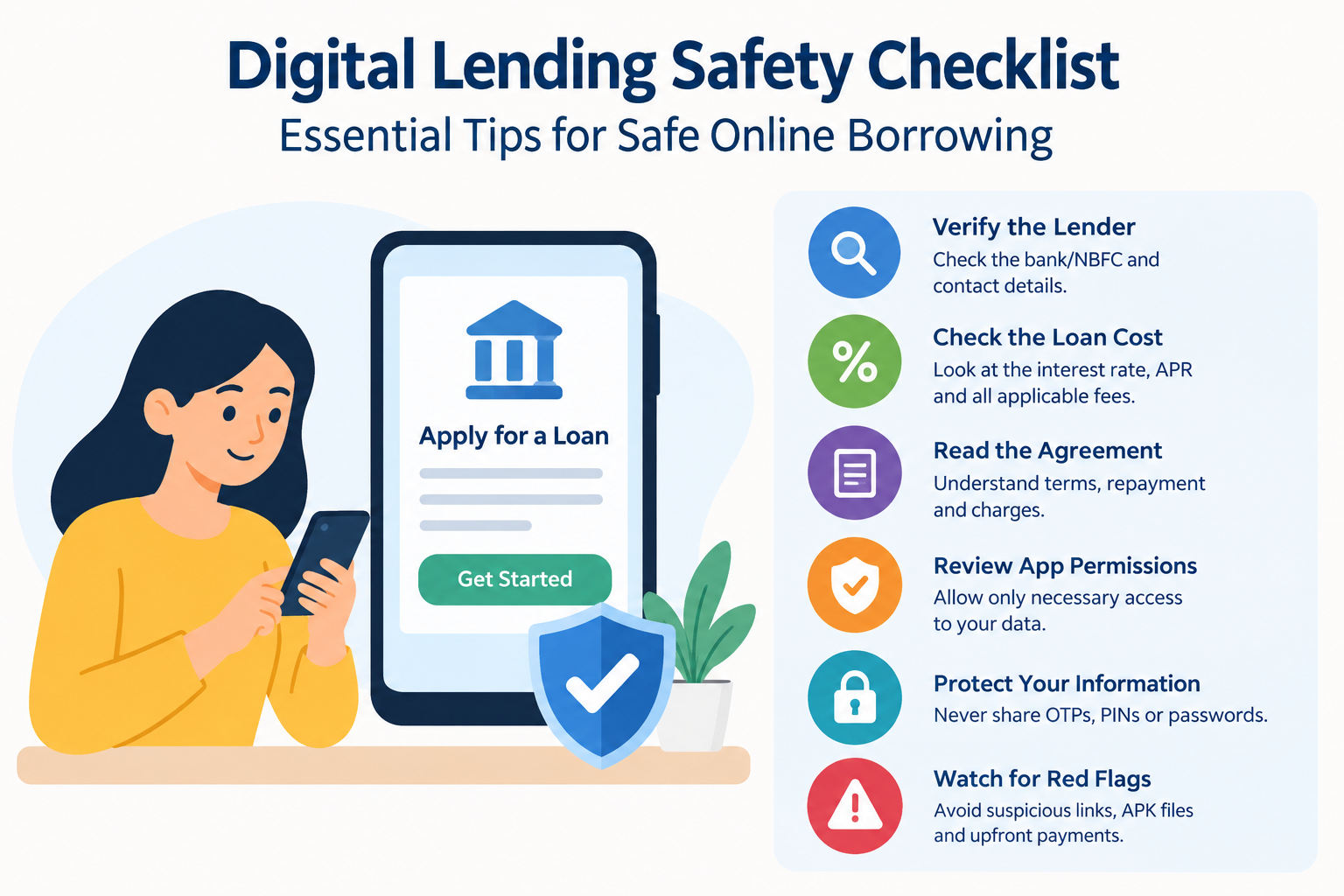
Digital Lending Safety Checklist: Essential Tips for Safe Online Borrowing
Digital lending has made it easier to apply for loans through mobile apps and online platforms. However, borrowers should verify the lender, understand the total cost of borrowing, review permissions, and protect their personal information before accepting a loan.
RBI guidance for digital lending includes requirements around transparent disclosure of the Annual Percentage Rate (APR), borrower consent for data collection, privacy policies, and disclosure of recovery-agent details.
Digital Lending Safety Checklist: Essential Tips for Safe Online Borrowing
Digital lending allows borrowers to apply for loans through websites, mobile applications and other digital platforms without visiting a physical branch. While this can make borrowing faster and more convenient, it is important to check the lender and loan terms carefully.
A simple digital lending safety checklist can help borrowers identify suspicious apps, understand loan costs, protect personal data and avoid unnecessary financial risks.
What Is Digital Lending?
Digital lending refers to the process of applying for, processing and receiving a loan through digital channels. It may involve banks, NBFCs and digital lending platforms or apps that facilitate credit.
The process can include:
- Online loan applications
- Digital KYC verification
- Electronic document submission
- Credit assessment
- Digital loan agreements
- Online disbursal
- Digital repayment
Digital Lending Safety Checklist
1. Verify the Lender
Before applying, identify the actual lender behind the digital platform.
Check:
- Name of the regulated bank or NBFC
- Official website
- Contact details
- Loan agreement
- Grievance redressal information
- Details of the digital lending service provider, where applicable
Do not rely only on an app's advertisements or ratings.
2. Check the Total Cost of the Loan
Do not look only at the advertised interest rate. Check the complete cost of borrowing.
Review:
- Interest rate
- Annual Percentage Rate (APR)
- Processing fee
- Late-payment charges
- Penal charges
- Foreclosure or prepayment charges, if applicable
- Other applicable fees
RBI guidance requires disclosure of the all-inclusive cost of digital loans through the APR.
3. Read the Loan Agreement
Read the digital loan agreement before accepting the loan.
Pay attention to:
- Loan amount
- Tenure
- EMI amount
- Interest rate
- Repayment schedule
- Fees and charges
- Default provisions
- Cancellation or cooling-off provisions where applicable
- Customer support and grievance channels
Save a copy of the agreement and important loan documents.
4. Review App Permissions
A lending app should not automatically receive access to unnecessary information on your phone.
Before granting permissions, check whether the app requests access to:
- Contacts
- Photos
- Files
- Location
- Microphone
- Camera
- SMS
RBI's digital lending framework emphasizes need-based data collection and prior explicit borrower consent.
5. Check the Privacy Policy
Read the app's privacy policy before submitting sensitive information.
Look for information about:
- What data is collected
- Why the data is collected
- How it is used
- How long it is retained
- Whether it is shared with third parties
- How consent can be managed or withdrawn
6. Never Share Sensitive Credentials
A legitimate loan process should not require you to casually share highly sensitive banking credentials.
Never share:
- OTPs
- UPI PIN
- ATM PIN
- Internet banking password
- Card PIN
- Passwords
Do not disclose an OTP to someone claiming to be a lender, recovery agent or customer-service representative.
7. Beware of Upfront Payment Scams
Be cautious if an unknown loan app or person demands an immediate payment before providing the promised loan.
Examples may include claims of:
- Guaranteed loan approval
- Refundable security deposits
- Urgent verification fees
- Personal account transfers
- Unusual processing charges
Verify the lender and payment details independently before making any payment.
8. Avoid Unknown APK Files and Links
Download financial apps only from trusted sources and verify the developer or lender information.
Avoid installing an application received through:
- Unknown WhatsApp messages
- Unverified SMS links
- Random websites
- Social-media messages
- Unknown email attachments
9. Check Repayment Details
Before accepting the loan, make sure you understand exactly when and how repayment must be made.
Confirm:
- EMI due date
- Repayment account
- Auto-debit instructions
- Total repayment amount
- Late-payment consequences
Keep payment receipts and transaction records.
10. Keep Digital Records
Maintain copies of:
- Loan application
- Sanction letter
- Loan agreement
- KFS or applicable loan disclosures
- Repayment schedule
- Payment receipts
- Customer-support communications
- Closure or settlement documents
These records can be useful if a dispute arises.
Digital Lending Red Flags
Be particularly cautious when a loan app:
- Promises guaranteed approval without proper verification
- Hides the identity of the actual lender
- Does not clearly explain loan charges
- Requests excessive phone permissions
- Pressures you to borrow immediately
- Demands payment to a personal account without proper explanation
- Uses threatening or abusive communication
- Does not provide a clear grievance mechanism
- Provides unclear or incomplete loan documentation
Digital Lending Safety Checklist Before Borrowing
| Safety Check | What to Verify |
|---|---|
| Lender | Identify the actual bank/NBFC |
| Loan cost | Interest, APR and all applicable charges |
| Agreement | Read terms before acceptance |
| Privacy | Understand data collection and use |
| Permissions | Allow only necessary access |
| Repayment | Confirm EMI and due dates |
| Security | Never share OTP/PIN/password |
| Records | Save agreements and receipts |
| Support | Check customer-service and grievance channels |
What Should You Do If You Suspect a Fraudulent Loan App?
If you believe a digital lending app is fraudulent or your information has been misused:
- Stop providing additional personal information.
- Do not share OTPs or banking credentials.
- Preserve screenshots, messages and transaction records.
- Contact your bank or financial institution if money has been transferred without authorization.
- Report suspected cyber fraud through the appropriate official reporting channels.
- Contact the lender's official grievance channel if the lender is identifiable.
- Consider changing compromised passwords and securing affected accounts.
Conclusion
Digital lending can make borrowing quick and convenient, but borrowers should always take safety precautions before accepting an online loan. Verifying the lender, checking the total loan cost, reading the agreement, reviewing app permissions and protecting sensitive financial information are important steps.
Using a Digital Lending Safety Checklist can help borrowers identify potential risks, avoid suspicious loan offers and make better-informed borrowing decisions. Always keep loan documents and payment records safely stored, and report suspected fraud through the appropriate official channels.
Published on : 30th September
Published by : MONISHA
www.vizzve.com || www.vizzveservices.com
Follow us on social media: Facebook || Linkedin || Instagram
🛡 Powered by Vizzve Financial
RBI-Registered Loan Partner | 10 Lakh+ Customers | ₹600 Cr+ Disbursed