

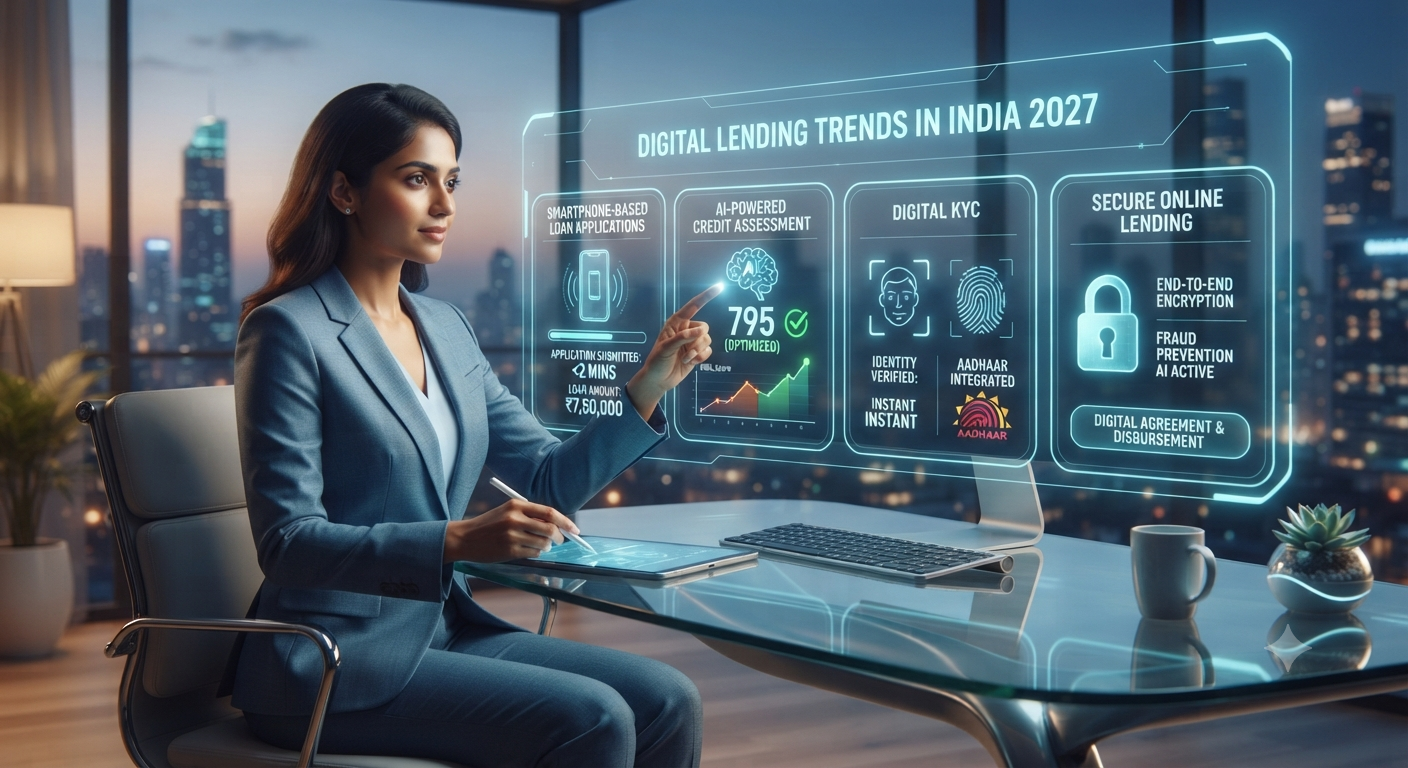
Digital lending is transforming India's financial landscape by making loans more accessible, convenient, and technology-driven. With increasing smartphone adoption, digital payments, and financial technology innovations, borrowers can now explore credit options through online platforms without visiting traditional bank branches.
In 2027, digital lending is expected to evolve further with AI-powered credit assessments, paperless KYC, improved loan application processes, and greater transparency in borrowing costs. These developments may create new opportunities for salaried employees, freelancers, gig workers, and self-employed individuals.
However, understanding loan eligibility, interest rates, repayment conditions, and digital safety will remain essential for making responsible financial decisions.
1. Growth of Digital Lending in India
Digital lending is becoming an important part of India's financial services ecosystem. Online platforms allow eligible borrowers to apply for personal loans and other credit products through smartphones and websites.
Some important developments include:
-
Online loan applications.
-
Digital document submission.
-
Paperless identity verification.
-
Faster application processing.
-
Convenient EMI repayment facilities.
-
Improved access to financial services.
Digital lending can reduce application-related inconvenience, although approval and disbursement timelines depend on lender verification and eligibility requirements.
2. AI-Powered Credit Assessment
Artificial intelligence and data analytics are increasingly influencing how lenders evaluate loan applications.
In 2027, technology may support credit assessments by analysing:
-
Monthly income patterns.
-
Existing loan obligations.
-
Credit history and repayment behaviour.
-
Bank statement information.
-
Employment and business income.
-
Overall repayment capacity.
These tools may help lenders improve their assessment processes. However, borrowers should understand that automated assessment does not guarantee loan approval.
3. Paperless KYC and Digital Verification
Digital KYC is simplifying the loan application process by reducing the need for physical paperwork.
Depending on the lender and applicable regulations, borrowers may need to provide:
-
PAN details.
-
Aadhaar-based identity verification where applicable.
-
Bank account information.
-
Income proof.
-
Employment or business details.
Borrowers should provide documents only through verified lending channels and avoid sharing confidential information with unknown individuals.
4. Greater Transparency in Loan Pricing
Loan transparency is becoming an important factor in digital lending. Borrowers should understand the complete cost of borrowing before accepting a loan.
Important loan components include:
|
Loan Component |
What to Understand |
|---|---|
|
Interest Rate |
Rate charged on the borrowed amount |
|
APR |
Overall annualised borrowing cost |
|
Processing Fee |
Application-related charges |
|
Loan Tenure |
Total repayment duration |
|
EMI |
Monthly repayment amount |
|
Late Payment Charges |
Applicable charges for delayed payments |
|
Foreclosure Conditions |
Terms for early loan closure |
The Key Fact Statement (KFS) helps borrowers understand important loan terms and applicable charges.
5. Personalised Digital Credit Solutions
Digital lending platforms may increasingly use technology to evaluate different borrower profiles and financial requirements.
For example:
-
Salaried employees may prefer predictable monthly EMIs.
-
Freelancers may need income verification based on bank statements and ITR.
-
Self-employed individuals may require assessments of business income.
-
Gig workers may need financial assessments that account for variable earnings.
-
First-time borrowers may need guidance on credit history and repayment responsibilities.
Borrowers should select credit products according to their financial requirements and repayment capacity.
6. Importance of Credit Score in Digital Lending
Credit scores remain an important consideration in many lending decisions. Lenders may evaluate credit reports to understand previous borrowing behaviour and repayment discipline.
To maintain a healthy credit profile:
-
Pay EMIs and credit card bills on time.
-
Avoid unnecessary loan applications.
-
Maintain reasonable credit card utilisation.
-
Review credit reports regularly.
-
Report inaccurate credit information for correction.
-
Manage existing debts responsibly.
A good credit score may improve loan eligibility, but lenders also consider income, existing obligations, and their own lending policies.
7. Digital Lending Safety and Fraud Prevention
As online lending services expand, borrowers must remain careful about fraudulent applications and misleading loan offers.
Follow these safety practices:
-
Verify the regulated bank or NBFC responsible for the loan.
-
Check the lending app's official association with the lender.
-
Read the loan agreement and KFS carefully.
-
Understand the APR and all applicable charges.
-
Avoid suspicious advance-payment demands.
-
Never share OTPs, PINs, or banking passwords.
-
Review application permissions and privacy policies.
Digital convenience should never come at the cost of financial security.
8. Convenient Digital Loan Repayment
Digital repayment facilities are making it easier for borrowers to manage their monthly loan obligations.
Some useful repayment practices include:
-
Setting EMI reminders.
-
Maintaining sufficient bank balance.
-
Tracking outstanding loan amounts.
-
Checking repayment statements.
-
Monitoring loan closure status.
-
Contacting the lender through official channels when facing repayment difficulties.
Consistent repayment behaviour can help borrowers maintain a positive credit history.
9. Benefits and Limitations of Digital Lending
Understanding both advantages and limitations can help borrowers make informed decisions.
|
Benefits |
Limitations |
|---|---|
|
Convenient online applications |
Eligibility criteria vary |
|
Reduced paperwork |
Interest rates may differ |
|
Digital verification |
Approval is not guaranteed |
|
Convenient repayment options |
Missed EMIs can affect credit history |
|
Wider access to credit services |
Fraudulent applications remain a concern |
Digital loans should always be evaluated as financial commitments rather than additional income.
10. Future of Digital Lending in India: 2027 and Beyond
The digital lending industry is expected to continue evolving through financial technology, improved digital infrastructure, and regulatory developments.
Some potential trends include:
-
AI-assisted credit evaluation.
-
More advanced digital KYC processes.
-
Improved borrower verification.
-
Better loan cost transparency.
-
Technology-driven customer support.
-
Increased focus on data protection.
-
More convenient digital repayment systems.
-
Greater awareness of responsible borrowing.
These developments may improve the borrowing experience while encouraging safer and more transparent lending practices.
11. Tips for Borrowers Before Applying for a Digital Loan
Before choosing an online loan, borrowers should evaluate their financial position carefully.
Essential checklist:
-
Identify the actual financial requirement.
-
Check loan eligibility.
-
Review your credit report.
-
Calculate an affordable EMI.
-
Compare interest rates and APR.
-
Read the KFS and loan agreement.
-
Verify the lender's credentials.
-
Understand repayment and foreclosure conditions.
Taking these steps can help reduce borrowing risks and improve financial decision-making.
Conclusion
Digital lending trends in India in 2027 highlight the growing role of technology in making financial services more accessible and convenient. AI-assisted assessments, digital KYC, online applications, and improved repayment facilities may continue transforming the borrowing experience.
However, borrowers must focus on more than application speed. Understanding loan costs, checking lender credentials, protecting personal information, and maintaining repayment discipline are essential for responsible borrowing.
Published on : 17th November 2026
Published by : Yogendra
www.vizzve.com || www.vizzveservices.com
Follow us on social media: Facebook || Linkedin || Instagram
🛡 Powered by Vizzve Financial
RBI-Registered Loan Partner | 10 Lakh+ Customers | ₹600 Cr+ Disbursed