

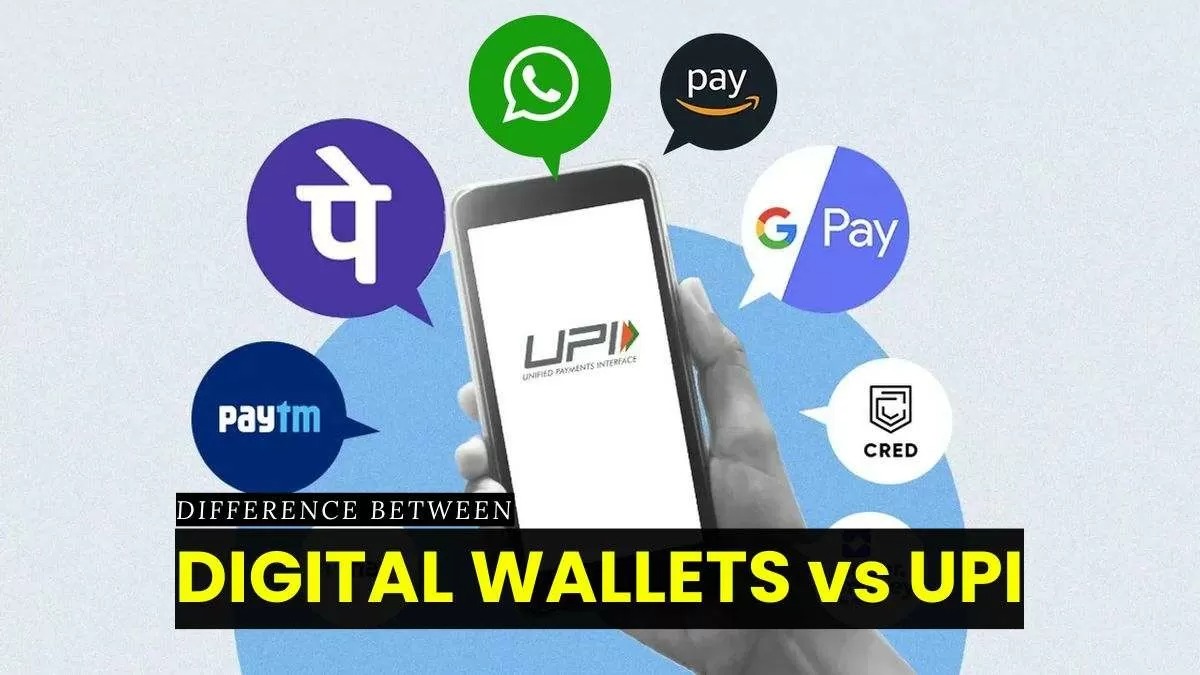
The digital payment ecosystem in India has witnessed rapid growth, fueled by smartphones, government initiatives, and fintech innovations. Two popular modes of digital transactions are Digital Wallets and Unified Payments Interface (UPI). Understanding their pros and cons helps users make informed choices for secure, convenient, and efficient payments.
What Are Digital Wallets?
Digital wallets (e-wallets) are apps or online platforms that store money digitally, allowing users to make payments, transfer funds, and shop online. Examples include Paytm, PhonePe Wallet, Amazon Pay, and Mobikwik.
Pros of Digital Wallets:
Ease of Use: Quick payments without bank account details.
Offers & Cashback: Many wallets provide discounts, cashback, and reward points.
Offline Payments: Can be used at merchants without internet in some cases.
Bill Payments & Recharges: Convenient for utility bills, mobile recharges, and subscriptions.
Cons of Digital Wallets:
Limited Bank Integration: Money stored in the wallet may need transfer to bank for withdrawals.
Transaction Limits: Some wallets have daily/monthly caps.
Security Risks: Digital wallets can be targets for cyber fraud or phishing attacks.
Expiry/Inactive Balance: Unused wallet balance may expire or become inactive.
What is UPI?
Unified Payments Interface (UPI) is a real-time payment system that allows instant fund transfer between bank accounts using a smartphone. Popular apps include Google Pay, PhonePe, Paytm, and BHIM.
Pros of UPI Payments:
Instant Transfers: Money moves directly between bank accounts in seconds.
No Wallet Balance Required: Transfers can be made even if you don’t maintain a separate wallet.
Secure Transactions: UPI uses two-factor authentication and bank-level security.
Wide Acceptance: Increasingly accepted at merchants, e-commerce platforms, and bill payments.
Cons of UPI Payments:
Bank Account Required: Users must have a linked bank account.
Limited Offers: Cashback and rewards are fewer compared to digital wallets.
Dependent on Internet: Requires active internet connection for transactions.
Transaction Failures: Occasionally, technical glitches may lead to failed or delayed transfers.
Digital Wallets vs. UPI – Key Differences
| Feature | Digital Wallets | UPI Payments |
|---|---|---|
| Fund Storage | Yes, stores money in the wallet | No, money goes directly to bank |
| Bank Account Needed | Optional | Mandatory |
| Speed of Transfer | Instant within wallet, slower to bank | Instant between bank accounts |
| Cashback & Offers | High, frequent | Limited |
| Security | Medium, risk of wallet hacking | High, bank-level security |
| Offline Usage | Some wallets support offline | Requires internet |
Which One Should You Choose?
Use Digital Wallets: For small payments, online shopping, recharge offers, and cashback rewards.
Use UPI: For instant bank-to-bank transfers, bill payments, and larger transactions requiring secure and direct fund movement.
Hybrid Approach: Many users use both wallets and UPI depending on convenience, transaction type, and benefits.
Conclusion
Both digital wallets and UPI payments have transformed how Indians transact. Understanding their strengths and limitations helps you choose the right mode for convenience, security, and savings. Whether you prefer cashback benefits or instant bank transfers, a smart mix of both can optimize your digital payment experience.
FAQs – Digital Wallets vs. UPI Payments
Q1: What is the main difference between digital wallets and UPI payments?
Digital wallets store money in an app for payments and transfers, while UPI directly transfers funds between bank accounts without needing a wallet balance.
Q2: Are digital wallets safe to use?
Yes, most wallets use encryption and OTP verification, but they can be vulnerable to phishing and cyber fraud. Always use strong passwords and app updates.
Q3: Do I need a bank account for digital wallets?
Not always. Some wallets allow prepaid loading via cards or cash, but linking a bank account enables easier top-ups and withdrawals.
Q4: Can I transfer money to anyone using UPI?
Yes, UPI allows instant transfers to any bank account in India using UPI ID, mobile number, or QR code.
Q5: Which is better for cashback and offers?
Digital wallets generally provide more frequent cashback, discounts, and rewards compared to UPI payments.
Published on : 14th August
Published by : SMITA
www.vizzve.com || www.vizzveservices.com
Follow us on social media: Facebook || Linkedin || Instagram
🛡 Powered by Vizzve Financial
RBI-Registered Loan Partner | 10 Lakh+ Customers | ₹600 Cr+ Disbursed