

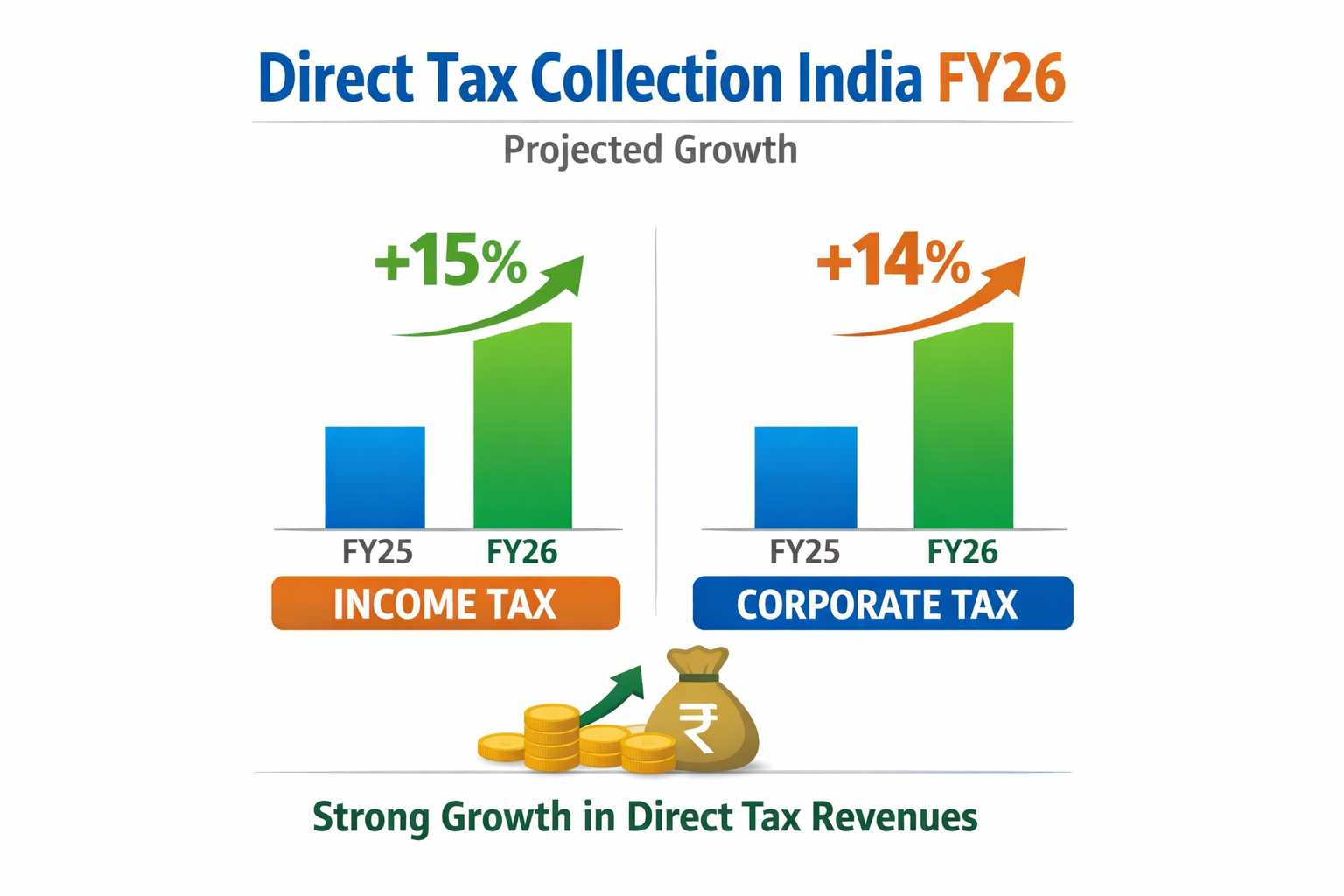
India has kicked off FY26 with strong momentum in direct tax collections, signaling improving economic activity and better compliance.
Rising collections from income tax and corporate tax indicate that both individuals and businesses are contributing more to government revenues.
👉 But what does this trend mean for the economy, markets, and investors?
Let’s decode.
AI Answer Box
What is happening?
Direct tax collections are rising in early FY26.
Why important?
Indicates strong economic activity and fiscal health.
Impact:
Boosts government spending and investor confidence.
What Are Direct Taxes?
Direct taxes are taxes paid directly to the government by individuals and corporations.
Key Types:
- Income Tax
- Corporate Tax
👉 Unlike indirect taxes, they cannot be shifted to others
Table: Direct Tax Components
| Type | Description |
|---|---|
| Income Tax | Paid by individuals |
| Corporate Tax | Paid by companies |
Why Direct Tax Collections Are Rising in FY26
Economic Growth
- Higher income levels
- Increased business profits
2. Better Tax Compliance
- Digital tracking systems
- Increased transparency
3. Formalization of Economy
- More businesses entering formal sector
- Wider tax base
4. Government Reforms
- Simplified tax systems
- Improved administration
Table: Key Drivers of Tax Growth
| Factor | Impact |
|---|---|
| Economic Growth | Positive |
| Compliance | Strong |
| Digitalization | High |
| Reforms | Positive |
Impact on Indian Economy
1. Strong Fiscal Health
- Higher revenue reduces fiscal deficit
- Better financial stability
2. Increased Government Spending
- More funds for infrastructure
- Boost to public welfare programs
3. Economic Growth Multiplier
- Government spending boosts demand
- Creates jobs and opportunities
Impact on Stock Market
Positive Effects
- Reflects strong corporate earnings
- Boosts investor confidence
Sectoral Impact
| Sector | Impact |
|---|---|
| Banking | Positive |
| Infrastructure | Positive |
| FMCG | Positive |
| IT | Moderate |
Comparison: Direct vs Indirect Tax
| Factor | Direct Tax | Indirect Tax |
|---|---|---|
| Paid By | Individuals/Companies | Consumers |
| Transparency | High | Moderate |
| Impact | Progressive | Regressive |
👍 Pros & 👎 Cons of Rising Tax Collections
✅ Pros
- Strong economy indicator
- Better fiscal management
- Increased government spending power
❌ Cons
- Higher tax burden perception
- Risk of over-taxation
- Dependency on economic cycle
Expert Commentary
Economists consider rising direct tax collections a “leading indicator of economic strength”.
👉 Key insight:
- It reflects real income and profit growth
- Indicates structural improvement in economy
Experts suggest:
✔ Monitor tax trends for economic signals
✔ Use data for investment decisions
Step-by-Step: What Should Investors Do?
- Track economic indicators
- Invest in growth sectors
- Focus on long-term opportunities
- Avoid short-term noise
- Diversify portfolio
Investment Strategy Table
| Investor Type | Strategy |
|---|---|
| Beginner | SIP investments |
| Moderate | Sector diversification |
| Aggressive | Growth stocks |
Key Takeaways
- Direct tax collections show strong early FY26 momentum
- Reflects improving economy and compliance
- Positive for fiscal health and markets
- Best strategy: long-term investment approach
❓ Frequently Asked Questions (FAQs)
1. What are direct taxes?
Taxes paid directly by individuals and companies.
2. Why tax collections are rising?
Due to economic growth and compliance.
3. Is it good for economy?
Yes.
4. Does it affect stock market?
Positively.
5. What is fiscal deficit?
Difference between revenue and spending.
6. Which taxes are included?
Income and corporate tax.
7. Is higher tax collection bad?
Not necessarily.
8. Does it show growth?
Yes.
9. Who benefits?
Economy and government.
10. Should investors care?
Yes.
11. What sectors benefit?
Banking, infrastructure.
12. Is this trend sustainable?
Depends on growth.
13. Does it impact GDP?
Yes.
14. Is compliance improving?
Yes.
15. What is outlook?
Positive.
Conclusion
The strong start in direct tax collections for FY26 reflects India’s improving economic fundamentals and growing financial discipline.
👉 For investors and policymakers alike, this is a positive signal of sustained growth and fiscal strength.
Stay informed, stay invested—and ride India’s growth story. 📈
Vizzve Financial is one of India’s trusted loan support platforms offering quick personal loans, low documentation, and an easy approval process.
👉 Apply now: www.vizzve.com
Published on : 11th April
Published by : SMITA
www.vizzve.com || www.vizzveservices.com
Follow us on social media: Facebook || Linkedin || Instagram
🛡 Powered by Vizzve Financial
RBI-Registered Loan Partner | 10 Lakh+ Customers | ₹600 Cr+ Disbursed