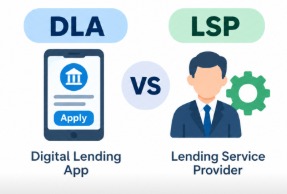
DLA vs LSP
Vizzve Admin
Introduction
Digital lending has made borrowing easier by allowing people to apply for loans through mobile apps and websites. In this process, two important terms are DLA (Digital Lending App) and LSP (Lending Service Provider). Although they work closely together, their roles are different. A DLA provides the digital platform through which borrowers access loan services, while an LSP helps a regulated lender with services such as customer acquisition, loan application processing, and loan servicing. Understanding the difference between DLA and LSP helps borrowers identify the actual lender, understand how digital loans work, and make informed borrowing decisions.
DLA vs LSP: Meaning, Differences, Roles and Examples
Digital lending has made it easier for people to apply for loans through mobile apps and websites. However, borrowers may come across two common terms: DLA (Digital Lending App) and LSP (Lending Service Provider).
Although these terms are closely related, they have different meanings and functions. Understanding the difference between a DLA and an LSP helps borrowers understand how digital loan applications work and how lenders provide loans.
This article explains DLA vs LSP, their roles, key differences, examples, and borrower-safety considerations under the Reserve Bank of India's (RBI) Digital Lending Directions, 2025.
What Is a DLA?
A Digital Lending App (DLA) is a mobile or web-based application that provides a user interface for digital lending services.
Borrowers can use a DLA to explore loan offers, submit applications, provide required information, and access other loan-related services.
A DLA may be operated directly by a regulated lender, such as a bank or NBFC, or by an LSP working with a regulated lender.
Key features of a DLA
-
Provides a digital interface for loan applications.
-
Allows users to access loan-related information.
-
May facilitate document submission and verification.
-
Can display loan offers and repayment details.
-
May provide access to customer support and loan servicing.
Example: A borrower opens a lending app on a smartphone and submits a personal loan application. The app is the DLA.
What Is an LSP?
A Lending Service Provider (LSP) is an agent of a regulated entity that performs one or more digital lending functions on the lender's behalf.
Under the RBI's Digital Lending Directions, 2025, these functions may include customer acquisition, services related to credit underwriting and pricing, loan servicing, monitoring, and recovery.
Key functions of an LSP
-
Helps lenders acquire new customers.
-
Supports the loan application process.
-
Assists with credit assessment and pricing-related services.
-
Provides loan servicing and monitoring support.
-
May assist with loan recovery on behalf of the lender.
Example: A fintech company partners with an NBFC to help customers apply for loans and manage application-related services. The fintech company acts as an LSP when performing those functions under the arrangement.
DLA vs LSP: Key Differences
|
Basis
|
DLA
|
LSP
|
|
Full form
|
Digital Lending App
|
Lending Service Provider
|
|
Meaning
|
A digital application or platform
|
An agent providing lending-related services
|
|
Main role
|
Provides the user interface
|
Performs assigned lending functions
|
|
Nature
|
Software application or platform
|
Service provider or business entity
|
|
Customer interaction
|
Through an app or website
|
Through services delivered to customers or the lender
|
|
Loan approval
|
Does not automatically approve loans
|
May support the assessment process but does not independently become the lender by acting as an LSP
|
|
Relationship with lender
|
May be operated by the lender or its LSP
|
Works under an arrangement with a regulated lender
|
|
Example
|
A loan application website
|
A fintech company supporting loan applications
|
Note: A DLA and an LSP are not necessarily separate businesses. An app operated by an LSP can itself be a DLA.
How Do DLA and LSP Work Together?
A DLA and an LSP can work together to make digital loan applications easier for borrowers.
Borrower
Wants to apply for a loan
DLA — App or Website
Provides the digital interface for the application
LSP — Lending Services
Performs assigned functions for the lender, where applicable
Regulated Lender
Bank or NBFC responsible for the lending decision
The exact process depends on the lender's arrangement and the services provided by the LSP. The regulated lender remains responsible for complying with applicable RBI requirements; outsourcing functions to an LSP does not remove that responsibility.
DLA vs LSP vs Lender
It is also important to distinguish both terms from the lender itself.
|
Term
|
Meaning
|
Primary responsibility
|
|
DLA
|
Digital application or platform
|
Provides the interface for accessing digital lending services
|
|
LSP
|
Lending Service Provider
|
Performs assigned services for the lender
|
|
Lender
|
Bank or NBFC, or another eligible regulated entity
|
Provides the loan and makes the lending decision
|
A borrower should identify the actual lender before accepting a loan. The name of an app or fintech company alone does not establish which entity is providing the credit.
RBI Rules for DLAs and LSPs in India
The RBI issued the Reserve Bank of India (Digital Lending) Directions, 2025, on May 8, 2025, consolidating earlier digital lending instructions and introducing additional requirements.
Important points include:
-
Lender responsibility: Regulated entities must ensure that their digital lending arrangements comply with applicable requirements.
-
LSP due diligence: Lenders must conduct due diligence on the LSPs they engage and establish contractual arrangements defining their roles and obligations.
-
Loan disclosures: Borrowers should review applicable loan terms, charges, and the Key Facts Statement before accepting a loan.
-
Data privacy: Digital lending processes must follow applicable requirements for collecting and using borrower data.
-
DLA verification: The RBI's public directory of digital lending apps can help borrowers check an app's reported association with a regulated entity. The directory is based on information submitted by regulated entities and is not an RBI endorsement or independent guarantee of an app.
For the latest requirements, refer to the RBI Digital Lending Directions, 2025.
Benefits of Understanding DLA vs LSP
Understanding the difference between a DLA and an LSP can help borrowers:
-
Identify the role of the app they are using.
-
Understand who is providing the loan.
-
Check the lender's identity before borrowing.
-
Review loan costs and repayment conditions.
-
Be more cautious about sharing personal and financial information.
How Can Borrowers Check a Digital Lending App?
Before applying for a digital loan, follow these steps:
-
Identify the bank or NBFC providing the loan.
-
Check the app's reported association in the RBI's public DLA directory.
-
Read the interest rate, Annual Percentage Rate (APR), fees, and repayment schedule.
-
Review the Key Facts Statement and loan agreement.
-
Read the app's privacy policy and assess whether requested permissions are necessary.
-
Avoid apps that demand advance payments to personal accounts or use threatening collection practices.
Remember that appearing in the DLA directory does not mean the RBI guarantees the app's safety or approves every loan offer.
Frequently Asked Questions (FAQs)
1. What is the full form of DLA?
DLA stands for Digital Lending App.
2. What is the full form of LSP?
LSP stands for Lending Service Provider.
3. What is the main difference between DLA and LSP?
A DLA is the application or platform used to access digital lending services, while an LSP performs lending-related services on behalf of a regulated lender.
4. Is a DLA a lender?
Not necessarily. A DLA may belong to a bank, NBFC, or LSP. The actual lender should be identified from the loan disclosures and agreement.
5. Can an LSP approve a loan?
An LSP may support credit assessment and related processes, but its role as an LSP does not make it the regulated lender. The lending decision is governed by the lender's arrangements and applicable requirements.
6. Can an LSP operate a DLA?
Yes. An LSP may operate an app or website that facilitates digital lending services for a regulated lender.
7. Are DLA and LSP the same?
No. A DLA is a digital interface, whereas an LSP is a service provider. However, an LSP may operate a DLA.
8. How can I check whether a DLA is associated with an RBI-regulated lender?
Check the RBI's public directory of digital lending apps and verify the lender's identity independently. Directory inclusion is not an RBI endorsement.
9. Is it safe to apply for a loan through an LSP?
Safety depends on the particular app, lender, data practices, and loan terms. Verify the lender and read the loan documents before proceeding.
10. Who is responsible for an LSP's lending-related activities?
The regulated lender remains responsible for complying with applicable RBI requirements, including those relevant to outsourced digital lending activities.
Conclusion
DLA and LSP are two important components of India's digital lending ecosystem. A DLA provides the app or website through which borrowers access lending services, while an LSP supports the lender by performing assigned functions such as customer acquisition, application support, servicing, or monitoring.
Understanding these differences helps borrowers identify the actual lender, review loan terms carefully, and make informed borrowing decisions.
Published on : 2nd October
Published by : MONISHA
www.vizzve.com || www.vizzveservices.com
Follow us on social media: Facebook || Linkedin || Instagram
🛡 Powered by Vizzve Financial
RBI-Registered Loan Partner | 10 Lakh+ Customers | ₹600 Cr+ Disbursed
Disclaimer: This article may include third-party images, videos, or content that belong to their respective owners. Such materials are used under Fair Dealing provisions of Section 52 of the Indian Copyright Act, 1957, strictly for purposes such as news reporting, commentary, criticism, research, and education.
Vizzve and India Dhan do not claim ownership of any third-party content, and no copyright infringement is intended. All proprietary rights remain with the original owners.
Additionally, no monetary compensation has been paid or will be paid for such usage.
If you are a copyright holder and believe your work has been used without appropriate credit or authorization, please contact us at grievance@vizzve.com. We will review your concern and take prompt corrective action in good faith... Read more

