

Introduction
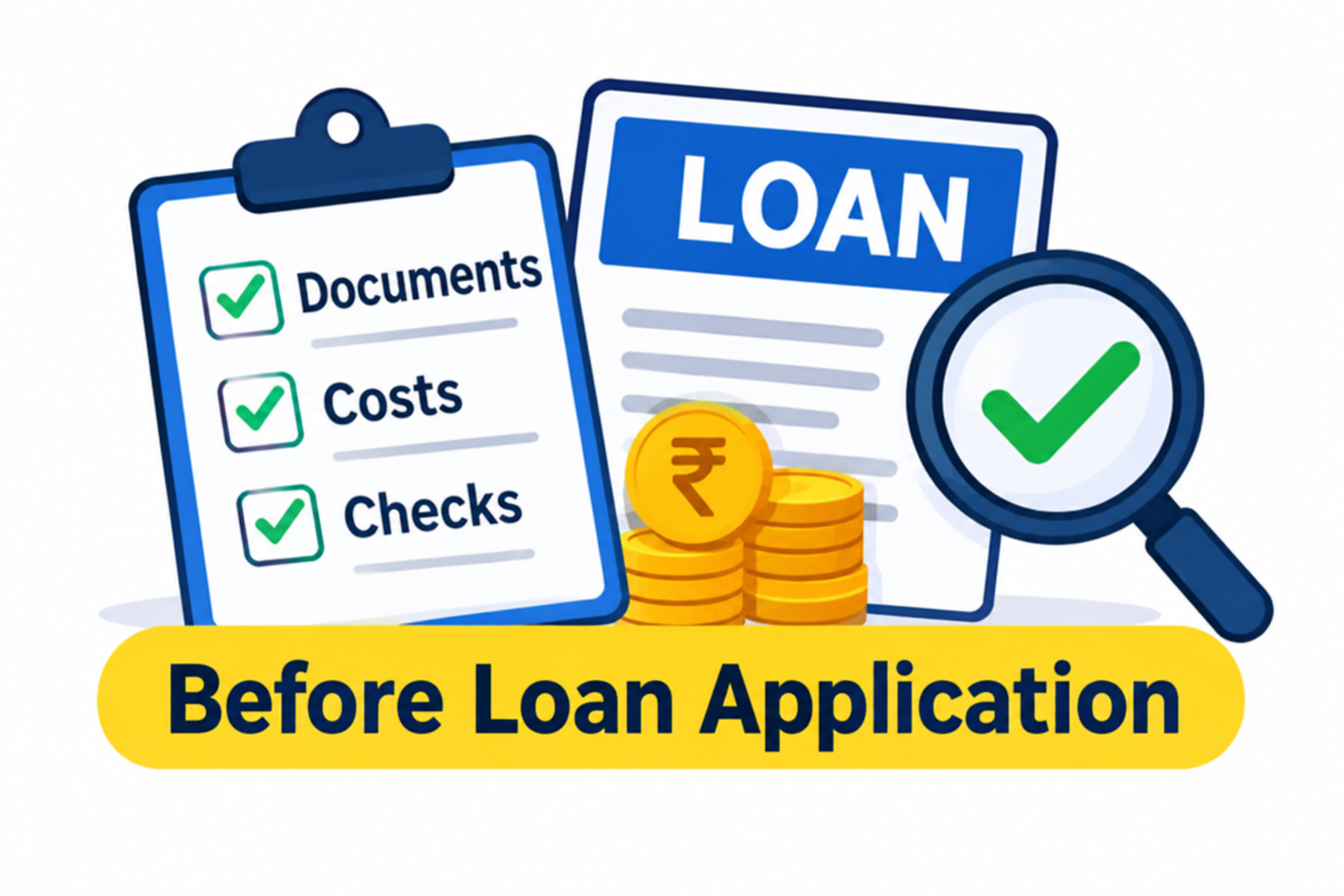
Applying for a loan requires more than simply filling out an online application form. Before submitting a loan application, borrowers should understand the required documents, applicable charges, eligibility conditions and important verification checks.
Preparing everything in advance can help reduce application errors, avoid unnecessary delays and make the borrowing process easier. This guide explains what to prepare and check before applying for a personal loan.
1. Documents Required Before Applying for a Loan
Lenders generally request documents to verify the applicant's identity, address, income and repayment capacity.
|
Document |
Why It Is Required |
|---|---|
|
Aadhaar Card |
Identity and address verification |
|
PAN Card |
Financial identity verification |
|
Bank Statement |
Income and transaction assessment |
|
Salary Slips |
Employment and income verification |
|
Employment Details |
Job and income stability |
|
Photograph |
Applicant identification |
|
Address Proof |
Current residential address |
Note: Requirements may differ depending on the lender, loan amount, employment type and applicable KYC rules.
2. Understand the Costs Before Applying
Before accepting a loan offer, understand all applicable charges.
Important loan costs
-
Interest Rate: The amount charged for borrowing money.
-
Processing Fee: A fee charged for processing the loan application.
-
GST: Applicable tax on taxable loan-related services and charges.
-
Late Payment Charges: Charges that may apply when an EMI is paid after its due date.
-
Foreclosure Charges: Charges, if applicable, for closing a loan early.
-
Other Fees: Documentation or other disclosed charges, where applicable.
Always check the Key Facts Statement (KFS), where applicable, and compare the Annual Percentage Rate (APR) rather than looking only at the advertised interest rate.
3. Check Your Loan Eligibility
Before applying, review the lender's eligibility conditions.
Common eligibility factors include:
-
Age requirements
-
Monthly income
-
Employment status
-
Credit score and credit history
-
Existing loan obligations
-
Bank account activity
-
Repayment capacity
Having a stable income and manageable existing EMIs may improve your chances of approval, but approval is always subject to the lender's assessment.
4. Check Your Credit Report
Your credit report provides information about your borrowing and repayment history.
Before submitting an application:
-
Check your latest credit report.
-
Review existing loans and credit cards.
-
Identify any overdue payments.
-
Check for incorrect personal or loan details.
-
Raise disputes if you find inaccurate information.
Avoid submitting multiple loan applications within a short period because several lender enquiries may affect your credit profile.
5. Review Your Monthly Repayment Capacity
A loan should fit comfortably within your monthly budget.
Consider:
-
Monthly take-home salary
-
Rent and household expenses
-
Existing EMIs
-
Essential family expenses
-
Emergency savings
-
Proposed new EMI
Example:
|
Particulars |
Amount |
|---|---|
|
Monthly income |
₹35,000 |
|
Existing EMIs |
₹5,000 |
|
Household expenses |
₹15,000 |
|
Remaining amount |
₹15,000 |
The remaining ₹15,000 is not automatically available for a new EMI. Keep room for savings and unexpected expenses before deciding how much you can borrow.
6. Verify the Loan App or Lender
Digital loan applications make borrowing convenient, but borrowers should verify the lender before sharing personal information.
Check these points:
-
Confirm the actual bank or NBFC providing the loan.
-
Verify the lender's RBI registration where applicable.
-
Check whether the lending app is associated with the regulated lender.
-
Read the privacy policy and loan agreement.
-
Check customer support and grievance redressal details.
-
Avoid apps demanding unnecessary permissions.
-
Never share your OTP, PIN or passwords.
7. Read the Loan Agreement Carefully
Before accepting the loan, review the complete terms and conditions.
Pay attention to:
-
Approved loan amount
-
Interest rate
-
APR
-
Loan tenure
-
Monthly EMI
-
Repayment date
-
Processing charges
-
Late payment penalties
-
Prepayment and foreclosure conditions
Do not accept an offer without understanding its total repayment cost.
8. Common Mistakes to Avoid Before Applying
|
Common Mistake |
Safer Approach |
|---|---|
|
Submitting incorrect documents |
Verify every document |
|
Ignoring processing fees |
Check all charges |
|
Applying without checking eligibility |
Review lender requirements |
|
Ignoring credit history |
Check your credit report |
|
Borrowing more than required |
Calculate actual needs |
|
Accepting without reading terms |
Review the loan agreement |
|
Using unverified apps |
Verify the regulated lender |
9. Step-by-Step Checklist Before Loan Application
Follow these steps before submitting your application:
-
Identify the actual amount you need.
-
Compare loan offers from different lenders.
-
Prepare identity and income documents.
-
Check your credit report.
-
Calculate your repayment capacity.
-
Review interest rates, APR and other charges.
-
Verify the lender or loan app.
-
Read the KFS and loan agreement.
-
Submit accurate information.
-
Save the application reference number for future tracking.
10. Benefits of Preparing Before Applying
Preparing in advance can help borrowers:
-
Reduce documentation errors.
-
Understand the actual borrowing cost.
-
Avoid unnecessary loan applications.
-
Make better financial decisions.
-
Identify suspicious lending platforms.
-
Plan EMI payments responsibly.
-
Reduce the chances of application delays.
AI Answer Box: What Should You Check Before Applying for a Loan?
Before applying for a loan, borrowers should prepare identity proof, address proof, income documents and bank statements. They should also check credit history, eligibility, interest rates, APR, processing fees, EMI affordability and lender authenticity. Reviewing the KFS and loan agreement before accepting an offer helps borrowers understand the total cost and repayment obligations.
Key Takeaways
-
Keep all required documents ready before applying.
-
Understand interest rates, processing fees and other charges.
-
Check your credit report and eligibility.
-
Calculate your EMI affordability.
-
Verify the lender before sharing personal information.
-
Read the KFS and loan agreement carefully.
-
Borrow only what you can comfortably repay.
Conclusion
Preparing documents, understanding loan costs and completing essential checks can make the loan application process smoother and safer. Borrowers should never rush into accepting a loan without reviewing the interest rate, additional charges, repayment terms and lender details.
At Vizzve, responsible borrowing starts with understanding the loan before applying. A well-informed decision can help borrowers manage their finances and avoid unnecessary repayment pressure.
Published on : 27th November
Published by : monisha
www.vizzve.com || www.vizzveservices.com
Follow us on social media: Facebook || Linkedin || Instagram
🛡 Powered by Vizzve Financial
RBI-Registered Loan Partner | 10 Lakh+ Customers | ₹600 Cr+ Disbursed