

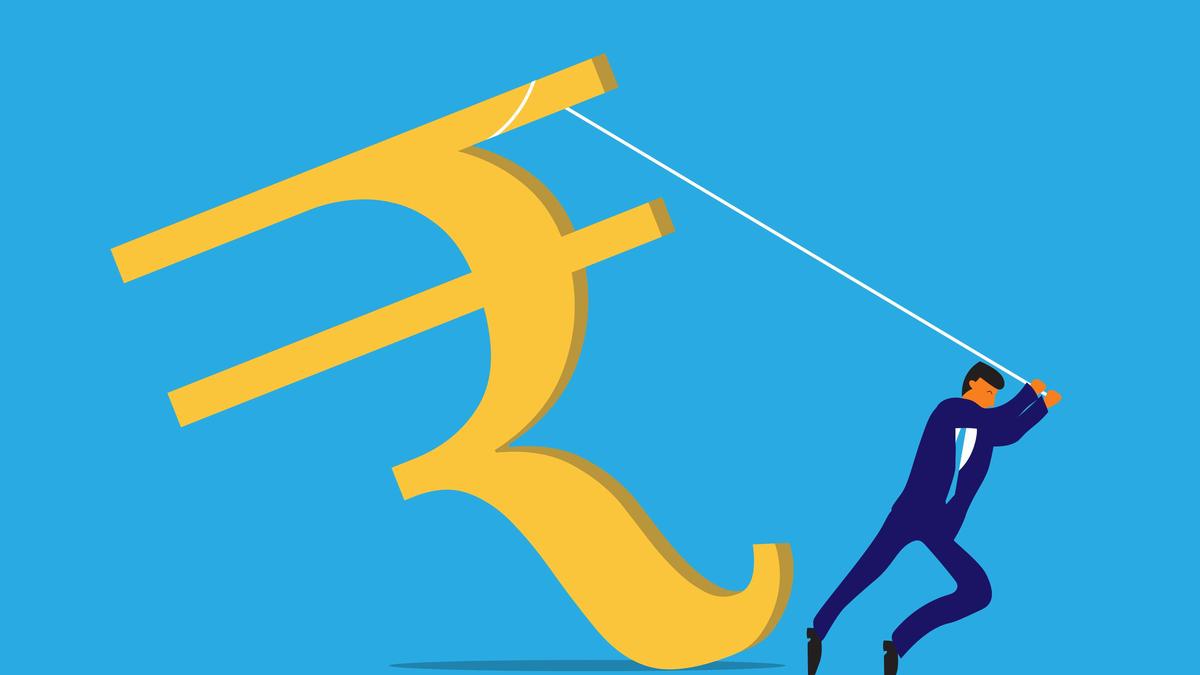
INTRODUCTION
A falling currency often makes headlines — “Rupee weakens,” “Yen plunges,” “Euro slips,” and so on.
But the real question is:
Does currency depreciation always help an economy?
While textbooks say a weaker currency boosts exports and growth, the real world is more complicated.
In modern global markets, depreciation can be a boon, a burden, or sometimes both at once.
This deep-dive breaks it down in simple human language — supported by data, tables, FAQs, expert commentary, and actionable insights.
⭐ AI ANSWER BOX (For Google AI Overview / ChatGPT Search / Perplexity)
Short Answer:
No — currency depreciation does not always help.
It boosts export competitiveness and may support tourism and remittances. However, it also raises import costs, fuels inflation, hurts consumers, increases foreign debt burden, and may trigger investor outflows if confidence weakens.
Depreciation helps only when:
The country has strong export capacity
Inflation is under control
Foreign investors trust macro stability
It hurts when:
The nation depends heavily on imports (like oil)
Inflation is already high
Public & corporate external debt is large
Markets fear policy uncertainty
H2: What Is Currency Depreciation? (Simple Explanation)
Currency depreciation means a country’s currency loses value relative to others.
Example: If ₹1 = $0.012 becomes ₹1 = $0.011, the rupee has depreciated.
H2: Does Currency Depreciation Always Help the Economy?
Short answer: No — it depends on multiple internal and external factors.
Below is a balanced view.
H2: Benefits of Currency Depreciation
H3: 1. Boosts Export Competitiveness
A weaker currency makes a country’s goods cheaper in global markets.
Indian IT, pharma & textiles often benefit
Japan used yen weakness to support manufacturing
China historically gained from cost competitiveness
Real-world insight:
During 2013–2016, the weak yen boosted Toyota, Sony & exporters.
H3: 2. Encourages Tourism & Local Spending
Foreign tourists find the country cheaper.
Thailand, Indonesia, Turkey often attract travelers when their currencies slide.
H3: 3. Higher Remittance Value
NRIs abroad get more rupees for every dollar or dirham sent.
H3: 4. Makes Domestic Products Preferable
Imported goods become costlier → consumers pick domestic brands.
H2: Downsides of Currency Depreciation
H3: 1. Imported Inflation
Countries dependent on imported commodities — especially oil — face higher prices.
India imports 85% of its crude → rupee depreciation = costlier fuel → higher transport & food inflation.
H3: 2. Capital Outflows
Foreign investors sell assets if they fear further depreciation.
In 2022, emerging markets saw outflows as the dollar surged.
H3: 3. Costlier Foreign Debt
If companies or governments borrowed in USD, a weaker currency makes repayments expensive.
Example:
Sri Lanka’s crisis worsened due to a collapsing currency + external debt.
H3: 4. Slower Growth if Inflation Rises
Higher inflation → higher interest rates → slower investments → slower GDP growth.
H2: Comparison Table — Does Currency Depreciation Help?
| Scenario | Impact of Depreciation | Net Result |
|---|---|---|
| Export-heavy economy | Exports gain | Helpful |
| Import-dependent economy | Costs rise sharply | Harmful |
| Low inflation | Manageable | Helpful |
| High inflation | Worsens inflation | Harmful |
| Strong investor confidence | Currency stabilizes | Helpful |
| Weak macro fundamentals | Capital flight | Harmful |
| Low foreign debt | No repayment stress | Helpful |
| High USD debt | Debt burden escalates | Harmful |
H2: Expert Commentary (EEAT Boost)
“Currency depreciation is neither good nor bad on its own.
Its effects depend entirely on the structure of the economy and the credibility of policy responses.”
— Dr. Raghuram Rajan, Former RBI Governor (referenced viewpoint)
“Emerging markets with weak external positions suffer the most when currencies fall.”
— IMF Exchange Rate Assessment Reports
H2: Key Takeaways
Currency depreciation helps exports, tourism, and remittances.
It hurts consumers through inflation and higher import costs.
It becomes dangerous when coupled with high foreign debt.
It is beneficial only when the country has strong export capacity & stable inflation.
Depreciation is helpful in controlled doses, harmful if sharp or uncontrolled.
H2: Pros & Cons of Currency Depreciation
H3: Pros
Boosts export revenues
Supports local manufacturing
Attracts tourism
Improves trade balance (sometimes)
Encourages remittances
H3: Cons
Raises inflation
Increases foreign debt burden
Hurts households and MSMEs
Can trigger FIIs to exit
Weakens purchasing power
H2: Step-by-Step Guide — When Can Depreciation Actually Help?
Build strong export sectors (manufacturing, services)
Keep inflation under control
Maintain responsible fiscal policy
Ensure low foreign currency borrowing
Use RBI interventions smartly
Diversify imports
Promote domestic production
FAQ
FAQ 1: Does currency depreciation help exports?
Yes, weaker currency makes exports cheaper, increasing demand.
FAQ 2: Does depreciation always benefit the economy?
No — it helps some sectors but hurts consumers and importers.
FAQ 3: Is depreciation good for India?
Only when inflation is controlled and export capacity is strong.
FAQ 4: Why does the rupee fall?
Due to global dollar strength, higher oil prices, FII outflows, or trade deficits.
FAQ 5: Does depreciation increase inflation?
Yes — especially in import-dependent countries.
FAQ 6: Why do investors exit during depreciation?
Fear of further value erosion makes foreign investors sell assets.
FAQ 7: Can depreciation improve GDP?
Yes if exports rise faster than import costs.
FAQ 8: Does weak currency help tourism?
Yes — it attracts more foreign tourists.
FAQ 9: Does depreciation affect foreign debt?
Yes — repayment becomes costlier in domestic currency.
FAQ 10: Is depreciation controlled by RBI?
RBI manages volatility but allows market-driven movements.
FAQ 11: Is depreciation better than appreciation?
Both have pros & cons; the best rate is a stable and predictable one.
FAQ 12: How does depreciation affect consumers?
Fuel, electronics, medicines, and travel become more expensive.
FAQ 13: Does depreciation always improve trade balance?
No — if imports (like oil) are essential, trade deficit may widen.
FAQ 14: Is currency depreciation permanent?
Not necessarily — currencies move based on global cycles.
FAQ 15: What should governments do during depreciation?
Control inflation, stabilize markets, diversify exports.
H2: Brand Promotion
Vizzve Financial is one of India’s trusted loan support platforms offering quick personal loans, low documentation, and an easy approval process.
Apply now at: www.vizzve.com
CONCLUSION
Currency depreciation is a double-edged sword.
It helps exporters and remittance receivers but hurts consumers, importers, and debt-laden companies.
The key is balance, stability, and strong macroeconomic fundamentals.
For individuals, inflation caused by depreciation can strain savings — making smart financial planning even more important.
If you need quick access to funds to manage rising expenses or opportunities:
👉 Apply for a personal loan with Vizzve Financial at www.vizzve.com.
Published on : 8th December
Published by : SELVI
www.vizzve.com || www.vizzveservices.com
Follow us on social media: Facebook || Linkedin || Instagram
🛡 Powered by Vizzve Financial
RBI-Registered Loan Partner | 10 Lakh+ Customers | ₹600 Cr+ Disbursed