

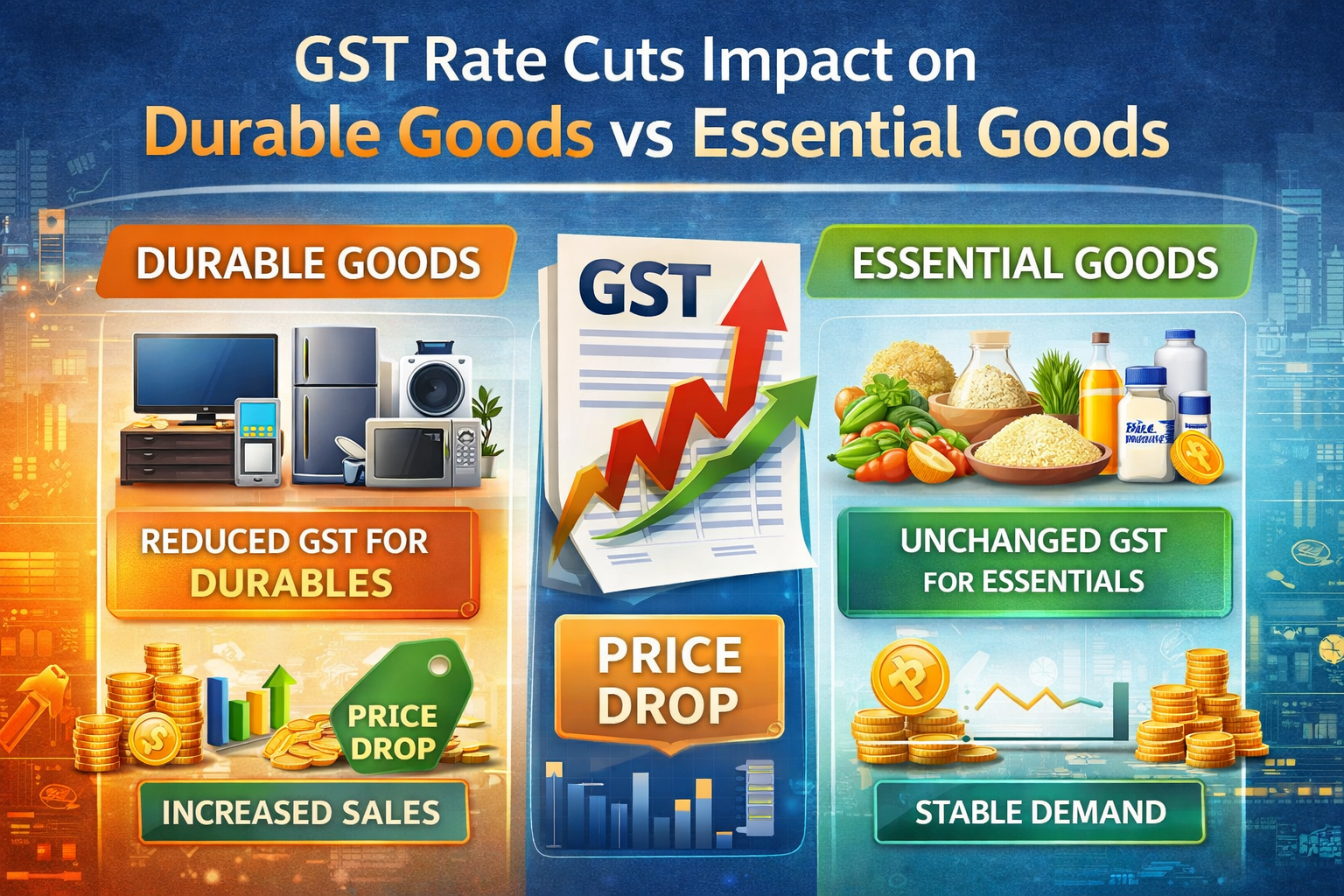
Recent GST rate cuts in India appear to be benefiting durable goods more than essential commodities, according to market analysts and industry data.
The changes in indirect tax policy have reduced prices for several consumer durables, encouraging higher demand in sectors such as electronics, appliances, and automobiles. However, essential goods have seen relatively smaller benefits from the tax reductions.
The policy changes discussed by the Goods and Services Tax Council aim to stimulate consumption and support economic growth while maintaining revenue stability.
AI Answer Box
How are GST rate cuts affecting consumer goods?
GST rate reductions are boosting demand for durable goods such as appliances and electronics more than essential items, as price reductions are more noticeable in high-value products.
Key Highlights
| Category | Impact |
|---|---|
| Durable goods | Higher demand |
| Essential goods | Limited price impact |
| Consumer spending | Increasing |
| Market growth | Strong in durables |
What Are Durable Goods?
Durable goods are products that have a long lifespan and are used repeatedly over time.
Examples of Durable Goods
Home appliances
Consumer electronics
Automobiles
Furniture
These goods are typically higher in value, which means tax reductions can significantly affect their prices.
How GST Rate Cuts Impact Prices
Lower tax rates can reduce the final price consumers pay for products.
Price Impact Example
| Product Type | GST Impact |
|---|---|
| Durable goods | Noticeable price reduction |
| Essential goods | Smaller price change |
For expensive products, even small tax reductions can lead to significant savings for consumers.
Why Durable Goods Benefit More
Several factors explain why durable goods benefit more from GST rate cuts.
Key Reasons
Higher product value
Greater price sensitivity
Strong consumer demand cycles
Promotional pricing by retailers
Consumers are more likely to purchase durable goods when prices fall.
Impact on Consumer Demand
Lower taxes can encourage consumers to spend more on big-ticket items.
Market Effects
| Sector | Effect |
|---|---|
| Electronics | Increased sales |
| Appliances | Higher demand |
| Automobiles | Improved consumer interest |
Retailers often use tax reductions as an opportunity to launch promotions and discounts.
Impact on Businesses
Businesses in the durable goods sector may benefit from increased demand.
Business Benefits
Higher product sales
Increased production
Expansion of retail distribution
Manufacturers and retailers often respond by increasing inventory and marketing efforts.
Role of the GST Council
The Goods and Services Tax Council is responsible for determining GST rates and making policy decisions related to indirect taxation.
The council evaluates factors such as:
Economic growth
Government revenue
Consumer demand
Based on these factors, it decides whether tax rates should be adjusted.
Challenges in GST Policy
Despite its benefits, GST rate adjustments can present challenges.
Key Challenges
Balancing revenue collection
Ensuring fair taxation
Managing price transmission to consumers
Effective policy implementation is essential to ensure intended benefits reach consumers.
Future Outlook
Experts believe GST policy will continue evolving to support economic growth and consumption.
Possible Developments
Further GST rate rationalization
Simplified tax structures
Increased compliance through digital systems
These measures could strengthen India’s indirect tax framework.
Key Takeaways
GST rate cuts are benefiting durable goods more than essential items.
High-value products see greater price reductions from tax cuts.
Lower prices encourage higher consumer spending on durable goods.
Businesses in the consumer durables sector may experience growth.
GST policy changes continue to influence consumer markets.
Frequently Asked Questions (FAQs)
1. What are GST rate cuts?
They refer to reductions in Goods and Services Tax rates applied to products and services.
2. Which products benefit most from GST cuts?
Durable goods such as appliances and electronics.
3. Why do durable goods benefit more?
Because tax reductions significantly affect high-value items.
4. Who decides GST rates in India?
The Goods and Services Tax Council.
5. Do GST cuts reduce product prices?
Yes, they can lower the final price paid by consumers.
6. What are essential goods?
Products required for daily living, such as food and basic supplies.
7. How do GST cuts affect businesses?
They can increase demand and boost sales.
8. Do GST changes impact economic growth?
Yes, tax changes can influence consumption and business activity.
9. Are GST policies permanent?
They can be revised by the GST Council.
10. Do consumers always benefit from GST cuts?
Benefits depend on whether price reductions are passed on by businesses.
11. What sectors benefit from GST reforms?
Retail, manufacturing, and consumer goods sectors.
12. How does GST affect consumer markets?
It influences product pricing and demand.
13. What is indirect tax?
A tax collected by businesses from consumers on behalf of the government.
14. Can GST cuts increase consumption?
Yes, lower prices may encourage more spending.
15. Will GST rates change again?
Future changes depend on economic conditions and policy decisions.
Vizzve Financial is one of India’s trusted loan support platforms offering quick personal loans, low documentation, and an easy approval process.
If you need financial assistance, applying online is simple.
👉 Apply now at www.vizzve.com
Published on : 18th March
Published by : SMITA
www.vizzve.com || www.vizzveservices.com
Follow us on social media: Facebook || Linkedin || Instagram
🛡 Powered by Vizzve Financial
RBI-Registered Loan Partner | 10 Lakh+ Customers | ₹600 Cr+ Disbursed