

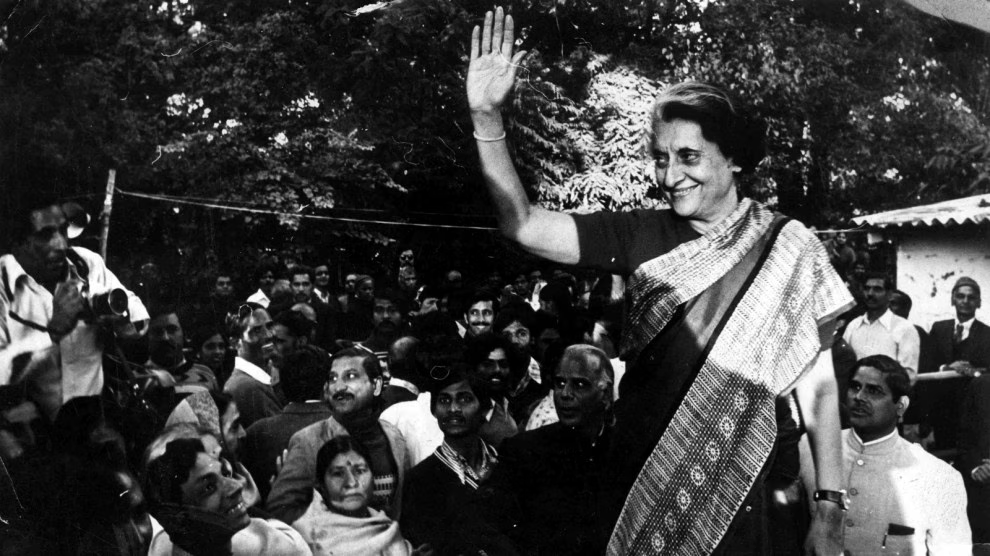
Durga, Dictator, Democrat: How the 3 Veins Ran Parallel in Indira Gandhi
Indira Gandhi remains one of the most iconic and complex leaders in Indian history. Her leadership combined the fierce strength of Durga, an iron-willed dictator, and a committed democrat, often running these three veins in parallel to shape India’s destiny.
The Durga Spirit: Strength and Fierceness
Indira Gandhi was often likened to the goddess Durga — symbolizing courage, power, and resilience. Throughout her political career, she showed immense determination to safeguard India’s sovereignty and integrity. This vein of strength was visible during:
The 1971 Indo-Pak war and creation of Bangladesh
Her tough stance on economic policies
Resolute decision-making in crises
The Dictator: Authoritarianism and Emergency
Indira Gandhi’s rule was also marked by authoritarian tendencies, most notably during the Emergency period (1975-1977). Declaring a state of emergency allowed her to:
Curtail civil liberties and press freedom
Centralize power and suppress opposition
Enforce controversial policies with little parliamentary oversight
This phase is widely debated as a dark chapter but also reflects the “dictator” vein in her leadership.
The Democrat: Champion of the Masses
Despite authoritarian moments, Indira Gandhi remained fundamentally committed to democratic ideals and mass welfare. She:
Advocated for the poor through the Garibi Hatao (Eradicate Poverty) campaign
Strengthened the Congress party’s democratic framework
Participated in electoral politics and respected democratic processes outside the Emergency
Balancing the Three Veins
Indira Gandhi’s leadership was a complex interplay of these three veins — strength, authoritarian control, and democratic values. This unique blend enabled her to navigate India through challenging times while leaving a lasting imprint on its political fabric.
Frequently Asked Questions (FAQ)
Q1: Why is Indira Gandhi compared to Durga?
A1: She was likened to Durga for her courage, strength, and decisive leadership in protecting India’s interests.
Q2: What was the Emergency, and why is it controversial?
A2: The Emergency (1975-77) was a period when Indira Gandhi suspended democratic freedoms, leading to accusations of authoritarianism and suppression of opposition.
Q3: How did Indira Gandhi promote democracy despite authoritarian actions?
A3: She implemented policies for social welfare, respected elections outside the Emergency, and worked to strengthen her party’s democratic structure.
Q4: What is the significance of the three veins in her leadership?
A4: The three veins symbolize the coexistence of strength, authoritarianism, and democratic ideals that defined her political style.
Q5: How is Indira Gandhi’s legacy viewed today?
A5: Her legacy is mixed, with admiration for her achievements and criticism for authoritarian episodes, reflecting the complex nature of her leadership.
Published on: June 24, 2025
Uploaded by: PAVAN
www.vizzve.com || www.vizzveservices.com
Follow us on social media: Facebook || Linkedin || Instagram
🛡 Powered by Vizzve Financial
RBI-Registered Loan Partner | 10 Lakh+ Customers | ₹600 Cr+ Disbursed