

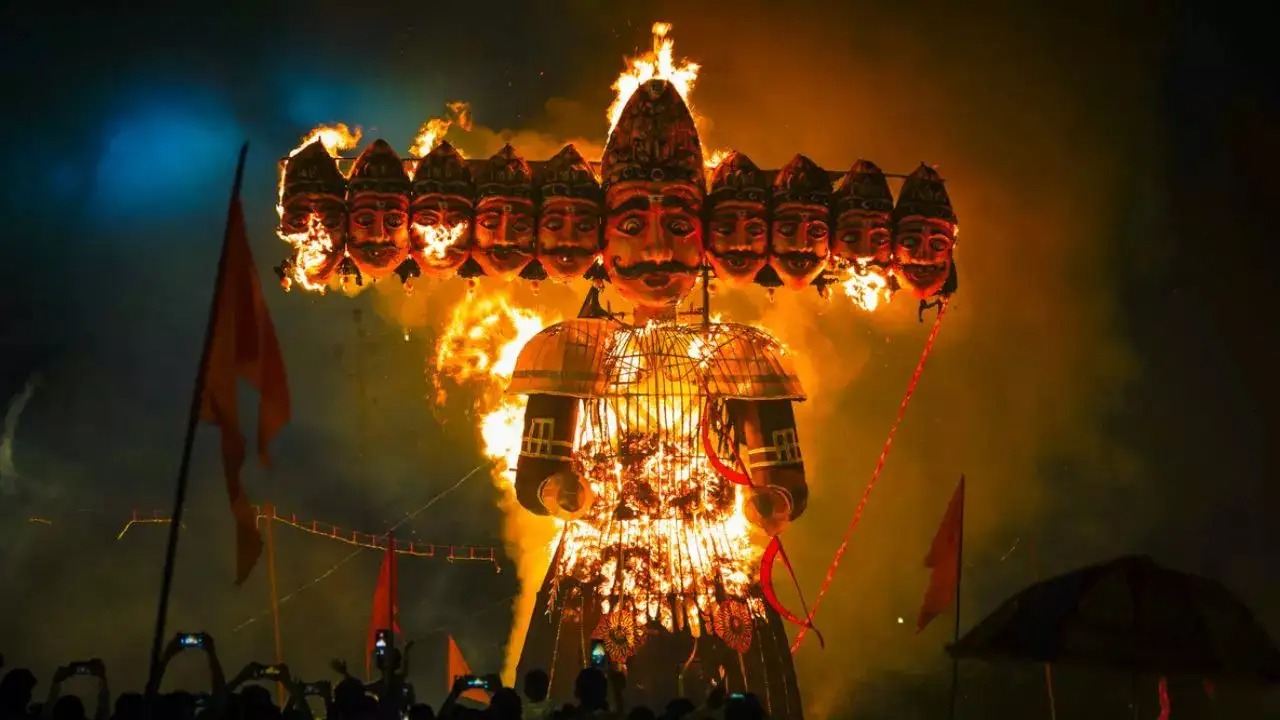
Dussehra, also known as Vijayadashami, is one of India’s most celebrated festivals, symbolizing the victory of good over evil. Observed on the tenth day of the Navratri festival, Dussehra honors Lord Rama’s triumph over Ravana and Goddess Durga’s victory over Mahishasura, depending on regional traditions.
1. Significance of Dussehra
Victory of Good Over Evil: Central to Dussehra is the story of Lord Rama defeating Ravana, symbolizing the triumph of righteousness.
End of Navratri: Marks the culmination of the nine-day Navratri festival, celebrating devotion and spiritual discipline.
Cultural Symbolism: Reinforces moral values and inspires courage, truthfulness, and devotion in everyday life.
2. Regional Traditions Across India
North India
Ramlila Performances: The epic Ramayana is enacted in dramatic plays across towns and cities.
Ravana Dahan: Large effigies of Ravana, Kumbhkaran, and Meghanad are burned with fireworks.
West Bengal & East India
Durga Puja: Celebrates Goddess Durga’s victory over Mahishasura.
Artistic Immersion: Idols are worshipped for several days and immersed in rivers on Vijayadashami.
South India
Mysore Dasara: Karnataka hosts grand processions, decorated elephants, and cultural performances.
Ayudha Puja: Tools, vehicles, and instruments are worshipped for prosperity.
Western India
Garba & Dandiya Nights: In Gujarat and Maharashtra, people dance in traditional attire during Navratri, culminating in Dussehra celebrations.
Central India
Local Fairs: Mela (fairs) and exhibitions are organized with food stalls, rides, and cultural shows.
3. Common Dussehra Rituals
Lighting lamps and bursting fireworks.
Offering prayers and performing aarti.
Preparing traditional sweets and festive meals.
Visiting temples and participating in community gatherings.
Conclusion:
Dussehra is more than a festival; it is a celebration of morality, courage, and cultural heritage. From the burning of Ravana effigies in the North to Durga Puja in the East and Mysore Dasara in the South, the festival unites India in joy, devotion, and cultural pride.
FAQ :
Q1: When is Dussehra celebrated in 2025?
Dussehra 2025 will be celebrated on October 22, marking the tenth day of Navratri.
Q2: What is the significance of burning Ravana effigies?
It symbolizes the victory of Lord Rama over Ravana, representing the triumph of good over evil.
Q3: How is Dussehra celebrated in South India?
Through Mysore Dasara processions, Ayudha Puja, and temple celebrations honoring Goddess Durga.
Q4: Are there special foods associated with Dussehra?
Yes, traditional sweets and festive meals like puris, halwa, and laddoos are prepared and shared.
Q5: Why is Dussehra important culturally?
It reinforces moral values, devotion, and cultural heritage, uniting people across regions in celebration.
Published on : 3rd September
Published by : SMITA
www.vizzve.com || www.vizzveservices.com
Follow us on social media: Facebook || Linkedin || Instagram
🛡 Powered by Vizzve Financial
RBI-Registered Loan Partner | 10 Lakh+ Customers | ₹600 Cr+ Disbursed
https://play.google.com/store/apps/details?id=com.vizzve_micro_seva&pcampaignid=web_share