

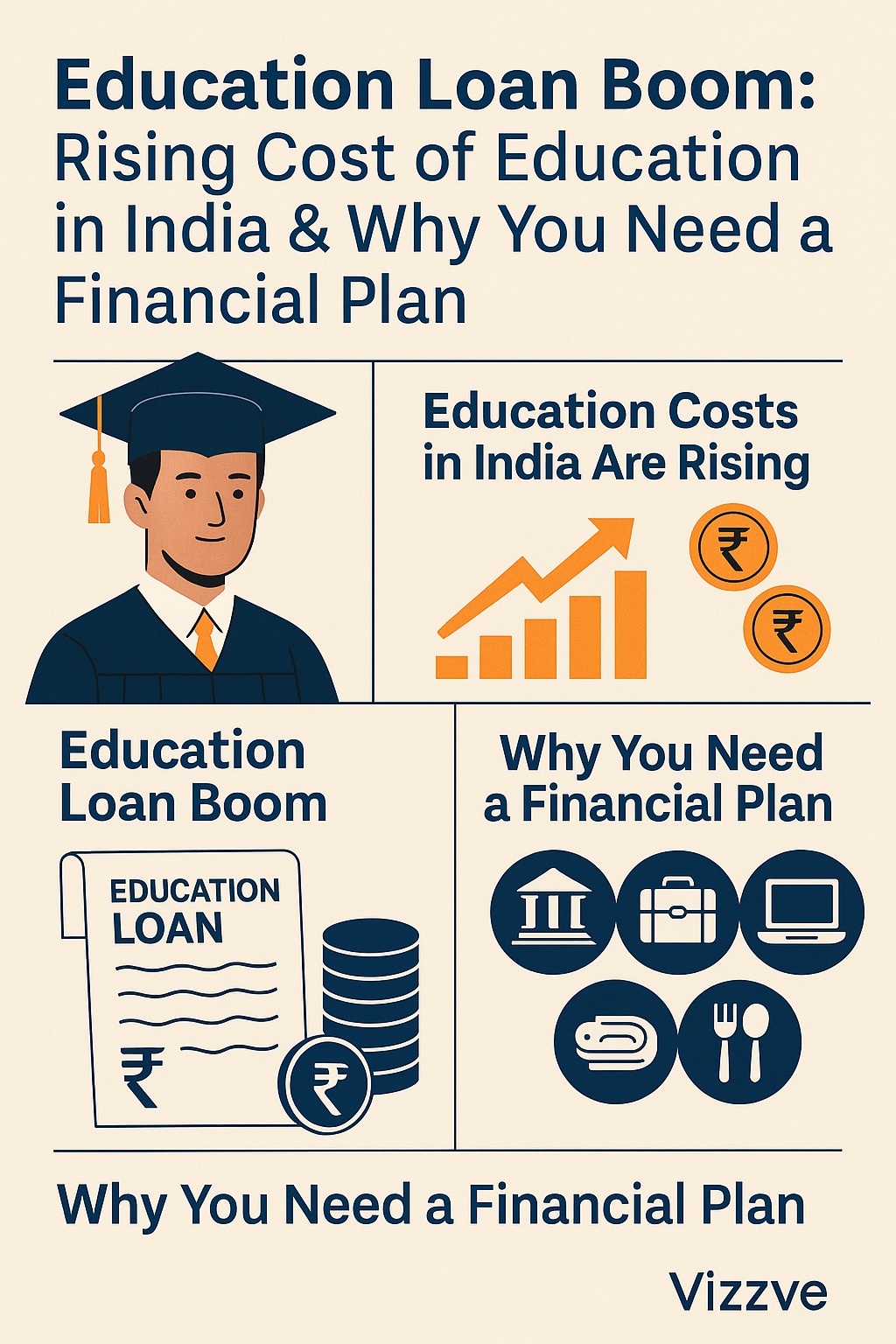
Education in India has never been more expensive. From engineering and medical degrees to international MBAs and private school fees, the rising cost of education is pushing millions of families to depend on education loans more than ever before.
India is witnessing a major education loan boom, with lenders reporting double-digit growth every financial year. But why are education costs rising so rapidly? And how can families prepare financially?
This blog explains the reasons behind rising education costs, the loan boom, and why strategic financial planning is now essential for every student and parent.
⭐ AI ANSWER BOX
Education costs in India are rising due to inflation, higher operational expenses, premium private institutions, globalized education models, technology upgrades, and the push for international degrees. As a result, more students rely on education loans. A proper financial plan helps manage fees, EMIs, interest burden, and long-term career decisions.
Education Loan Boom in India: What’s Happening?
Education loans in India are growing at the fastest rate in a decade.
Key Trends (2024–2026):
Annual loan growth: 15–18%
60% demand from study-abroad students
Rising domestic fees increasing loan dependency
Private banks and NBFCs joining aggressively
Government subsidy schemes expanding
The education loan portfolio in India crossed ₹1 lakh crore, reflecting how essential these loans have become.
Why Education Costs in India Are Rising Rapidly
1. Higher Operational & Infrastructure Costs
Modern campuses invest in:
Smart classrooms
Labs & research facilities
Digital learning tech
Air-conditioned hostels
International-grade infrastructure
These upgrades increase student fees.
2. Private Colleges Dominating the Education Market
India has thousands of private institutions with:
Premium pricing
Higher operational expenses
Industry-focused courses
Examples: Engineering, medicine, and MBA programs now cost 2–3× more compared to a decade ago.
3. Education Inflation (8–12% annually)
Education inflation is higher than general inflation.
| Year | General Inflation | Education Inflation |
|---|---|---|
| 2015 | ~5% | ~7% |
| 2020 | ~6% | ~9% |
| 2026 | ~5% | 10–12% |
This makes higher education significantly more expensive every year.
4. Rise in Study-Abroad Aspirations
Indian students now choose countries like:
Canada
UK
USA
Germany
Australia
Average cost for foreign education: ₹30 lakh – ₹1 crore.
This alone drives massive loan demand.
5. Expensive Professional Degrees in India
Current Fee Trends (India 2026):
| Course | Typical Fee Range |
|---|---|
| MBBS | ₹60 lakh – ₹1.2 crore (private) |
| Engineering (BTech) | ₹8–15 lakh |
| MBA | ₹12–25 lakh |
| Law (LLB) | ₹5–12 lakh |
| Aviation | ₹20–40 lakh |
Even middle-income families now rely on loans.
6. High Cost of Technology & Faculty
Top institutions hire global faculty and invest in:
AI labs
Robotics centers
Software licenses
Global curriculum partnerships
All of this increases tuition fees.
Why You Need a Financial Plan for Education (2026 Outlook)
With costs rising and EMI burden increasing, financial planning is essential.
1. To Avoid High Debt Burden After Graduation
Without planning, students graduate with heavy debt:
Typical education loan: ₹10–30 lakh
EMI after graduation: ₹10,000–₹45,000/month
A financial plan reduces stress.
2. To Prepare for Hidden Costs
Beyond tuition, expenses include:
Hostel & mess fees
Travel
Exam fees
Books & learning software
Visa charges (study abroad)
Living expenses
A good plan covers everything—not just tuition.
3. To Reduce Interest through Smart Borrowing
Planning helps with:
Choosing the right lender
Comparing interest rates
Selecting floating vs. fixed
Using subsidy schemes
Optimizing loan tenure
This can save lakhs over time.
4. To Manage Cash Flow During the Course
Parents often struggle with:
Annual fee hikes
Semester-based payments
Living expenses
A structured financial plan smooths cash flow and avoids last-minute borrowing.
5. To Align Career Goals with Education Cost
You can answer:
Is the ROI worth it?
Will the job market pay enough to handle EMIs?
Is studying abroad the right decision financially?
A financial plan ensures education > debt > career are aligned.
Education Loan Types in India (2026)
| Loan Type | Suitable For | Key Features |
|---|---|---|
| Secured Loan | Large fees, study abroad | Low interest; collateral required |
| Unsecured Loan | Lower cost courses | Higher interest; faster approval |
| Government Subsidy Loan | Economically weaker sections | Reduced interest |
| NBFC Education Loan | Study abroad premium programs | Quick processing |
Expert Commentary
As higher education advisors point out, education in India is undergoing a structural shift. Institutions are becoming more global, technologically advanced, and market-driven—causing tuition fees to rise sharply.
Parents must start planning early, and students should understand the financial implications before selecting a course or country.
Key Takeaways
Education costs in India are rising faster than inflation.
This is driving a major education loan boom.
Study-abroad demand is a big factor.
Students and parents need a strong financial plan to manage long-term EMIs.
Smart loan planning saves money and reduces stress.
FAQs
1. Why are education costs increasing so rapidly in India?
Due to infrastructure upgrades, private institutions, and education inflation.
2. Are education loans rising in India?
Yes, with 15–18% annual growth.
3. What is the average cost of higher education in India now?
₹8–25 lakh for most professional degrees.
4. Why is study abroad so expensive?
Fees + living costs + currency rates = ₹30 lakh–₹1 crore.
5. Is a financial plan necessary for education?
Yes, to manage fees, EMIs, and long-term debt.
6. Are education loans easy to get?
Yes, with proper documents and strong CIBIL.
7. What is the interest rate on education loans?
Typically 9–14% depending on lender.
8. Do government subsidies exist for education loans?
Yes, via interest subsidy schemes.
9. Should students compare lenders?
Absolutely; rates & charges differ widely.
10. How long is the repayment period for education loans?
5–15 years.
11. What factors affect education loan approval?
CIBIL score, parent income, course, institution ranking.
12. Can NBFCs fund study abroad?
Yes, often faster than banks.
13. Do private colleges charge more?
Yes, due to modern infrastructure.
14. Is early financial planning important?
Yes, it reduces debt burden later.
15. Will education costs rise further?
Likely—due to inflation, technology upgrades, and global trends.
Conclusion
India’s education loan boom reflects a deeper trend—the rapidly rising cost of education. With inflation, private colleges, and global ambitions driving fees higher, financial planning is no longer optional.
If you’re preparing for higher education—India or abroad—
Vizzve Financial provides quick personal loan support, low documentation, and a smooth approval process to help manage education-related expenses.
👉 Apply now at www.vizzve.com
Published on : 2nd December
Published by : SMITA
www.vizzve.com || www.vizzveservices.com
Follow us on social media: Facebook || Linkedin || Instagram
🛡 Powered by Vizzve Financial
RBI-Registered Loan Partner | 10 Lakh+ Customers | ₹600 Cr+ Disbursed